01Aerospace
5-axis complex parts
Watch: Tool interference and thin-wall distortion
Dovetail fixture + zero-point base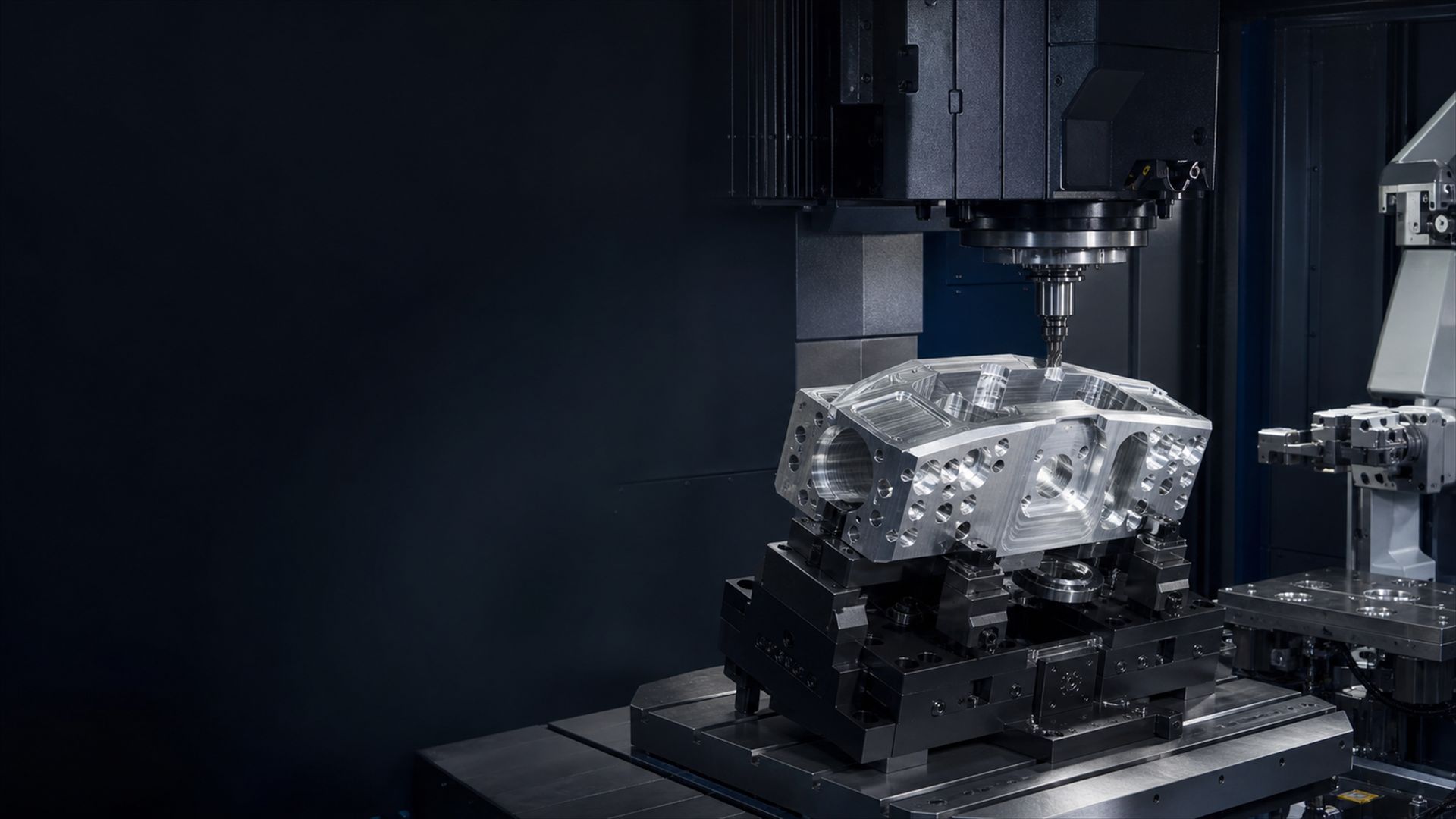
Application engineering / six industries
Start with the machining risk—not a catalog category. Compare datum control, tool access, changeover logic, and the path from manual setup to automation.
One datum, fewer surprises
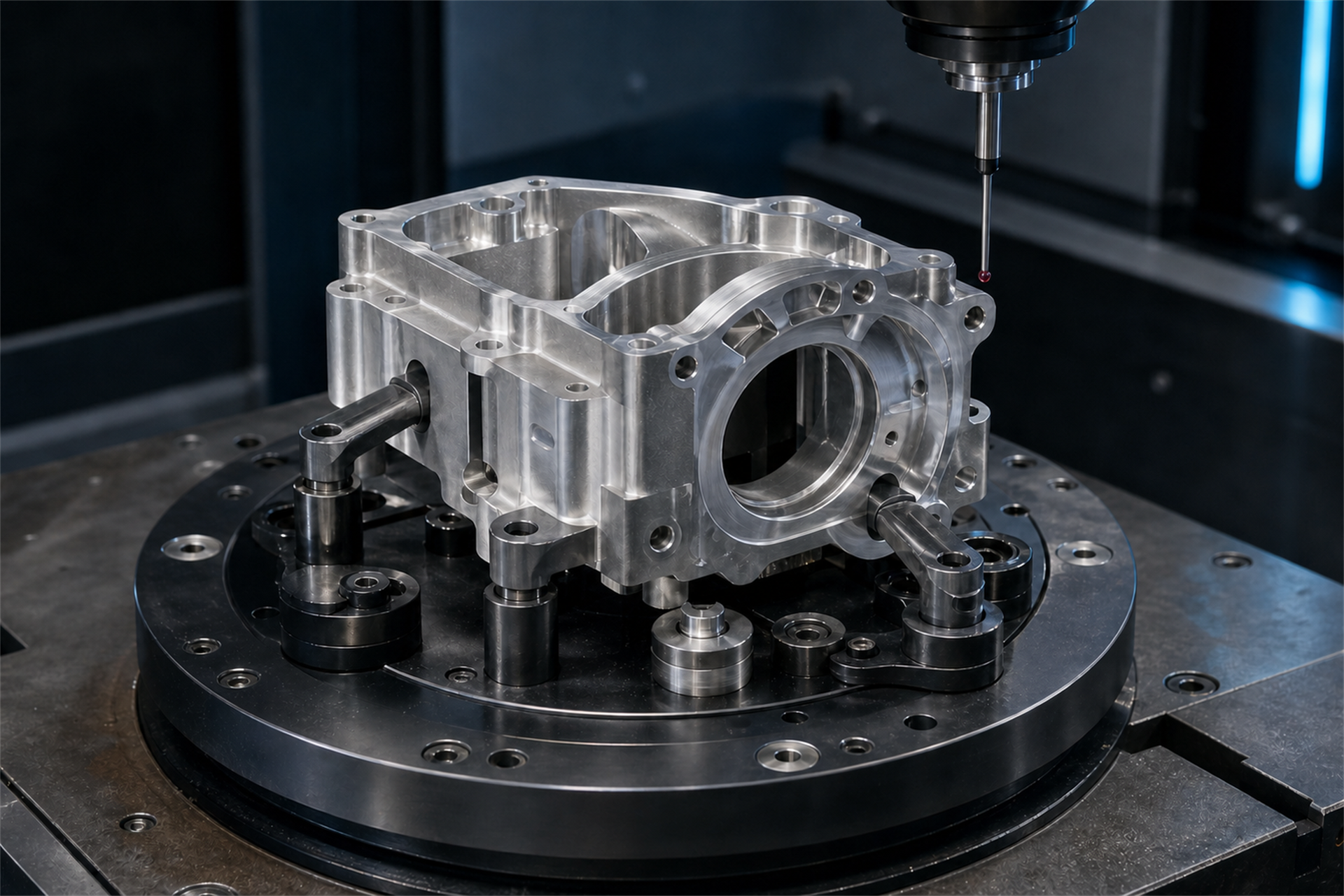
A fixture should protect the reference surfaces from first operation through inspection—not merely hold the part for one cut. The review starts by mapping how the workpiece is located, clamped, released, and transferred.
Separate the surfaces that control geometry from the areas available for clamping.
Check reach, spindle clearance, load direction, and how chips leave every contact surface.
Keep a repeatable interface for re-clamping, inspection, palletizing, or future robot loading.
Selection matrix
These are practical starting directions, not a substitute for checking the drawing, machine envelope, cutting load, and required tolerance.
| Machining job | Primary risk | Starting direction |
|---|---|---|
| 5-axis complex partsAerospace | Tool interference and thin-wall distortion | Dovetail fixture + zero-point base |
| Repeat-volume housingsAutomotive | Loading variation and station downtime | Hydraulic fixture + standardized datum |
| Small delicate componentsMedical | Clamp marks and geometry shift | Balanced low-profile clamping |
| Milling-to-EDM transferMold & Die | Datum loss between operations | E-Series chuck interface |
| Large-format EV componentsNew Energy | Fixture scale-up and changeover consistency | Pneumatic zero-point platform |
| Precision equipment partsSemiconductor | Stack-up drift through inspection handoffs | BDS positioning datum |
Watch: Tool interference and thin-wall distortion
Dovetail fixture + zero-point baseWatch: Loading variation and station downtime
Hydraulic fixture + standardized datumWatch: Clamp marks and geometry shift
Balanced low-profile clampingWatch: Datum loss between operations
E-Series chuck interfaceWatch: Fixture scale-up and changeover consistency
Pneumatic zero-point platformWatch: Stack-up drift through inspection handoffs
BDS positioning datumManufacturing proof
The facts below describe the organization supporting NEXTAS workholding development and delivery. Project performance still needs to be validated against your real process conditions.
A long-term focus on CNC workholding, fixture interfaces, and production support.
Recorded for the assessed Zhuhai facility in supplier assessment report MIC-ASI2411114.
Buyers should confirm which current documents apply to the quoted product, manufacturing scope, destination market, and buyer requirements.
Verified organization facts. Final fixture capability depends on the selected product, machine, part, process, and validation method.
Application review workflow
Review the part, machine, operations, critical datums, access limits, and current bottleneck.
Rank standard and custom options by rigidity, access, transfer logic, maintenance, and automation readiness.
Confirm fit, collision clearance, loading sequence, clamp behavior, repeatability checks, and trial-cut criteria.
Before you send the drawing
Start with the part drawing, machine model, material, critical datums, batch pattern, and the setup problem you want to remove. That gives the engineering team enough context to compare fixture directions.
Yes. A manual-first project can preserve the same locating and clamping interface for later pallet or robot loading, provided that access, sensing, chip control, and service connections are considered early.
No. Share the process and risk first. The review can then identify whether a standard zero-point, vise, chuck, automation product, or custom fixture is the practical route.
Ready for a practical recommendation?
No product shortlist required—start with the setup risk and production goal.