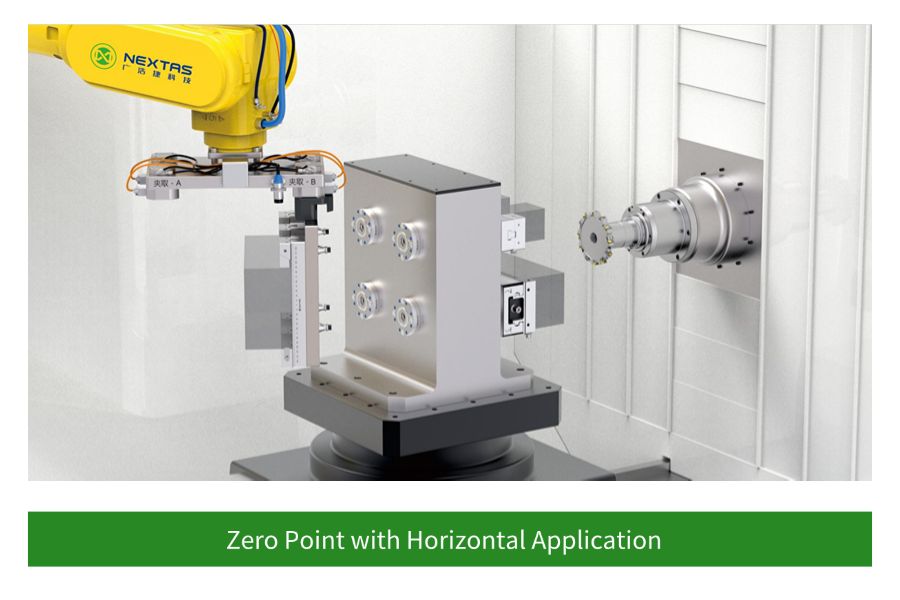
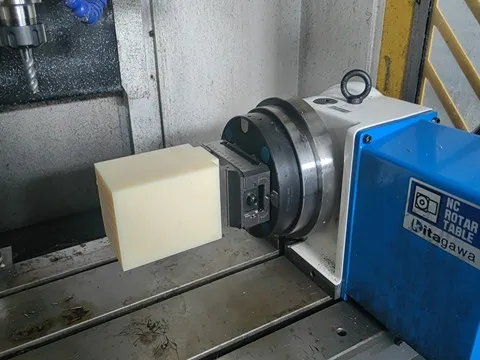
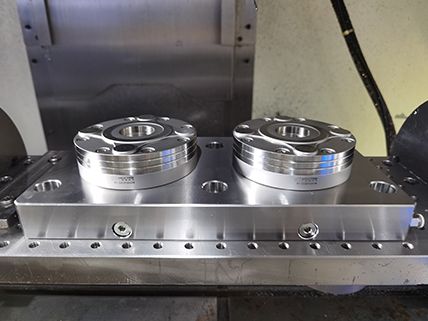
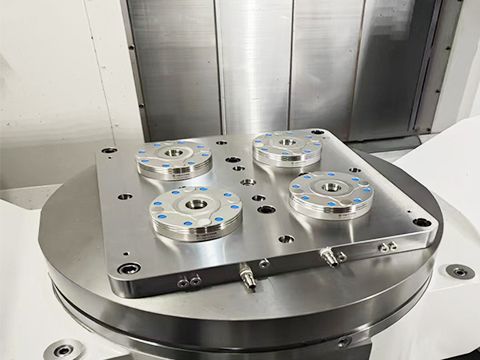
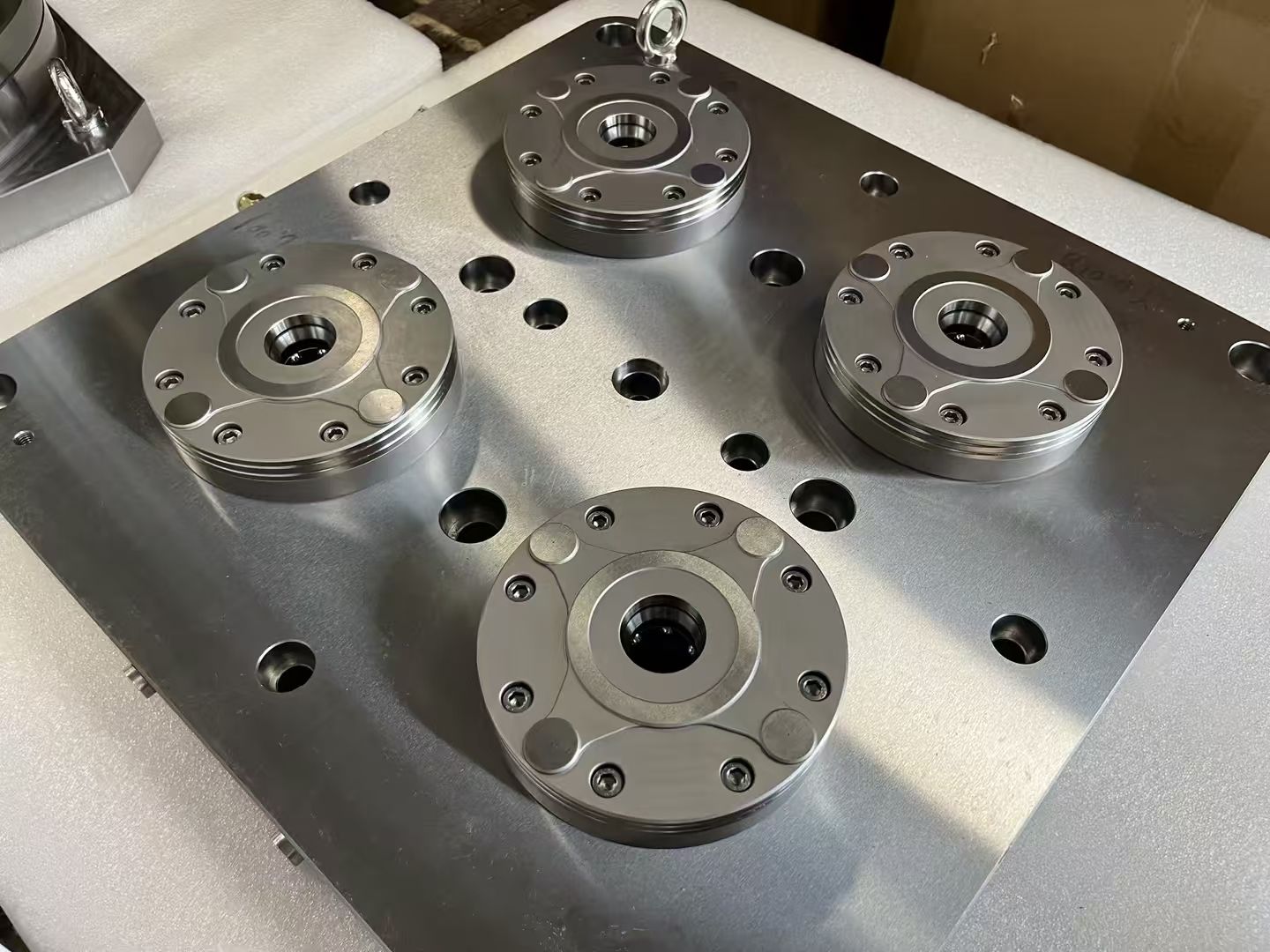
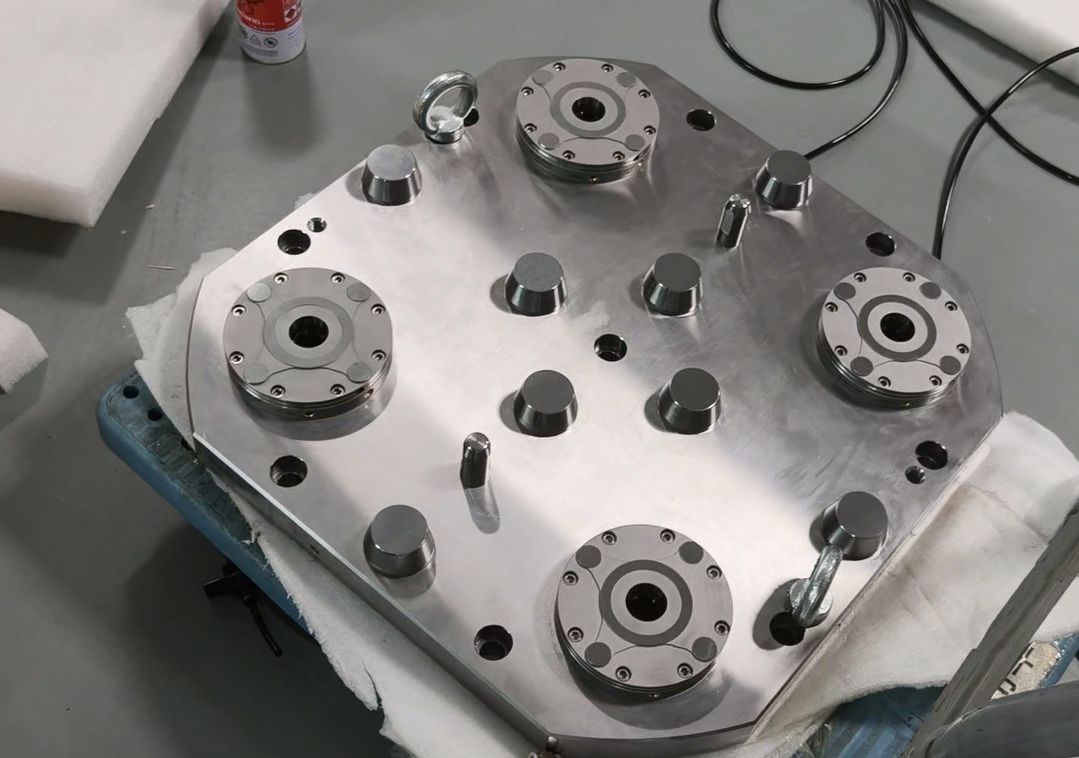
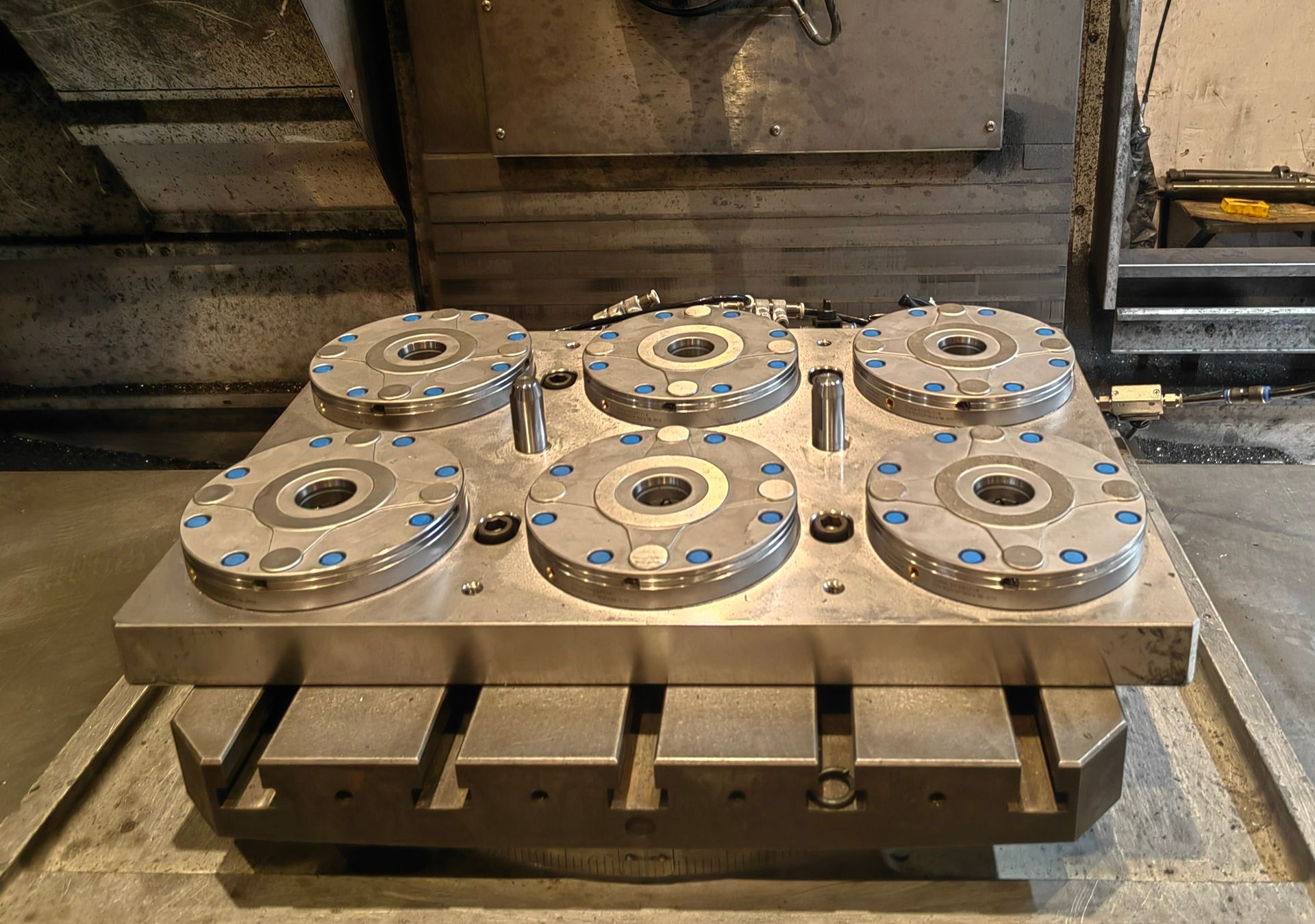
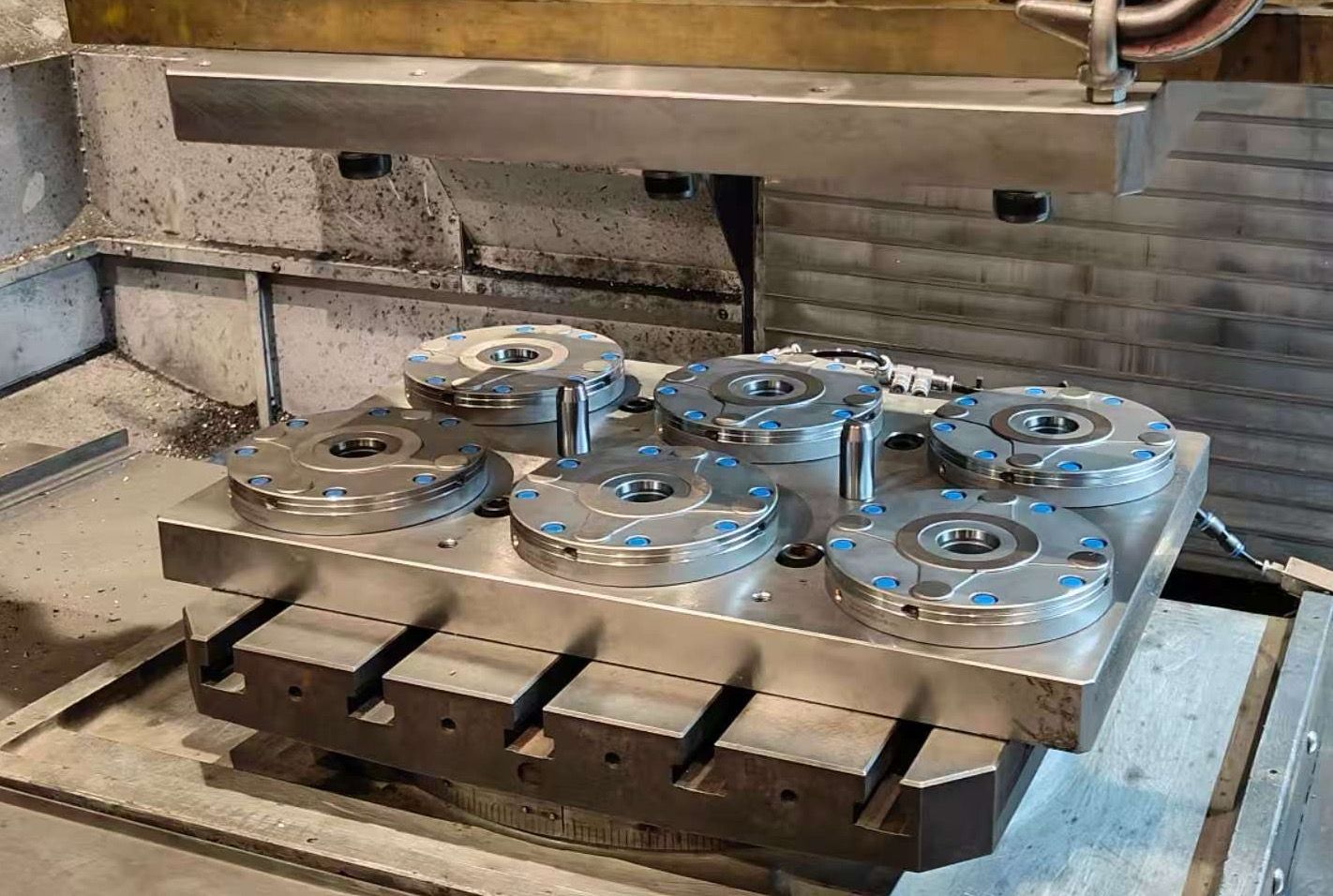
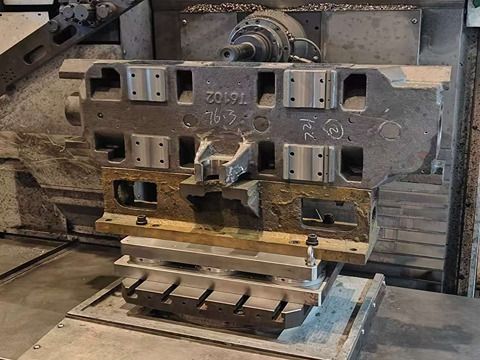
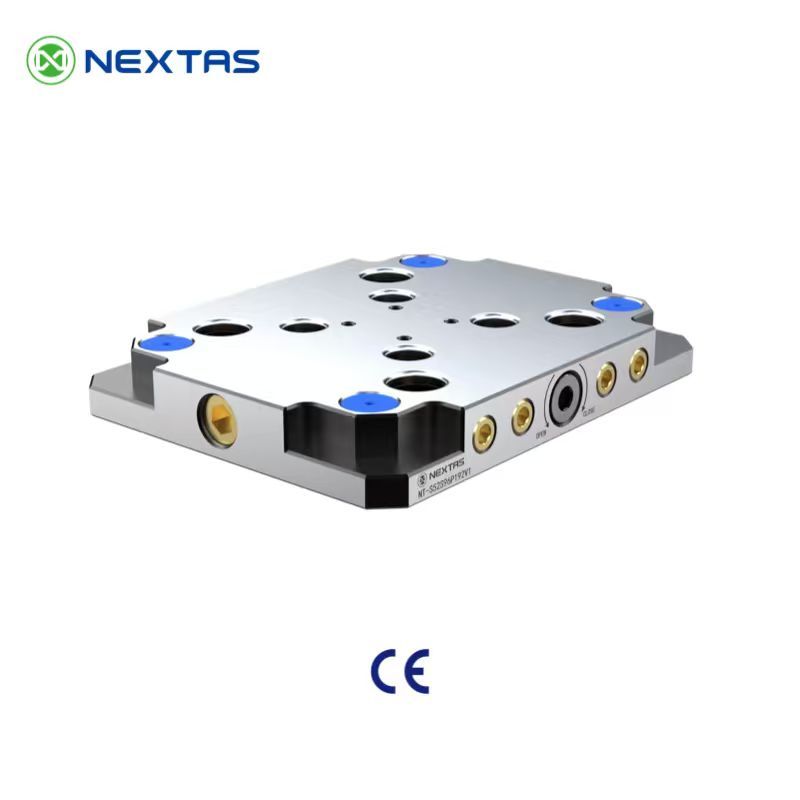
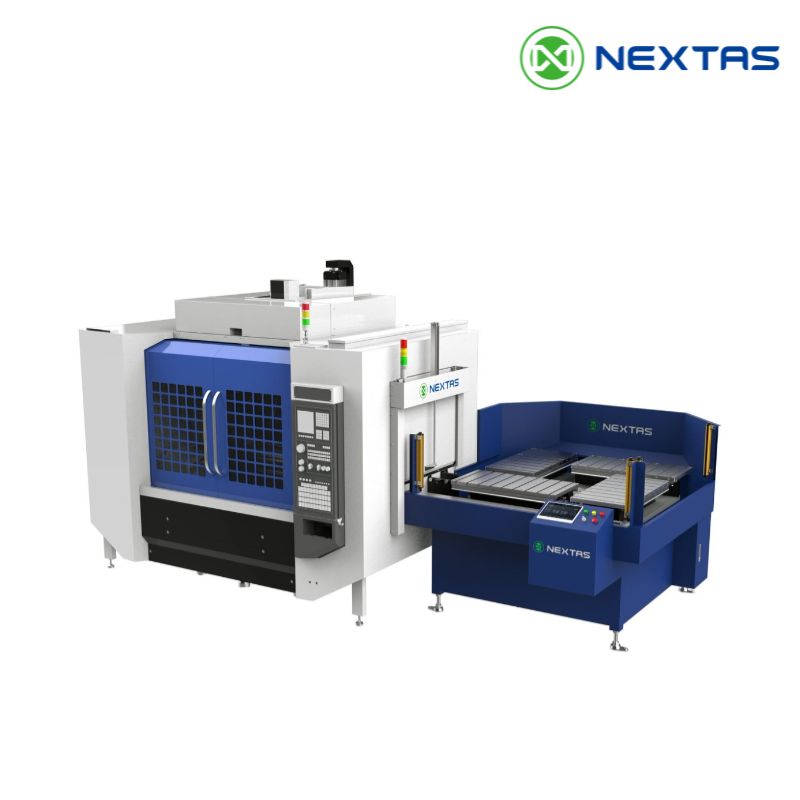
Main view of Nextas Tech Zero-Point Clamping System module
Core Locking Technology

Zero-Point Clamping Systems

Receiver modules and combination blocks for quick-change machining, pallet flow, and automation integration

Choose this page when the real question is the locking interface itself. The MFG module family covers compact receivers, multi-station blocks, and control-ready options for shops that need stable repeatability plus a cleaner path into pallet transfer, APC, or robot-assisted workholding.

Use this page when you are buying loose receiver modules — single units or 2/4/6-station MFG combination blocks — to drop into a custom subplate, tombstone, or OEM fixture. If you want a finished, drilled, ready-to-bolt plate instead, see the Quick-Change Zero-Point Clamping Plate or the air-actuated Pneumatic Zero-Point Plate.

≤ 0.003 mm repeatability
Spring self-locking structure
Sensor & automation ready
Lead time: 15–25 days MOQ: 1 set Payment: T/T · L/C ISO 9001 / 14001 / 45001 MIC Verified Supplier
Discuss Zero-Point Integration

Best fit

When the receiver module is the real project core

Use this route when the buyer is selecting pull studs, receiver spacing, air routing, and control feedback rather than just looking for a datum plate under an existing fixture.

Integration prep

What to send for a faster module recommendation

Provide pallet size, pull-stud standard, inlet preference, sensor or confirmation requirements, and whether the module will tie into APC, robot, or manual quick-change stations.
Quick project handoff

Send machine model, workpiece, and target takt time

We map your process data to a fitting configuration, relevant catalogue options, and the right contact channel for this product page.

Fast contact paths

Need drawings or a quick reply? WhatsApp / Email.

Machine & interface

Tell us the machine model, table or spindle interface, available envelope, and whether this is a retrofit or a new line.

Workpiece & fixturing goal

Share part size, material, current clamping concept, volume range, and whether it goes to machining, inspection, or transfer.

Accuracy & automation target

List repeatability target, clamping-force needs, pallet concept, robot handoff and the first bottleneck in takt time.

Best fit

Use this route when the receiver module itself is the buying decision

Best for projects centered on pull studs, receiver spacing, air routing, and lock-state confirmation across pallets, vises, or automation carriers.

Compare first

Decide module footprint, inlet routing, and feedback requirement first

Single receiver modules, combination blocks, and control-ready versions become easier to compare once those three constraints are locked.

Related path

Not every project starts with the same hardware layer

If the real need is table standardization or pallet logistics first, jump sideways before going deeper into this module page.

Catalogue System Map

Catalogue System Map — technical data
Family What it covers Typical models / note
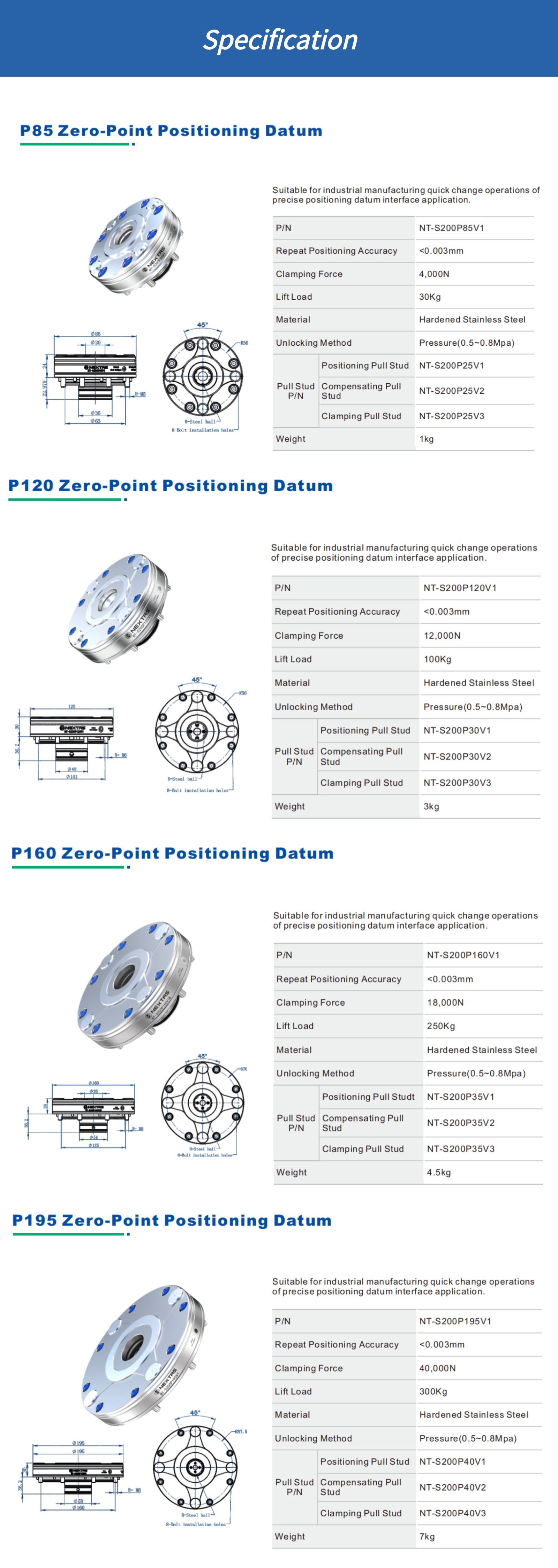
MFG zero-point positioning datumSingle receiver modules for direct pallet, vise, chuck, or fixture changeover.NT-S200P85V1 / 120V1 / 160V1 / 195V1
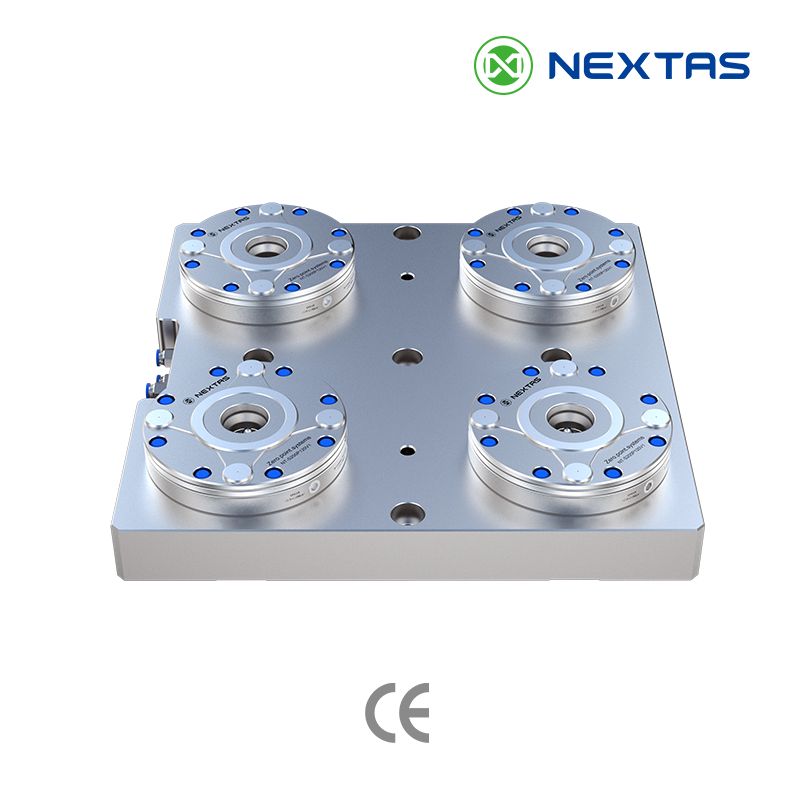
MFG combination modulesMulti-station receiver blocks (2 / 4 / 6 stations) for larger pallets, tombstones, and automation-ready subplates, with auxiliary positioning modules (WJ2 / WJ4) for precise pallet indexing.ZH2A/B, ZH4A/B, ZH6A/B on P120 or P160 base — e.g. NT-S200P120ZH2A through NT-S200P160ZH6B
Quick change datum plate familyPlate-level 52 mm / 96 mm foundations that standardize the machine interface.See the zero-point clamping plate page for full 52 / 96 plate model matrix.
BDS positioning datumCompact datum family used when smaller positioning interfaces are preferred in automation cells.See the dedicated BDS page for A024 / B024 datum and pallet variants with <0.003 mm repeatability and 60,000 N clamping force.
Zero-point couplingsQuick EOAT / robot-side transfer interface for lightweight pallets, docking modules, and automation handoff.NT-S600P90V1 coupling body with matching NT-S200P25 / 30 / 35 / 40 spigot family.
Sensor zero-point quick change datumReceiver formats prepared for clamp / unclamp status confirmation in automated cells.Used when PLC confirmation, robot interlock, or unattended cycle validation is required.

Need the compact datum family?

BDS is now broken out as its own product detail page so engineers can review A024 / B024 datum bodies, matching pallets, clamping force, and handling notes without digging through the general zero-point overview.

Technical Specifications

Technical Specifications — technical data
Model Module Diameter Clamping Force Lift Load Repeatability
V1 — Standard pneumatic receivers (pressure-unlock, taper-type positioning)
NT-S200P85V185 mm4 kN30 KG≤0.003 mm
NT-S200P120V1120 mm12 kN100 KG≤0.003 mm
NT-S200P160V1160 mm18 kN250 KG≤0.003 mm
NT-S200P195V1195 mm40 kN300 KG≤0.003 mm
V2 — Compact pneumatic receivers (reduced stack height for integrated pallets and fixtures)
NT-S200P85V285 mm5 kN≤0.003 mm
NT-S200P115V2115 mm10 kN≤0.003 mm
NT-S200P148V2148 mm18 kN≤0.003 mm

Common Specifications (All Models)

  • Actuation:Pneumatic unlocking (6 bar class supply, confirm your local air standard)
  • Body Material:Hardened stainless steel
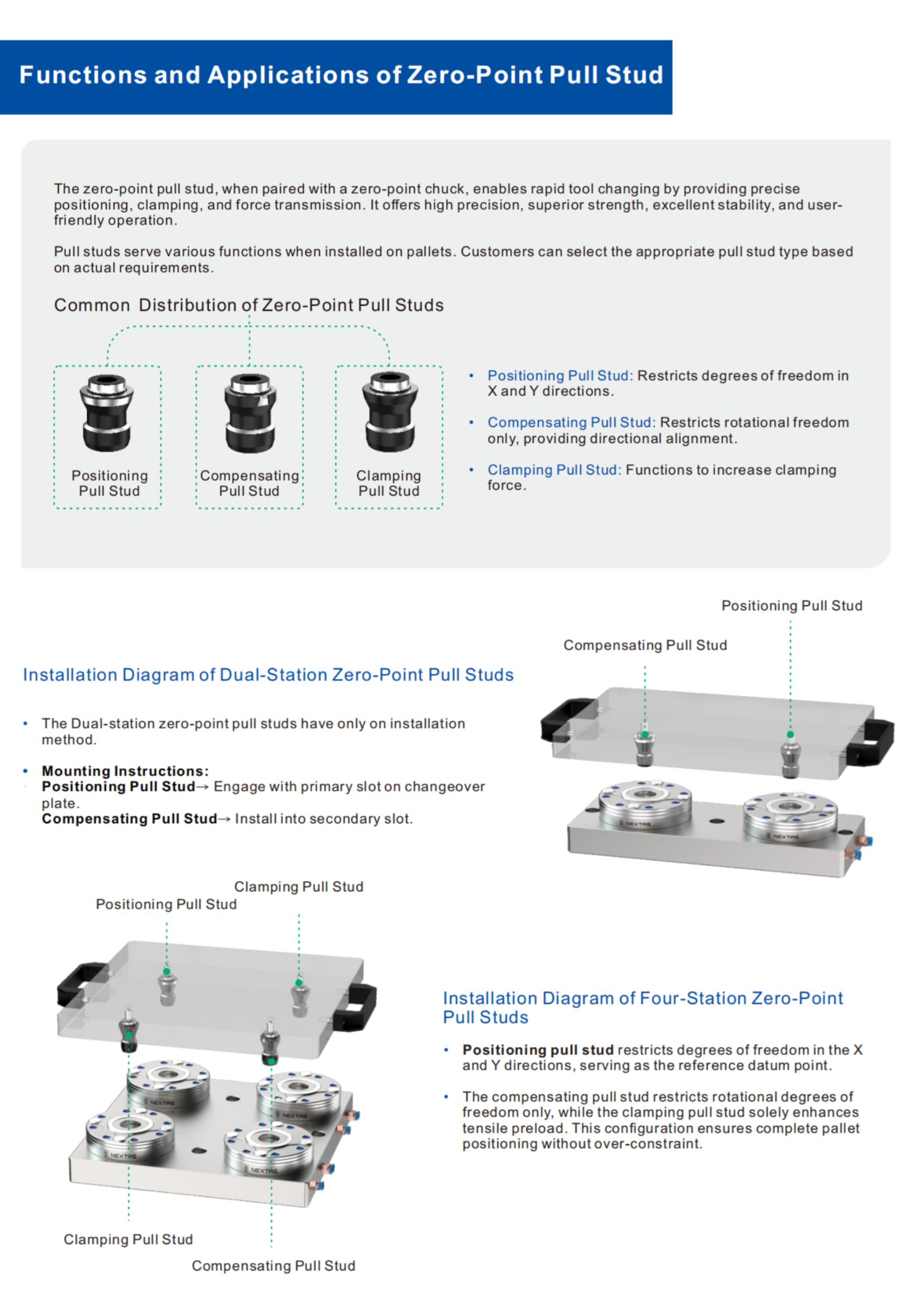
  • Core functions:Taper-type positioning, mechanical self-locking, self-cleaning locating datum, air-tightness testing, and inner-hole cleaning.

Receiver family depth buyers often miss

The catalogue does not stop at four single receivers. It also shows multi-station receiver blocks, robot couplings, and sensor-ready formats that matter when the real project is pallet standardization or automated handoff.

Technical Specifications — technical data
Receiver format Where it fits best Catalogue reference
Single receiver modulesCompact vises, 5-axis fixtures, smaller pallets, and machine-to-machine transfer where low stack height matters.NT-S200P85V1 / P120V1 / P160V1 / P195V1 (and V2 compact variants P85V2 / P115V2 / P148V2)
Two-station combination modulesLonger pallets and subplates that need more support than a single receiver can provide.NT-S200P120ZH2A / P120ZH2B / P160ZH2A / P160ZH2B · with auxiliary positioning modules NT-S200P120WJ2 / P160WJ2
Four-station combination modulesLarger pallets and subplates where four positioning points deliver higher support and stability.NT-S200P120ZH4A / P120ZH4B / P160ZH4A / P160ZH4B · with auxiliary positioning modules NT-S200P120WJ4 / P160WJ4
Six-station combination modulesTombstone layouts, large automated carriers, and pallet formats that demand six supported points.NT-S200P120ZH6A / P120ZH6B / P160ZH6A / P160ZH6B
Zero-point couplingsRobot or transfer-side quick exchange where compact automation interface matters more than machine-table footprint.NT-S600P90V1 + coupling pallet NT-S200P35TP01
Sensor-ready zero-point interfacesCells that require clamp confirmation before pallet motion, robot pickup, or unmanned restart.Sensor zero-point quick change datum family

Mechanism Details

How the Mechanical Locking Works

Nextas Tech Zero-Point modules are built from high-grade, hardened alloy steel for rigidity and long service life. The locking mechanism uses pneumatic pressure (typically 6 bar) to overcome powerful springs for unlocking. When the air is removed, these springs pull in and lock the clamping stud, creating a secure, vibration-proof connection that maintains its force even if air pressure is lost.

System in Action: Quick Changeover

This demonstration shows how the Zero-Point Clamping System enables fast pallet changes. The locking mechanism holds precision positioning within <0.003mm and allows complete changeovers in seconds.

Diagram of the Bottom Inlet Solution for the zero-point system

Bottom Inlet Solution Features

  • • Flexible taper fit positioning · Repeatable positioning accuracy <0.003mm.
  • • High-precision ball lock self-locking structure for proven stability.
  • ③⑥ Pneumatic boosting function enhances clamping force.
  • ④⑦ Air-tightness testing and surface self-cleaning function.
  • ⑤⑧ Pneumatic lock/unlocking and chuck lifting function.
  • • Jet cleaning function inside the pull stud hole prevents debris.
  • • Air-tightness testing and positioning surface self-cleaning.
Cutaway view of the internal mechanism of the zero-point clamp

Key System Functions

  • Mechanical Self-Locking: Maintains 100% clamp force even if air pressure is lost.
  • Clamping Force Booster: Optional turbo function increases holding force for heavy-duty jobs.
  • Self-Cleaning Air Blast: Integrated channels clear debris before clamping for perfect seating.
  • Position Monitoring: Sensor-ready for feedback to confirm clamp/unclamp status for secure automation.
Detailed product feature breakdown for the clamping system

Flexible Intake Solutions

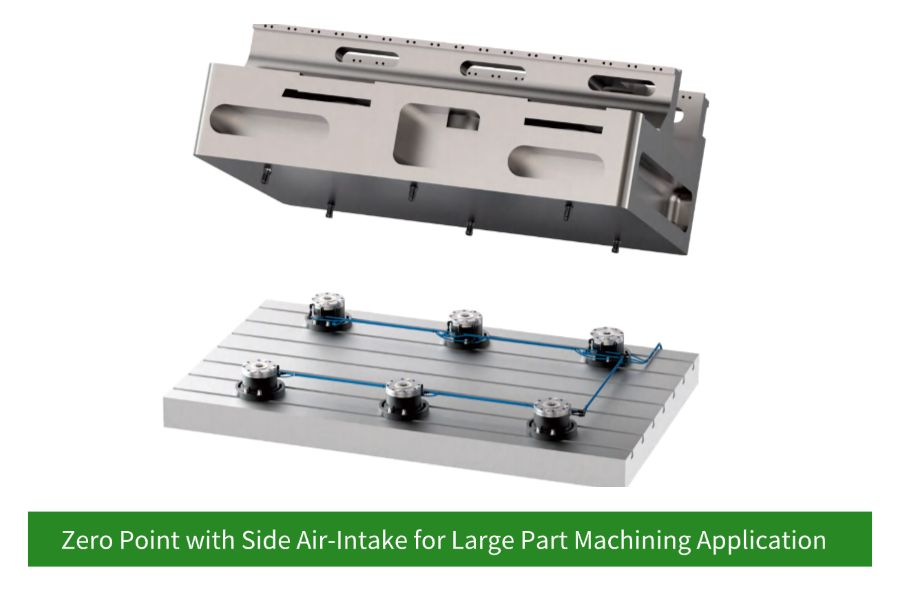
Choose bottom-inlet routing when you can bring air through the table or subplate and want the cleanest, best-protected layout. Choose side-inlet routing when retrofit access, hose serviceability, or machine constraints make lateral connection the more practical solution.

Diagram of the Side-Inlet Solution
Side-Inlet Solution
Technical drawing with specifications and dimensions

Selection & Integration Guide

How to specify a zero-point system for your machine

  1. Define your changeover goal: pallet swaps, fixture swaps, or both. This sets the receiver count and pallet strategy.
  2. Select receiver size: based on fixture weight, cutting load, and available footprint (85 / 120 / 160 / 195 mm options).
  3. Choose pull studs: standard vs. compact vs. anti-rotation, depending on clearance and datum requirements.
  4. Plan the sub-plate: optimize receiver spacing for tool access, chip flow, and coolant drainage.
  5. Decide air routing: bottom inlet for clean through-table plumbing; side inlet when through-table routing isn’t possible.
  6. Automation readiness: add clamp/unclamp confirmation sensors for APC/robot cells and safe PLC sequencing.

Typical retrofit paths

Zero-point systems pay off fastest when you standardize one interface across multiple setups. Here are the most common upgrade routes we support.

3-axis CNC → quick-change fixtures

Mount a receiver pattern on a sub-plate and add pull studs to your vises/fixtures. Great for mixed-batch work and short runs.

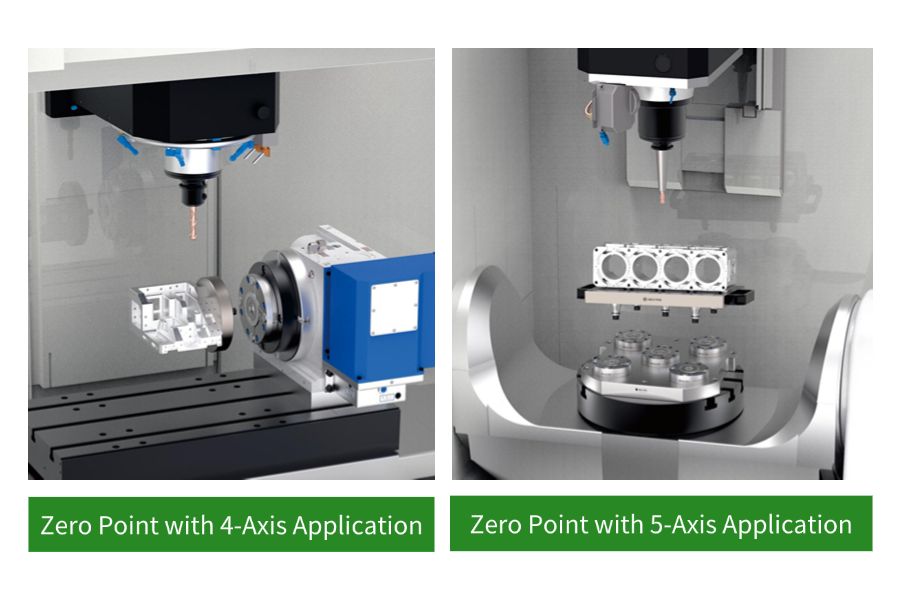
5-axis CNC → compact, high-access fixturing

Use dense receiver layouts and low-profile fixtures to maximize tool access and reduce re-indicating between operations.

Automation cell → pallet pool / APC / robot

Add clamp confirmation signals and consistent pallets to enable safe unattended changeovers and higher spindle uptime.

Receiver sizing & layout quick guide

These guidelines help early-stage planning for a quick-change pallet / fixture interface. Final selection depends on cutting loads, moments, and machine constraints — share your setup and we’ll propose a layout.

Selection & Integration Guide — technical data
Use caseTypical payloadRecommended receiverTypical receiver countNotes
Compact 5-axis fixtures / vises≤ 30 kg85 mm3–4
  • Prioritize low height and tool access.
  • Use anti-rotation features when needed.
  • Keep chip evacuation paths open.
General 3-axis quick-change setups≤ 100 kg120 mm4
  • A 4-point pattern is a common standard for repeatable pallet swaps.
  • Balance spacing with bolt access and coolant drainage.
  • Good all-rounder for mixed-batch work.
Heavy-duty fixtures / tombstones≤ 250 kg160 mm4–6
  • Use more receivers to improve rigidity against high moments.
  • Increase receiver spacing to reduce plate bending.
  • Plan air manifolds and service access up front.
Large pallets / automation / APC≤ 500 kg195 mm6–8
  • Favor stiffness and stable pull-down for unattended machining.
  • Add clamp/unclamp confirmation sensors for safe sequencing.
  • Standardize pallets to build a reliable pool.

Bottom inlet vs. side inlet routing

Selection & Integration Guide — technical data
OptionBest whenPlumbing notesAutomation notes
Bottom inletYou can route air through the table/sub-plate for a clean, protected setup.
  • Great for sealed routing and chip resistance.
  • Plan ports before machining the plate.
  • Use FRL / filtration close to the supply.
  • Easier manifold routing for multi-receiver plates and pallet pools.
  • Cleaner hose management for robot/APC cells.
  • Consistent pressure drop across pallets.
Side inletThrough-table routing isn’t possible, or you need a fast retrofit on existing plates.
  • Keep hoses protected from chips and toolpaths.
  • Use strain relief and guards.
  • Label lines to reduce setup mistakes.
  • Still automation-ready — ensure consistent unclamp timing.
  • Add confirmation signals (sensor or pressure switch) where required.
  • Keep quick-disconnects accessible for maintenance.

Quality & Reliability You Can Audit

For zero-point workholding, repeatability isn’t just a spec — it’s the result of material control, precision grinding, and functional testing. Nextas Tech focuses on stable long-term performance in real chip-and-coolant environments.

Materials & wear resistance

  • Hardened, corrosion-resistant steel on critical locating/locking interfaces.
  • Precision-ground engagement surfaces to keep repeatability stable over cycles.
  • Designed for coolant exposure with robust sealing and debris management.

Functional testing

  • Air-tightness and actuation verification for consistent enable behavior.
  • Self-cleaning air blast paths to protect seating accuracy in chip-heavy jobs.
  • Repeatability validation guidance available for incoming inspection and FAT.

Support & documentation

  • CAD/STEP files on request for fast fixture design and simulation.
  • Configuration proposal with receiver spacing, porting plan, and BOM suggestions.
  • Spare parts and maintenance checklist to keep uptime predictable.

Advanced Manufacturing Applications

Offline setup and palletization

Offline Setup & Palletization

Build fixtures and mount workpieces on pallets while the machine is running, drastically increasing machine uptime.

Multi-machine standardization

Multi-Machine Standardization

Use the same setup across multiple machines (3-axis, 5-axis, CMMs) for ultimate flexibility and reduced fixture inventory.

Robotic arm integration with zero-point system

Full Automation Integration

Built-in sensing and pneumatic control provide the feedback needed for robotic pallet changers and unmanned cells.

Complex 5-axis machining setup using zero-point clamping

5-Axis and Complex Machining

The compact modules allow for creative fixturing with minimal interference, providing maximum tool access.

Choose the right zero-point architecture first

Most changeover problems get solved earlier when receiver layout, inlet routing and pallet strategy are matched to the machine and part family before the fixture design is frozen.

Single receiver modules

Ideal for compact fixtures, 5-axis work, vises or pallets that need a low-profile interface and direct maintenance access.

Combination blocks

A stronger starting point when a fixture needs multiple clamping points, higher support rigidity, or a denser palletized layout.

Bottom inlet vs side inlet

Choose bottom inlet when under-table routing is available and protection is the priority. Choose side inlet when retrofit access or utility routing makes the lateral connection more practical.

What to send for a safe module recommendation

Machine & envelope

Machine table, available mounting area, stack-height limit and whether the fixture is 3-axis, 4-axis or 5-axis.

Fixture & load

Fixture mass, part family, roughing severity and whether the fixture has to move between machining and inspection.

Utility routing

Tell us whether air can come through the table, through a sub-plate, or only from the side so inlet selection stays practical.

Automation target

Share changeover targets, pallet count, robot transfer requirements and the clamp / unclamp confirmation signals you need.

Case Studies

Dual-Station Zero-Point Clamping System

Dual-Station Zero-Point Clamping System case 1 Dual-Station Zero-Point Clamping System case 2 Dual-Station Zero-Point Clamping System case 3

Four-Station Zero-Point Clamping System

Four-Station Zero-Point Clamping System case 1 Four-Station Zero-Point Clamping System case 2 Four-Station Zero-Point Clamping System case 3

Six-Station Zero-Point Clamping System

Six-Station Zero-Point Clamping System case 1 Six-Station Zero-Point Clamping System case 2 Six-Station Zero-Point Clamping System case 3
Selection • Integration • Maintenance CheatsheetClick to expandClick to collapse

Selection • Integration • Maintenance Cheatsheet

A compact, shop-floor reference to help you choose the right configuration, integrate cleanly with your machine/automation, and keep repeatability stable in daily production.

1) Selection: pick the right configuration

1) Selection: pick the right configuration — technical data
If you care most about…Start with…Why this helps
Fast changeovers / high-mix jobsStandardize one interface (zero-point / ITS / 3R) across machines + build fixture plates/pallets.Enables offline setup and swaps in seconds with minimal re-indicating.
5-axis access and tool clearanceChoose low-profile components and plan clearance early (stack height, clamp body, wrench access).Avoids collisions and preserves reach for deep features.
Lights-out / robot-tended machiningAdd confirmations (clamp-OK / part-present), chip protection, and a recovery sequence.Reduces mis-load risk and improves automation reliability.
Heavy roughing / high cutting forcesIncrease support points and rigidity (more clamping stations, stiffer base, shorter stack-up).Minimizes deflection and protects surface finish.

2) Integration: what to prepare before install

2) Integration: what to prepare before install — technical data
ItemTypical choicePractical tip
Mounting and datumsBolt pattern + dowel pins / keyways / reference edgeDefine a master datum and keep a gauge pallet/part for quick verification.
UtilitiesClean, dry air with FRL; stable pressure; (hydraulic/electrical if used)Drain FRL regularly and avoid long, restrictive hoses that slow actuation.
Control handshakeM-codes/PLC I/O: clamp, unclamp, clamp-OK, faultUse timeouts + safe states; log signals to diagnose intermittent downtime.
Process validationProbe macro / indicator check / first-article routineBaseline repeatability after installation, then compare weekly.

3) Maintenance: keep repeatability stable

3) Maintenance: keep repeatability stable — technical data
Risk / wear pointEarly symptomPrevention / quick fix
Chips on locating surfacesParts shift, repeatability driftsAir-blow + wipe seating faces; add chip covers/air blast if needed.
Seals/wipers and sliding surfacesSlow actuation, leaks, inconsistent clampInspect on schedule; keep coolant/abrasives out; replace wear items proactively.
Loose fasteners / damaged contact facesUnexpected misalignment, vibration marksTorque-check; use dowels; stone minor nicks (don’t ‘machine’ the datum).
Contaminated air/oilSticky motion, alarms in automationImprove filtration, dry air, drain bowls; keep a simple spare-kit.

Need CAD/STEP, a mounting pattern, or a recommended setup for your part?

Contact us
Product Data & Evaluation ChecklistClick to expand

Product Data & Evaluation Checklist

Use this checklist to validate repeatability, pull-down force, and automation fit during supplier evaluation.

Key specifications

Product Data & Evaluation Checklist — technical data
System components Receiver modules + pull studs + mounting plate/pallet (configurable)
Repeatability Typical targets down to ≤ 0.003 mm (application-dependent)
Locking concept Fail-safe mechanical locking; pneumatic/hydraulic release options
Changeover focus Quick fixture/pallet swaps for 3-axis & 5-axis machining
Wear surfaces Hardened interfaces on critical locating and locking areas
Options Manual / pneumatic / hydraulic, multiple receiver sizes & stud patterns

Tip: share your part material, machine model, and target takt time. We’ll propose the right configuration and measurable targets.

Compatibility & standards

  • Integrates with pallets, tombstones, vises, chucks, and custom fixtures.
  • Layout can be designed for clearance, chip flow, and coolant access.
  • Suitable for APC/robot cells with clamp confirmation and safe sequencing.

Measured outcomes (before → after)

  • Setup time: minutes or seconds instead of manual re-indicating (process dependent).
  • Stable datum after re-clamp: reduced probing time between operations.
  • Lower scrap: fewer mis-location and tilt-related issues on multi-op jobs.

Workholding configuration

  • BOM definition: receiver quantity, stud type, mounting hardware, porting (if applicable).
  • Locator strategy: datum faces, pull-down direction, anti-rotation features.
  • Fixture stack-up: plate/pallet → receiver → fixture/vice/chuck → part (verify rigidity).

Evidence & proof

  • Fixture layout drawing (PDF/CAD snippet) showing receiver spacing and datum scheme.
  • On-machine photos/videos of clamp/unclamp and pallet swap sequence.
  • Inspection excerpt: re-clamp repeatability or probing repeat test (sample available).

Delivery & support

  • Configuration proposal within 24–48h after receiving part info and machine constraints.
  • Spare parts support: studs, seals, receiver components; maintenance checklist included.
  • Optional FAT video before shipment for key assemblies.

Frequently Asked Questions

How does the 'fail-safe' mechanical locking work?

Our zero-point system uses powerful pre-loaded springs as the primary locking mechanism. Clamping is mechanical and constant. Pneumatic pressure (typically 6 bar) is used to enable. If air pressure is lost, your workpiece remains secured — ideal for unattended machining and automation.

What is the difference between the 'Bottom Inlet' and 'Side Inlet' solutions?

Bottom inlet routes air through the machine table or sub-plate for a clean, protected installation. Side inlet is a flexible option when through-table routing isn’t possible — air lines connect from the side of the module.

Can these modules be used for applications other than CNC machining?

Yes. We commonly see zero-point receivers used on CMM inspection stations, welding fixtures, assembly lines, and EDM processes — anywhere that repeatable positioning and fast changeover improve throughput.

What maintenance is required for the zero-point modules?

Keep the seating area clean, inspect periodically, and apply light lubrication as specified in the manual. In chip- and coolant-heavy environments, routine wipe-down and occasional leak checks help keep unlocking and seating consistent over time.

How do I integrate the system for automated position monitoring?

Automation-ready modules can be configured with sensor ports for proximity sensors that provide clamp/unclamp confirmation. This feedback can be wired to a PLC or robot controller to validate system status before an automated cycle starts.

How do I choose the right module size (85 / 120 / 160 / 195 mm)?

Start with pallet/fixture footprint, part and fixture weight, and cutting loads. Smaller receivers fit compact 5-axis fixtures and dense layouts; larger diameters provide higher load capacity and stiffness for heavier pallets, tombstones, and roughing. Share your table size and changeover goal and we can recommend a safe configuration.

Which pull stud should I use, and how important is stud quality?

The pull stud is the precision interface between your fixture and the receiver, so it impacts repeatability and wear. Choose the style based on clearance, fixture thickness, and whether you need anti-rotation. Precision-ground studs with consistent hardness and surface finish help keep repeatability stable over many cycles.

What air quality / filtration is recommended for stable long-term operation?

Use clean, dry air at the specified unlocking pressure (typically 6 bar). A filter-regulator or FRL unit helps protect seals and keeps unlocking consistent. Stable air quality is especially important for automated cells and repeatable unclamp timing.

Can I retrofit an existing fixture or vise to a zero-point system?

Yes. Many customers retrofit vises, chucks, and custom fixtures by adding pull studs to an adapter plate or the fixture base. The key is maintaining a stable datum scheme (flatness and bolt pattern) and providing chip/coolant clearance so the system seats cleanly every time. Send us your fixture drawing and we’ll propose a practical retrofit approach.

What is the typical lead time from confirmed PO to shipment?

Standard MFG receiver modules and 2/4/6-station combination blocks ship 4–6 weeks after PO confirmation. Custom receiver spacing, sensor options, or OEM-branded configurations add 1–2 weeks. Committed lead time is confirmed in writing once module count and pull-stud spec are locked.

What inspection and quality documentation ships with each zero-point system?

Each MFG receiver module ships with a factory inspection report covering pull-stud repeatability, locking force, and seating geometry against the listed specification. Material certificates for the hardened body, calibration traceability, and the written warranty are available on request at order time.

Resources & Downloads

Request 3D CAD Files (STEP)

Contact us for files needed for your design and simulation.

Complete Your System

Related Articles