What to define
Usable area, locating features, grid / T-slot / zero-point top
Why it matters
Determines fixture layout, flexibility, and changeover speed
This page works best when the buying question is really about setup flow. Start by deciding whether offline pallet loading is enough, or whether the project needs sensor-confirmed APC exchange, interlocks, and a stronger path toward unattended machining.
Best fit
Useful for shops that want pallets prepared offline, faster fixture exchange, or a practical next step toward unattended production.
Compare first
That comparison usually clarifies pallet count, sensing needs, machine interlocks, and whether a full APC layout is justified yet.
Go next
The links below are faster when the active question is evaluation, engineering integration, or resource review.
Confirm operator availability and the initial automation budget before comparing the workflows below.
A lower-entry-cost route when an operator is available for each pallet exchange.
Plan the pallet queue and machine-control integration before committing to unattended production.
| Selection factor | Manual | Automatic (APC) |
|---|---|---|
| Typical goal | Reduce setup time & standardize fixtures | Maximize spindle uptime & enable unattended runs |
| Changeover workflow | Operator-assisted pallet exchange | Automated cycle with sensors and interlocks |
| Best for | Job shops, prototype work, frequent part changes | Batch production, HMLV at scale, lights-out machining |
| Integration | Simple; minimal CNC signals | PLC/HMI; supports I/O, network protocols (model dependent) |
A pallet changer system (manual or automatic) lets you prepare the next job outside the machine while machining continues. For job shops running high-mix, low-volume (HMLV) production, this means less waiting, fewer re-indicating steps, and a more predictable process from first piece to last piece.
Clamp the next fixture on the pallet off-machine, then exchange it using the selected layout. Confirm the loaded exchange time during acceptance.
Using tapered datum positioning and verified clamping feedback, the pallet seats the same way every time for stable machining results.
Automatic pallet changing is a practical entry point for CNC automation—often simpler than adding a full robot cell.
Pallet changer systems are popular in aerospace, automotive, mold & die, medical, and general precision parts machining—especially when multiple fixtures, vises, or tombstones are rotated through the same machine. They are also widely used for multi-part batching and lights-out CNC machining strategies.
Want a fast recommendation?
Send your VMC model, table size, typical part weight, and your target changeover time.
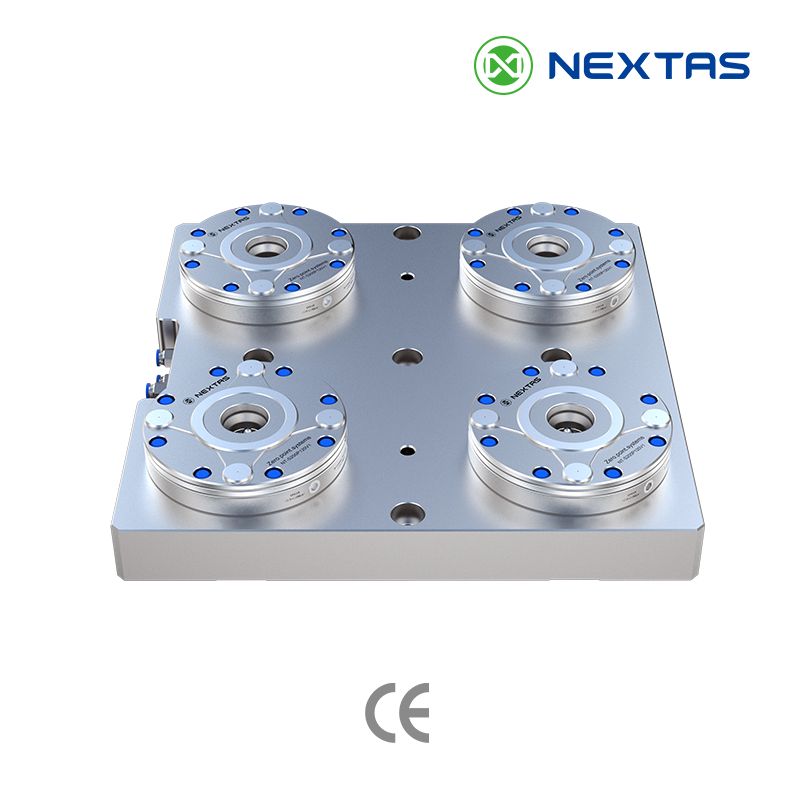
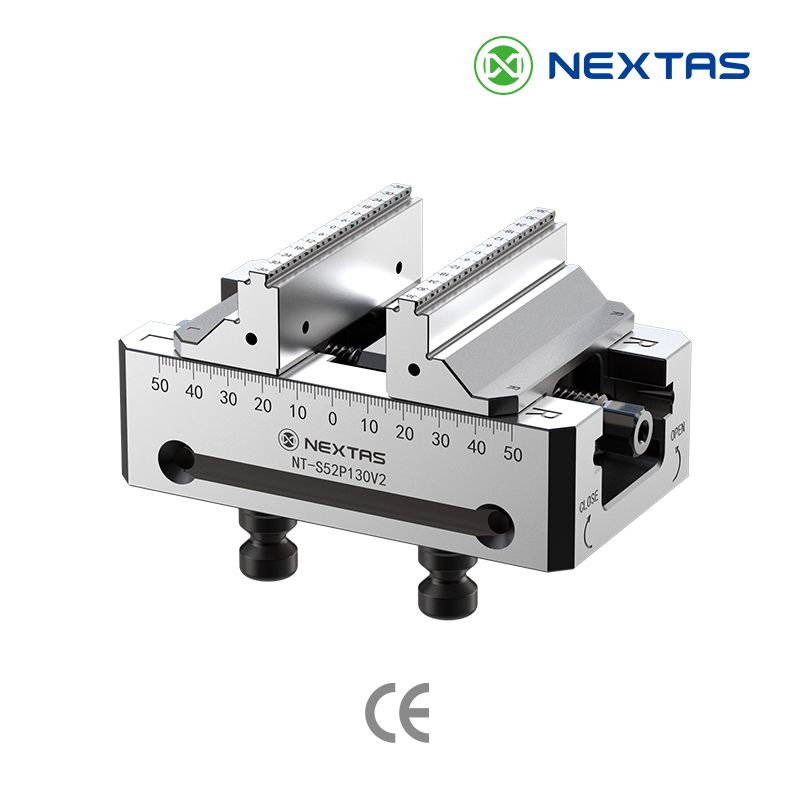
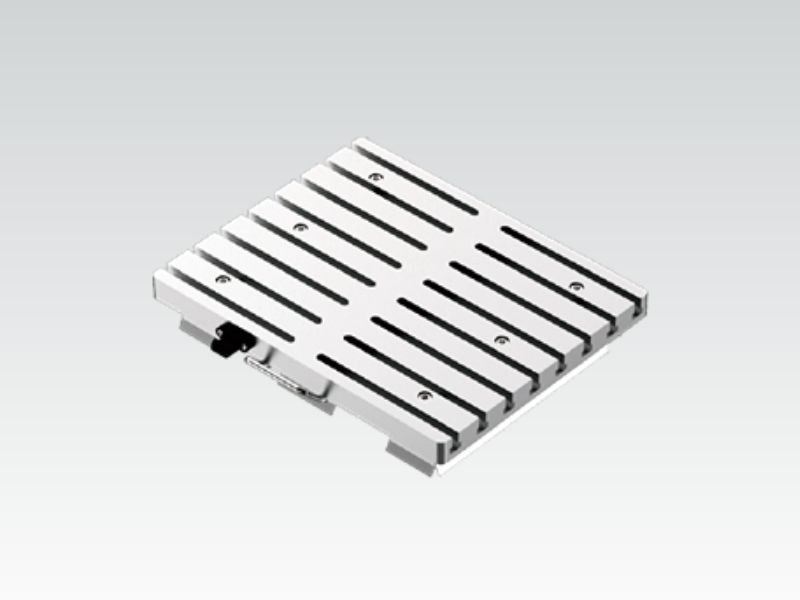
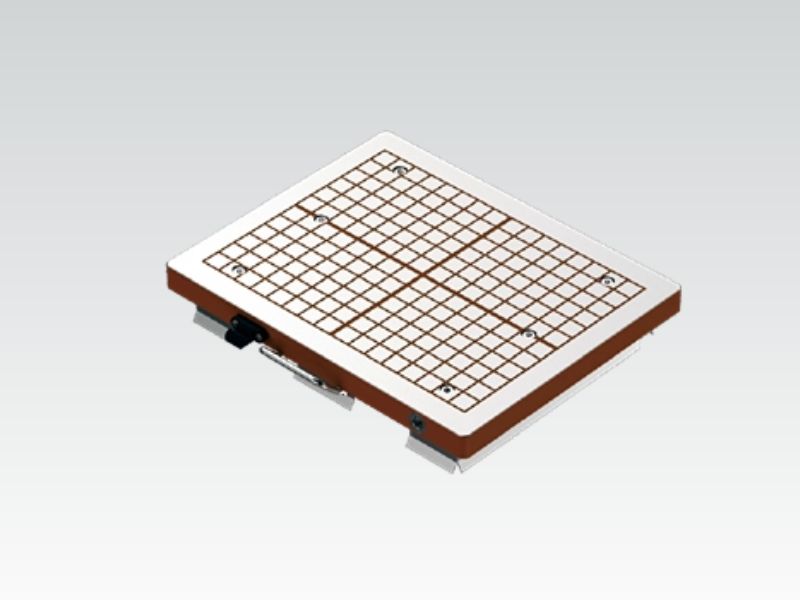
Talk to an engineerChoose the pallet top that matches your fixture strategy—T-slot pallets for flexible clamping, magnetic pallets for fast loading of flat parts, aluminum pallets for lightweight handling, and zero-point pallets for repeatable quick change workholding. Standardizing pallet plates helps speed up CNC setups and support pallet pool workflows.

Material: Aluminium Alloy
Size: Adaptable to machine stroke
Material: Martensitic Stainless Steel
Size: Adaptable to machine stroke
Material: Martensitic Stainless Steel
Size: Adaptable to machine stroke

With Zero Point Positioner
Material: Martensitic Stainless Steel
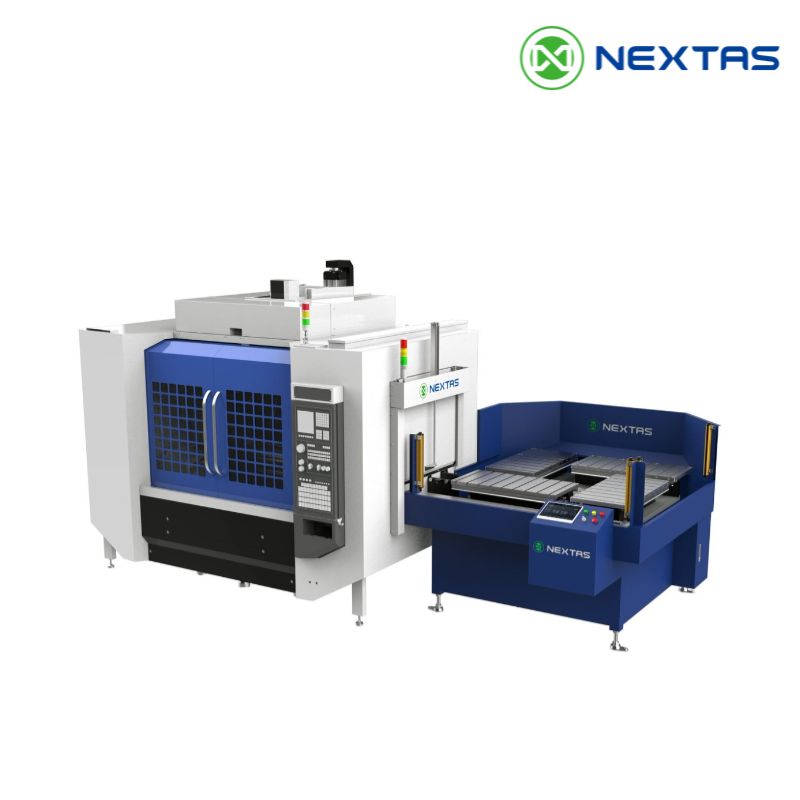
The manual pallet changer is a practical way to reduce setup time on a vertical machining center (VMC). Operators can clamp a fixture pallet offline and perform a quick pallet swap, making it ideal for frequent part changes, prototypes, and short-run CNC machining.
Flexible dual-station loading
Flexible dual-station design supports front or side-mounted loading, enabling high-mix, low-volume production.
Quick Loading & Processing
Prepare and clamp the next fixture outside the machine; confirm the loaded exchange and verification time for the selected setup.
Higher spindle utilization
Offline loading and a fast pallet swap cut the dead time between jobs, so more of each shift is spent cutting.
Safe & Labor-Saving
External clamping allows quick, effortless positioning via simple operation, reducing labor intensity.
A 29-second demonstration of the NEXTAS manual pallet exchange mechanism and the off-machine setup workflow; it does not substantiate a specific cycle-time or output claim.
| Control System | Manual push control |
|---|---|
| Compatible Systems | Machine/controller interface to be confirmed for the selected model, I/O and safety design. |
| Delivery Load | 100 Kg |
| Seating confirmation | Air-tightness monitoring |
| Load verification | Confirm pallet, fixture, part mass and centre of gravity for the selected machine; positioning-base lifting capacity is not transport payload. |
| Specification | V4 Positioning Datum |
| Positioning datum repeatability | < 0.005 mm |
| Clamping Force | 60,000 N |
| Max Lifting Load | 600 Kg |
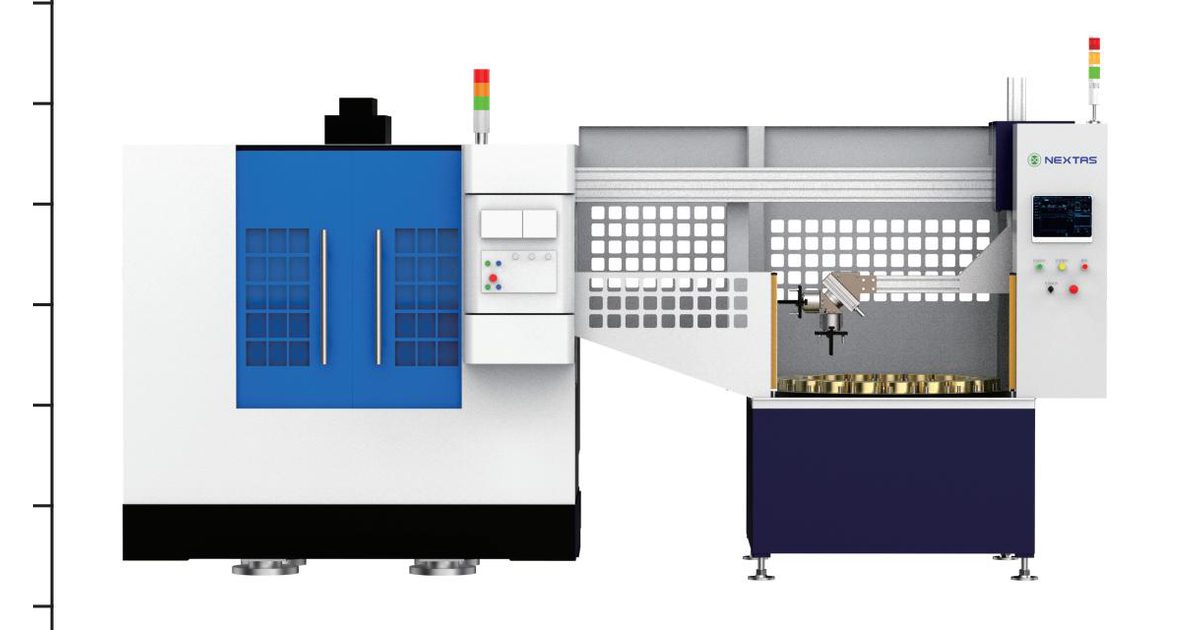
A CNC automatic pallet changer (APC) automates the pallet exchange cycle and uses process signals to confirm seating and clamping before machining. Spindle uptime and unattended operation depend on the complete cell, including controller integration, safeguarding and fault recovery.
A 52-second overview of the NEXTAS automatic pallet changer sequence and cell layout; final interfaces, interlocks, payload, and timing require project-specific engineering review.
Heavy-duty external clamping
High-strength rigid bracket structure supporting custom heavy-load configurations. Compact footprint with integrated safety protection.
Micron-Level Precision
The catalogue lists <0.005 mm repeat positioning accuracy for the V4, V6 and V8 datum bases. Loaded system and machining results require project acceptance.
Broad VMC Compatibility
Front or side exchange and pallet size are selected around the machine envelope. Confirm mounting, controller signals and guarding for the exact VMC.
Smart Integrated Control
The catalogue lists MES/SCADA and traceability expansion. Confirm the licensed scope, data map, machine signals and complete-cell acceptance before unattended operation.
| Control System | NEXTAS |
|---|---|
| Compatibility | Machine/controller interface to be confirmed for the selected model, I/O and safety design. |
| Communication | Protocol, data points and handshake to be confirmed for the selected CNC/PLC interface. |
| System Features | Dual-station, product editing, output monitoring, capacity statistics |
| Delivery Speed | 300 mm/s |
| Transport payload by layout | 200 kg front-loading; 350 kg side-loading or four-station; 1,500 kg gantry configuration. |
| V4 positioning base | 60,000 N clamping force · 600 kg lifting load · < 0.005 mm repeatability |
| V6 positioning base | 90,000 N clamping force · 900 kg lifting load · < 0.005 mm repeatability |
| V8 positioning base | 120,000 N clamping force · 2,000 kg lifting load · < 0.005 mm repeatability |
From multi-fixture job shops to automated production cells, pallet changer systems help keep the machine cutting. Common applications include milling families of parts on dedicated fixture pallets, running multiple SKUs overnight, and standardizing setups across machines with repeatable pallet references.

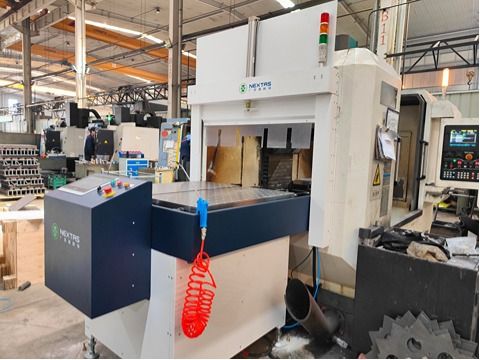

Planning an APC for a pallet pool, robot-tended cell, or unattended machining line? Use the guide below to size capacity, define control I/O and safety interlocks, and estimate cycle-time impact—so your pallet changer stays repeatable and integration is low-risk.
Define pallet size, payload, and moment load early—especially for 5-axis fixtures—so swap accuracy and repeatability don’t drift over time.
A clean handshake (M-codes, I/O, and confirmations) prevents mis-loads and supports unattended pallet swaps.
Estimate spindle uptime gain with a simple before/after model. This helps justify an APC versus manual pallet swapping.
A simple maintenance routine keeps repeatability stable for long-run production (pallet pool / unattended machining).
Automatic and manual pallet changers decouple setup time from spindle time by letting you load the next job while the current one cuts. This guide helps you choose between manual and automatic configurations, size the pallet for your parts, and maintain reliable pallet exchange over years of production cycling.
Need help sizing a pallet, choosing between manual and automatic, or integrating with your robot cell?
Contact usUse this checklist to lock down requirements: pallet size, payload, repeatability, control signals, and safety interlocks. This speeds up quoting and reduces integration risk.
Tip: include your pallet count, changeover-time target, machine model, and whether robot loading is planned. We'll recommend manual or automatic exchange and confirm the right receiver layout.
For buyers ready to compare suppliers
A catalog request is useful for early research. If you are selecting a supplier, send the machine model, pallet size, maximum load, required changeover target and whether the cell needs robot or pallet-pool integration. That lets our engineers reply with a layout direction instead of a general brochure.
An APC automates pallet exchange at a CNC machine so the next fixture can be prepared off-machine. Unattended operation depends on material supply, tool life, guarding, interlocks, fault recovery and acceptance of the complete cell; pallet exchange alone does not establish those conditions.
Pallet size, payload, controller and exchange time depend on the selected layout. The catalogue lists 200 kg for front-loading, 350 kg for side-loading or four-station, and 1,500 kg for the gantry configuration. Confirm exchange time from the loaded pallet, travel, guarding, PLC handshake and machine interlocks during acceptance.
Controller, I/O, PLC, protocol, firmware, and handshake compatibility must be confirmed for the exact machine and project signal list. The website does not make a blanket compatibility claim for controller or CNC brands.
The catalogue shows light curtains, guarding and sensing on specific APC layouts. The project risk assessment must define the required protection, safe stop, energy isolation and fault recovery. Seating and clamping sensors provide process confirmations unless their safety function is specifically designed and validated; confirm the complete cell through FAT/SAT or equivalent acceptance.
An external loading station lets an operator prepare the next pallet while the machine processes the current job, subject to the approved guarding and work procedure. The actual reduction in stopped-spindle time depends on part mix, cycle time, pallet count and staffing and must be measured on the selected layout.
Integration starts with the site layout, mechanical mounting, controller signals and safety assessment. Confirm commissioning, acceptance tests, operator and maintenance training, and the required records in the project quotation; the scope varies with the machine and configuration.
APC return on investment must be modelled from the site baseline, part mix, batch size, shift pattern, available unattended hours, integration scope, and total implementation cost. Engineering can help build that model, but the website does not guarantee a payback period or spindle-utilization result.
Please contact us. After reviewing the exact machine model, interface, application, and confidentiality scope, engineering will confirm which 2D/3D files can be supplied for the project. STEP/IGES files and assembly drawings are configuration-dependent and are not guaranteed by the website.
Fast quote
Three fields are enough — our engineers reply after reviewing the request with pricing and configuration advice.