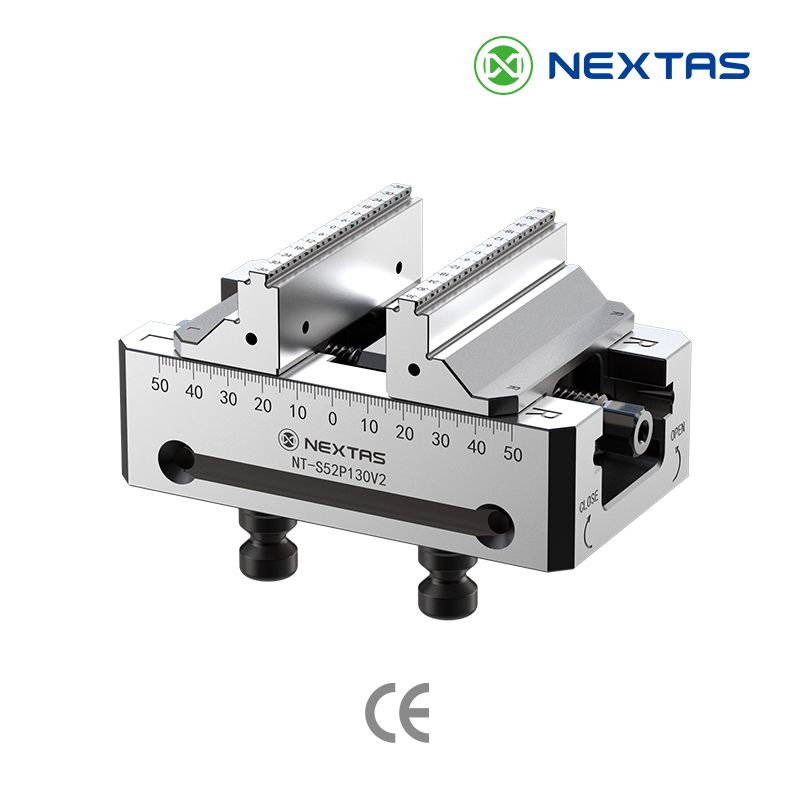
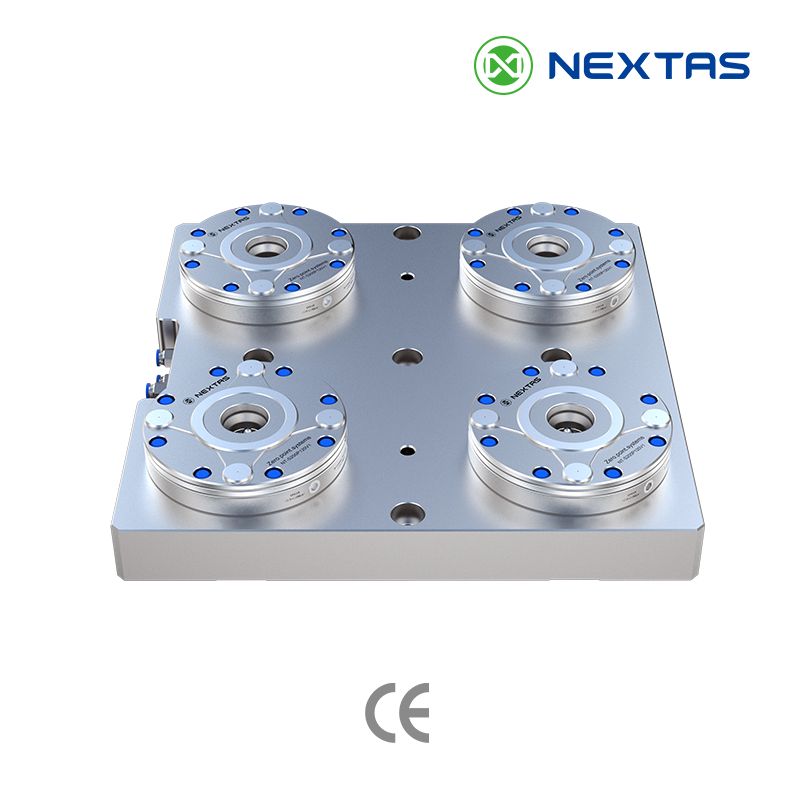
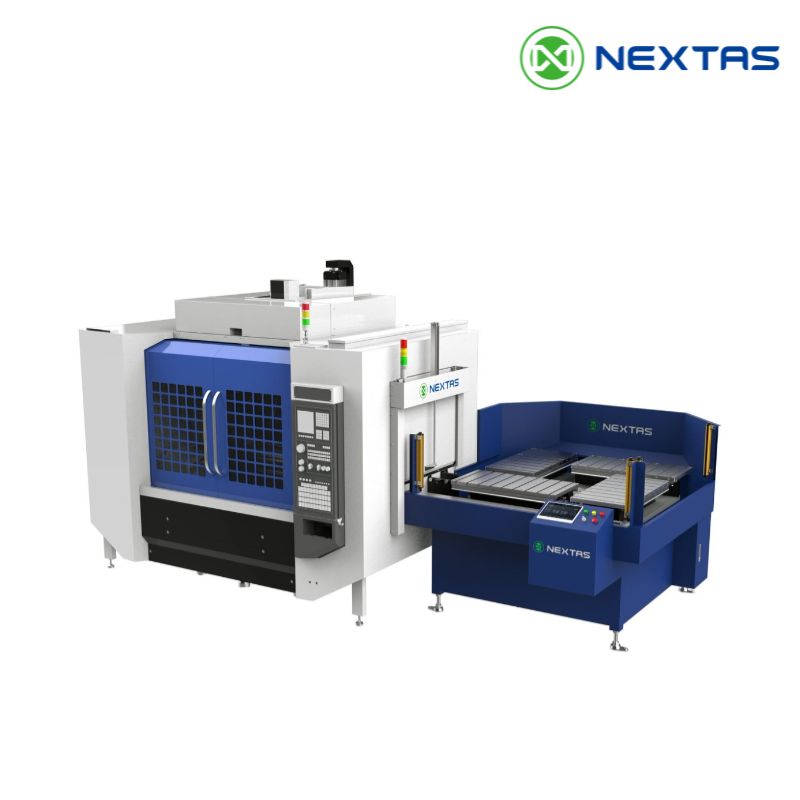
Higher clamp force
NT-S100P150RV1
Powerful pneumatic · >10,000 N
Use the R-Series when the project needs one reference family across multiple stations instead of isolated single-purpose fixtures. The range covers powerful pneumatic, standard pneumatic, side-vertical, right-angle, manual, and extension variants, so selection starts with workflow and air-routing logic rather than a single model code.
Where the E-Series is a tight ITS-based toolkit for the electrode-prep and EDM chain, the R-Series is the broader System 3R–compatible family covering CNC milling, turning subplates, presetting, and CMM transfer. Pick the R-Series when one datum logic must span more than just the EDM loop.
Best fit
A strong route for shops that want the same reference logic shared between CNC, EDM, presetting, inspection, and later automation upgrades.
Selection prep
The fastest qualification usually comes from deciding pneumatic vs manual, top vs side air access, and whether right-angle or extension geometry is needed.

Choose by three constraints first: available air, access direction, and the clamp-force class the process needs. Then confirm the complete chuck, spigot, plate, and machine interface with engineering.
Pneumatic production station or manual no-air setup?
Standard, side-vertical, right-angle, or extended reach?
General transfer or the higher-force pneumatic body?
Higher clamp force
Powerful pneumatic · >10,000 N
Side installation
Side vertical pneumatic · >6,000 N
General production
Standard pneumatic · >6,000 N
Multi-axis access
Right-angle pneumatic · >6,000 N
No-air station
Manual quick change · fixed indexing
Have these ready: workflow chain, air supply, mounting pattern, clearance, holder size, and changeover target.
Compatibility & integration
The chuck body is only one part of the result. Lock the matched spigot, rigid mounting base, utilities, clearance, and acceptance method for every station that will share the datum.
Confirm the R-Series chuck, matching spigot, positioning plate, table pattern, and stack height as one controlled assembly.
For pneumatic models, plan clean 0.5–0.8 MPa air and serviceable routing. Check enclosure and rotary-axis clearance.
Define re-clamp, seating, and station-to-station transfer checks against your own process tolerance before release.
Use the gated catalogue for the family overview; available CAD and drawings are confirmed for the selected configuration.
One datum family, multiple chuck formats, and cleaner transfer between machines and stations.
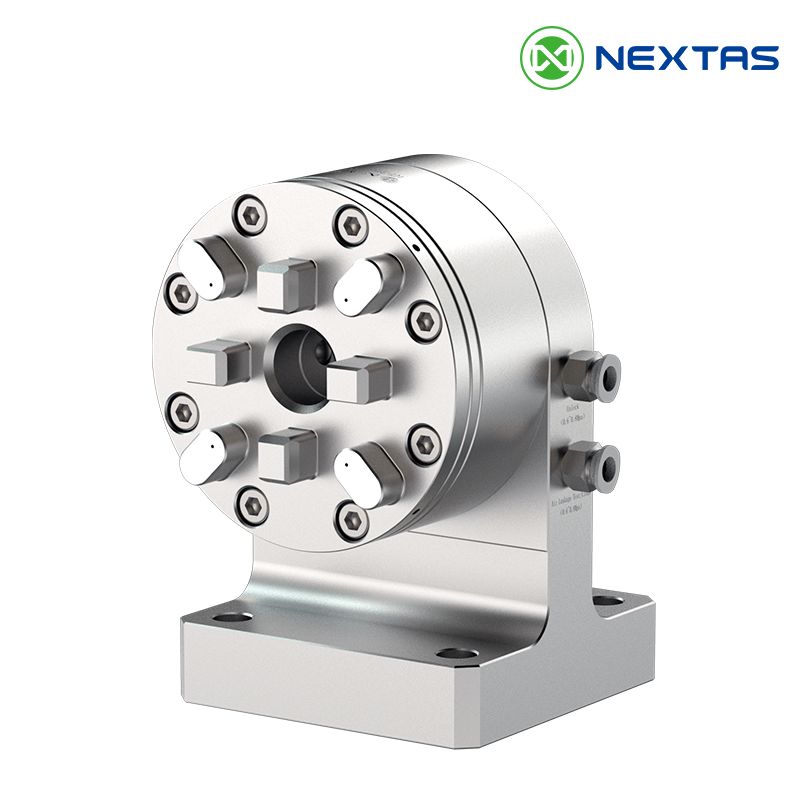
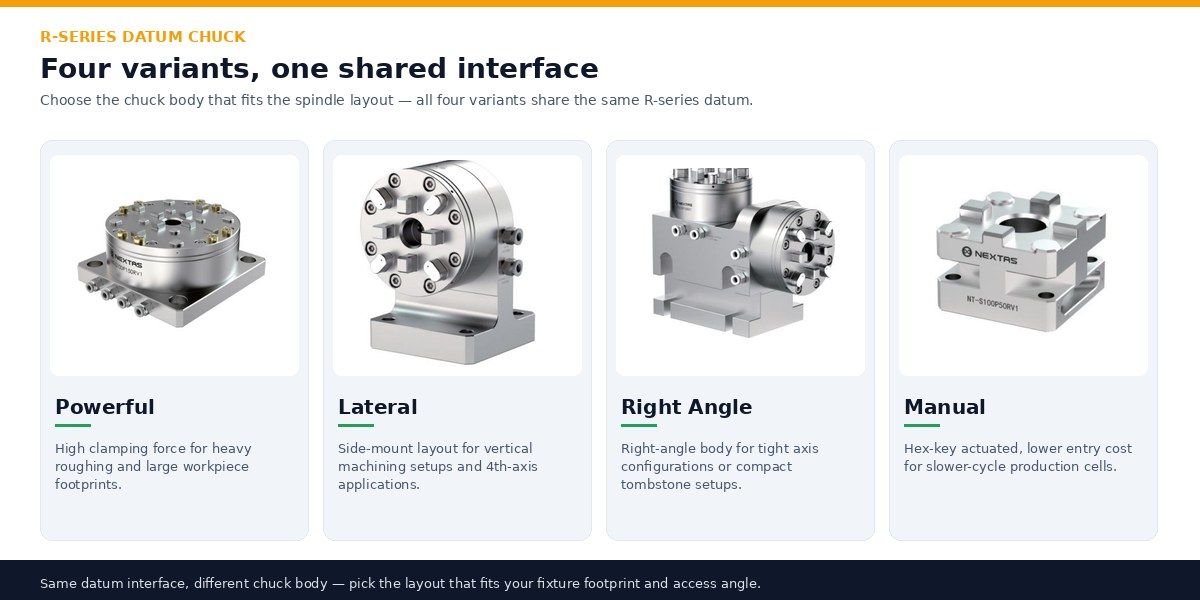
The R-Series is not just one chuck body. It is a datum chuck family that covers high-force pneumatic clamping, compact side vertical installation, right-angle accessibility, manual quick-change, and manual extension formats. That gives engineers a cleaner way to standardize one positioning logic while still matching different table layouts, rotary setups, offline presetting benches, and changeover routines.
For shops that want one reference language across CNC milling, EDM, and inspection, this matters more than a single product headline. You can use the same family logic while choosing the chuck body that best fits the process, the reach requirement, and whether air is available at the station.

The pneumatic variants are presented in the catalogue with mechanical self-locking, positioning datum self-cleaning, positioning airtightness testing, and inner-hole cleaning functions. Those features are meant to support repeatable seating and reliable operation in real production environments, especially when chucks are repeatedly loaded, unloaded, and cleaned around coolant and chips.
The manual chuck remains valuable when you need the same reference idea without pneumatic plumbing. It is suited to manual quick-change operations, and the extension versions help when more reach is needed around fixtures, towers, or machine obstructions.
R-SERIES VARIANTS
Select the exact chuck and mating hardware by drawing. Pneumatic models list NT-S100P57RV1 spigots; the manual NT-S100P56RV1 and its extensions list NT-S100P36RV1. A shared R-Series name does not establish interchangeability.
Model-specific product view
This 19-second close-up shows the chuck body, pneumatic connections and marked model identity. Use it for visual product review; confirm the complete datum stack, air routing, clamp-force class, repeatability and application fit from current model data and project acceptance checks.
Compare R-Series ModelsBelow is the core R-Series datum chuck range shown in the catalogue, including the corrected standard pneumatic and right-angle model assignments, plus the matching spigots and manual extension options used to complete the system.
| Model | Format | Repeatability / indexing | Clamping / function | Material | Matching spigot | Weight |
|---|---|---|---|---|---|---|
| NT-S100P150RV1 | Powerful pneumatic chuck | <0.003 mm | >10,000 N | Hardened stainless steel | NT-S100P57RV1 | 18 kg |
| NT-S100P100RV2 | Side vertical pneumatic chuck | <0.003 mm | >6,000 N | Hardened stainless steel | NT-S100P57RV1 | 6.3 kg |
| NT-S100P100RV1 | Standard pneumatic chuck | <0.003 mm | >6,000 N | Hardened stainless steel | NT-S100P57RV1 | 5 kg |
| NT-S100P100RV3 | Right-angle pneumatic chuck | <0.003 mm | >6,000 N | Hardened stainless steel | NT-S100P57RV1 | 18 kg |
| NT-S100P56RV1 | Manual chuck | 2–4 × 90° fixed indexing | Manual quick-change for no-air environments | Hardened stainless steel | NT-S100P36RV1 | 0.8 kg |
| Accessory / extension | Model | Key detail | Material | Weight | Use case |
|---|---|---|---|---|---|
| Pneumatic chuck spigot | NT-S100P57RV1 | Matched interface for pneumatic chuck family | Hardened stainless steel | 0.15 kg | Use with pneumatic R-Series chucks |
| Manual chuck spigot | NT-S100P36RV1 | Matched interface for manual chuck family | Hardened stainless steel | 0.15 kg | Use with manual chuck and manual extensions |
| Manual extension chuck | NT-S100P56RV2 | 6 in extension, 4,000 N | Hardened stainless steel | 2 kg | Add reach while staying inside the manual datum family |
| Manual extension chuck | NT-S100P56RV3 | 10 in extension, 4,000 N | Hardened stainless steel | 2.5 kg | More clearance for fixture towers and access-limited setups |
| R-series positioning plate | NT-S100P54RV1 | Integrated grinding process, high precision / high strength | Hardened stainless steel | 0.15 kg | Compact locating plate for smaller reference stacks |
| R-series positioning plate | NT-S100P75RV1 | Integrated grinding process, high precision / high strength | Hardened stainless steel | 0.25 kg | Mid-size positioning plate when more support area is needed |
| R-series positioning plate | NT-S100P142RV1 | Integrated grinding process, high precision / high strength | Hardened stainless steel | 1.1 kg | Larger positioning plate for heavier fixtures and 4-axis / 5-axis applications |
Pneumatic models are listed in the catalogue with 0.5–0.8 MPa pressure actuation, mechanical self-locking, positioning-datum self-cleaning, air-tightness testing, and inner-hole cleaning related functions. Confirm the final mounting stack, air routing, and spigot family before standardizing across multiple machines.
The R-Series family supports different layouts, not just different industries.
Keep one datum logic between milling, sinker EDM, and measurement stations.

Use pneumatic or manual variants to reduce rebuild time on short-run work.

Side vertical and right-angle formats help when fixture access and indexing orientation matter.
Manual and extension variants help build, transfer, and verify setups away from the spindle.
This workflow standardizes one reference family across milling, sinker EDM, and inspection. Pneumatic chucks stay on production stations while a manual chuck is used at the setup bench to prepare and verify holders before transfer.
The side vertical and right-angle variants are selected to keep the datum logic consistent while improving access around rotary fixtures, tombstones, or multi-face machining layouts.
In this workflow, operators build and check workholding offline with the manual chuck or extension version, then transfer the prepared setup to the machine-side datum base with less spindle downtime and fewer rebuild errors.
Commission with evidence
Use one documented datum build for every station. Validate the assembled chuck, spigot, plate, utilities, and handling method against the tolerance of your own process.
01 · Prepare
Record the model, spigot, plate, fasteners, air routing, and clean reference surfaces.
02 · Verify
Measure repeated seating and, where relevant, movement between machine, bench, and inspection.
03 · Release
Approve against internal tolerance, then document cleaning, inspection, and escalation rules.
Re-clamp repeat: record indicator readings after multiple controlled re-seats.
Interface seating: confirm no contamination, rocking, burrs, or incomplete contact.
Pneumatic operation: verify stable cycling with clean 0.5–0.8 MPa air where applicable.
Transfer check: confirm no unexpected datum shift between the intended stations.
Share the station layout and acceptance target for a configuration review.
Start the R-Series RFQThe family on this page covers powerful pneumatic, side vertical pneumatic, right-angle pneumatic, standard pneumatic, manual, and manual extension chuck formats, plus the matching spigots used to complete each interface.
NT-S100P150RV1, NT-S100P100RV2, NT-S100P100RV1, and NT-S100P100RV3 are pneumatic chuck formats. NT-S100P56RV1 is the manual chuck, while NT-S100P56RV2 and NT-S100P56RV3 are manual extension chuck options.
The pneumatic catalogue models are specified at less than 0.003 mm repeat positioning accuracy. In production, the real result still depends on the matched spigot, the mounting base, the cleanliness of the locating surfaces, and the way the stack is maintained.
Choose the side vertical chuck when compact four-side interchange or side-oriented installation is the main goal. Choose the right-angle chuck when fixture access, multi-axis orientation, or five-face accessibility matters more.
Yes. The manual chuck is intended for quick-change work in environments where air tubing is not available, which makes it useful for presetting, fixture preparation, inspection transfer, and flexible machine-side setups.
The pneumatic catalogue models use pressure actuation in the 0.5–0.8 MPa range. In real use, you should also plan for clean air, a rigid mounting base, and a simple routine for cleaning the locating surfaces and inner interfaces.
Yes, the page is positioned around System 3R-compatible referencing workflows. Before scaling across multiple stations, confirm the pallet, spigot, and mounting pattern you plan to standardize so interchangeability stays controlled.
Yes. We can help you match the chuck body, spigot type, extension length, mounting plate, and installation style to your machine table, fixture plate, presetting bench, or inspection workflow.
Fast quote
Three fields are enough — our engineers reply after reviewing the request with pricing and configuration advice.