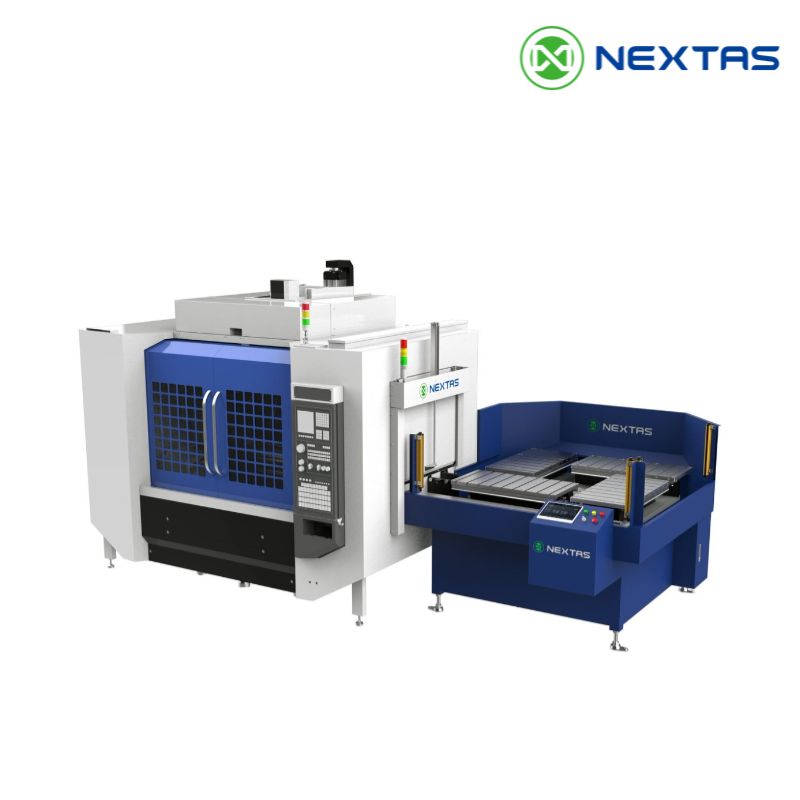
System 52
Small to mid-size parts; higher station density on a compact plate.
System 96
Mid to larger parts; more base area for stable docking on pallets.
What to verify
Machine envelope, pallet size, and how you load (manual/robot).
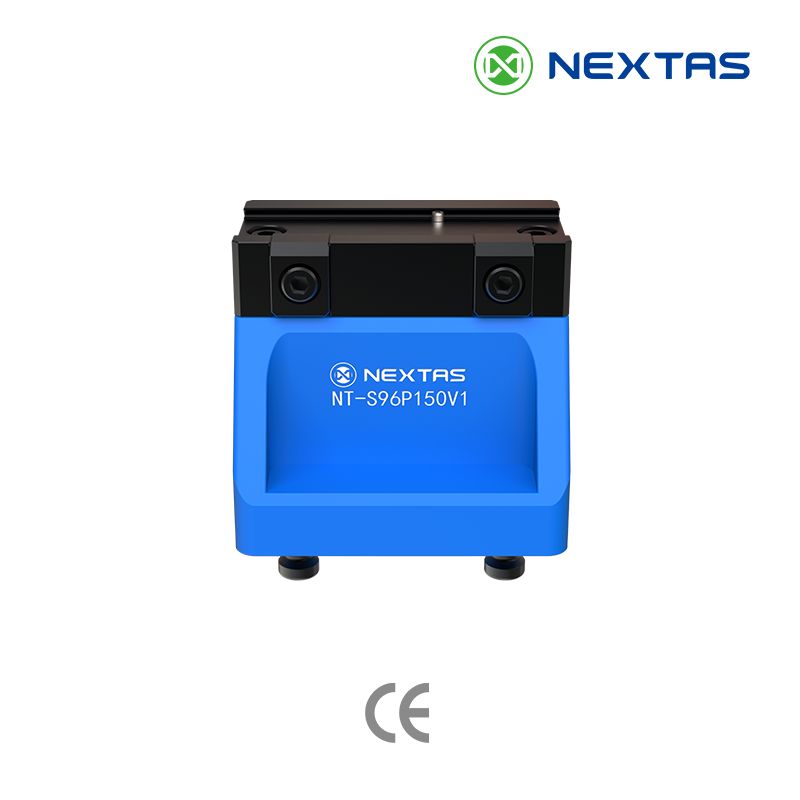
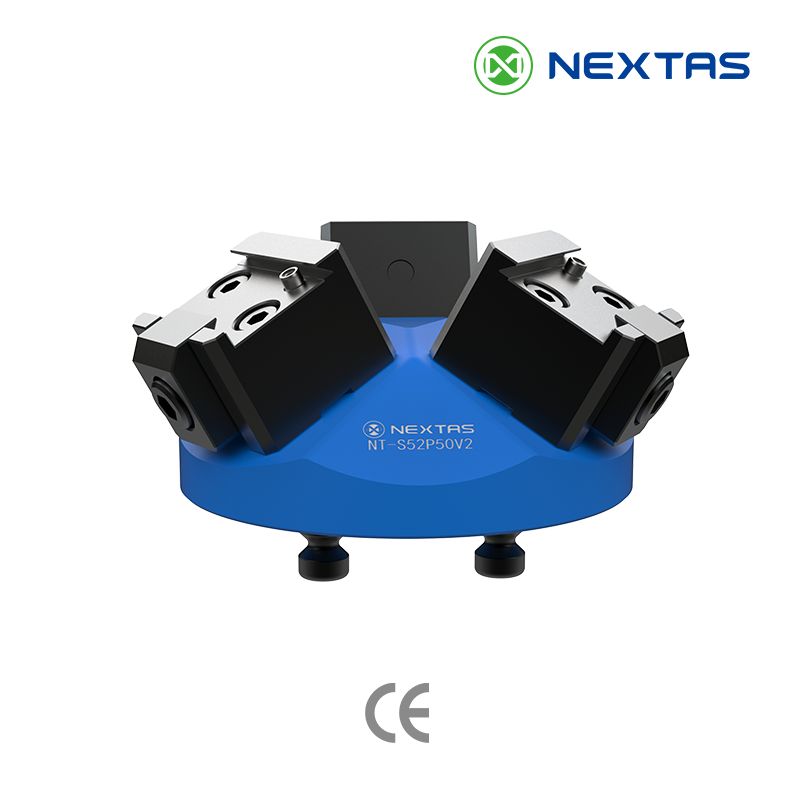
Single-station P50 and three-station P90 layouts for five-side machining with a compact 45° dovetail grip.
The NEXTAS dovetail fixture family is built for shops that want more five-side access without committing a large amount of sacrificial stock. Choose between the compact single-station P50 and the higher-throughput three-station P90, then match the fixture to a 52 mm or 96 mm quick-change foundation for repeat jobs, pallet setups, and automation handoff.
Best fit
A strong fit for smaller blanks, repeat parts, and five-side machining where the shop wants minimal stock waste, easier tool access, and fast reuse on quick-change bases.
Compare first
The faster selection path usually starts with 52 vs 96 system compatibility, pallet or zero-point usage, and whether the project needs single-part stiffness or higher fixture density.
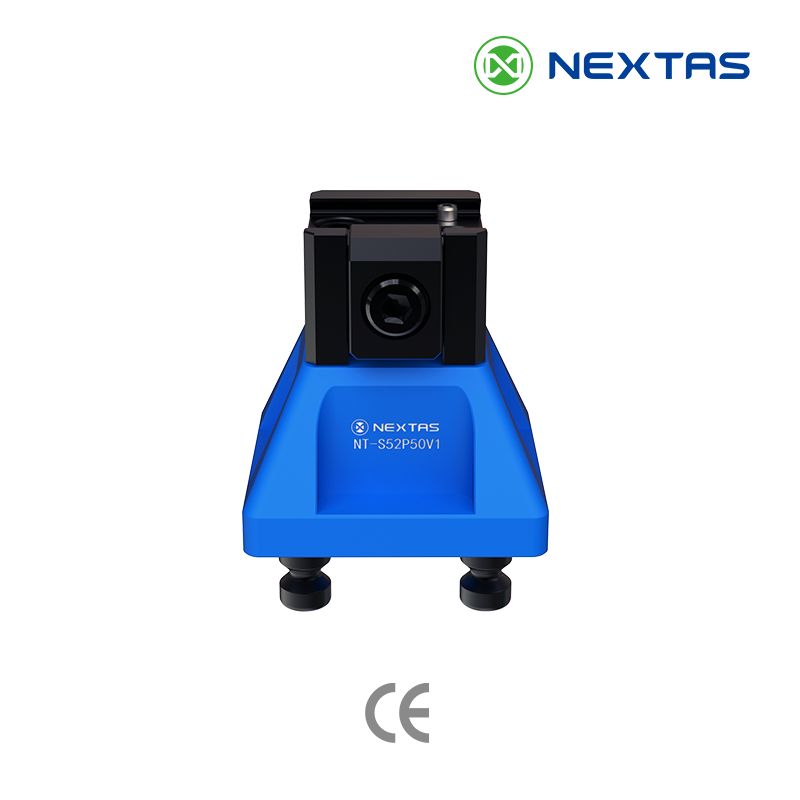
We match your 5-axis setup to the right 52 mm or 96 mm dovetail configuration, recommend jaw options, and confirm zero-point compatibility.
Provide the machine model, table dimensions, 5-axis travel envelope, and whether the dovetail fixture mounts directly or through an existing zero-point plate.
Share the part material, blank size, dovetail format preference (52 mm or 96 mm), number of sides to machine per setup, and surface finish requirements.
Specify repeatability tolerance, whether you need single- or triple-station density, target cycle time per part, and any robot or pallet-pool integration planned.
Choose the foundation first
Shortlist the interface family below, then use the detailed comparison and verification checks. Final fit depends on the selected model, approved interface drawing, machine envelope, payload, cutting load, and process validation.
Start with compact parts, limited machine space, or a dense multi-station layout.
Start here when larger parts or heavier cuts call for a wider supporting base.
For multi-fixture pallets, review the pneumatic zero-point plate and automatic pallet changer together with payload, machine clearance, and the validated exchange sequence.
The sheets below are the NT-S500P50 single-station and NT-S600P90 three-station pneumatic dovetail specification and blank-application tables. Confirm the 52 mm or 96 mm interface on the selected model drawing before integration.
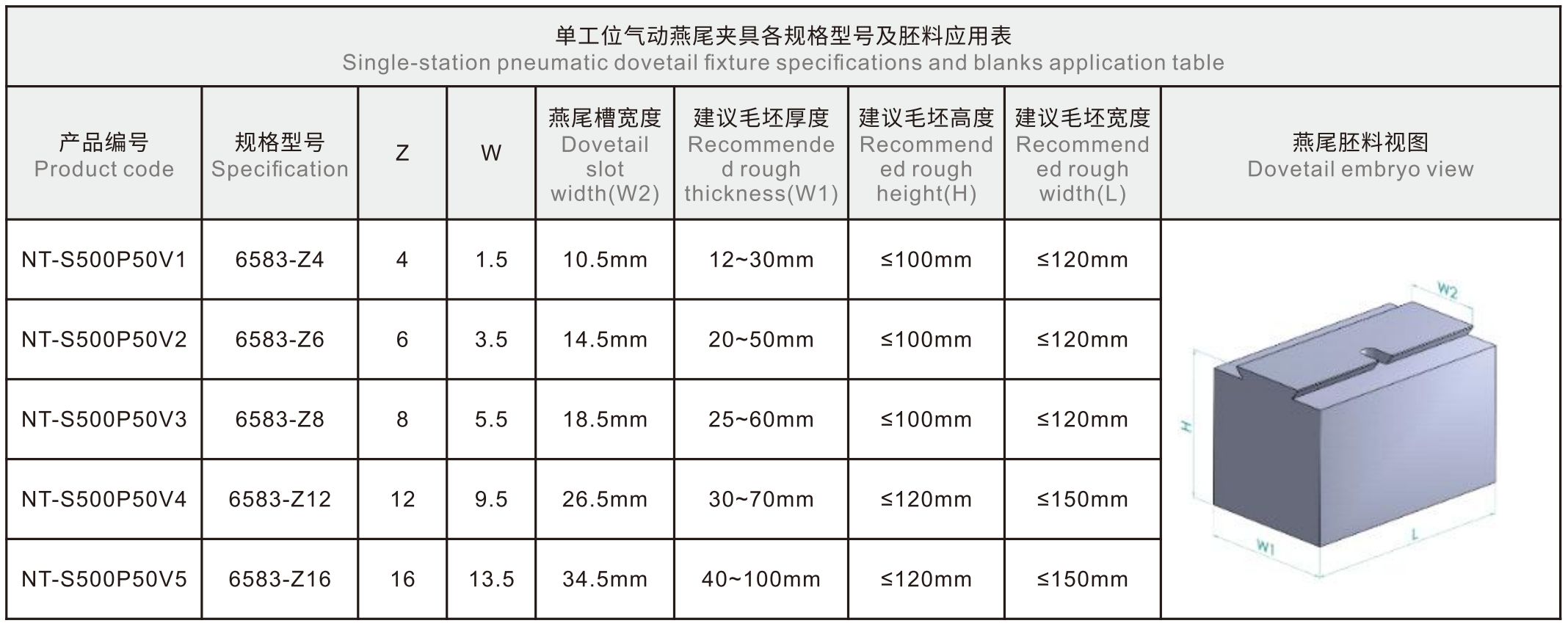
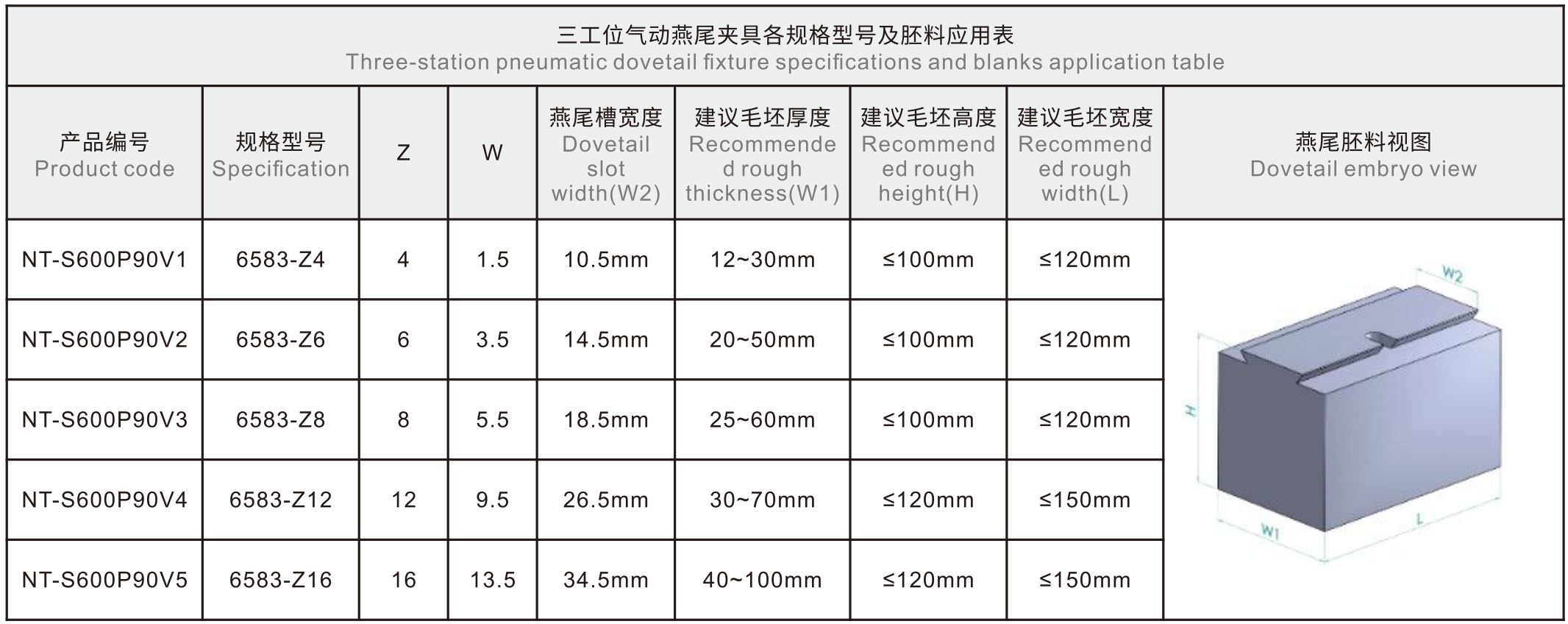
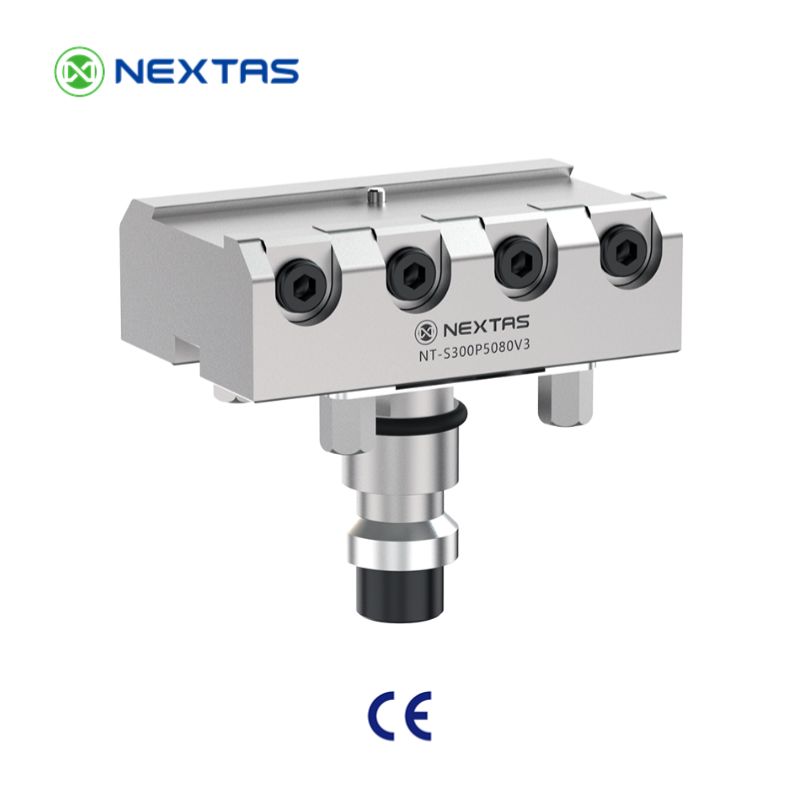
NEXTAS offers two pneumatic dovetail fixture families in the 2025 catalogue — the NT-S500P50 single-station series for compact parts and the NT-S600P90 three-station series for higher throughput. Both share a common 6583-Z dovetail-jaw platform, so operators can swap jaw widths across machines without re-learning the fixture.
| Product code | Dovetail jaw | Jaw width | Blank thickness | Blank length | Blank width |
|---|---|---|---|---|---|
| NT-S500P50 — Single-station pneumatic dovetail fixture · 4 kN clamping · <0.02 mm repeatability · hardened stainless steel · 6.5 kg | |||||
| NT-S500P50V1 | 6583-Z4 | 10.5 mm | 12–30 mm | ≤100 mm | ≤120 mm |
| NT-S500P50V2 | 6583-Z6 | 14.5 mm | 20–50 mm | ≤100 mm | ≤120 mm |
| NT-S500P50V3 | 6583-Z8 | 18.5 mm | 25–60 mm | ≤100 mm | ≤120 mm |
| NT-S500P50V4 | 6583-Z12 | 26.5 mm | 30–70 mm | ≤120 mm | ≤150 mm |
| NT-S500P50V5 | 6583-Z16 | 34.5 mm | 40–100 mm | ≤120 mm | ≤150 mm |
| NT-S600P90 — Three-station pneumatic dovetail fixture · >2.5 kN clamping · ≤30 kg load per station · hardened stainless steel · 6.5 kg | |||||
| NT-S600P90V1 | 6583-Z4 | 10.5 mm | 12–30 mm | ≤100 mm | ≤120 mm |
| NT-S600P90V2 | 6583-Z6 | 14.5 mm | 20–50 mm | ≤100 mm | ≤120 mm |
| NT-S600P90V3 | 6583-Z8 | 18.5 mm | 25–60 mm | ≤100 mm | ≤120 mm |
| NT-S600P90V4 | 6583-Z12 | 26.5 mm | 30–70 mm | ≤120 mm | ≤150 mm |
| NT-S600P90V5 | 6583-Z16 | 34.5 mm | 40–100 mm | ≤120 mm | ≤150 mm |
You machine one blank per cycle, need the smallest pneumatic dovetail footprint on a compact table, or want a dedicated single-station fixture for short runs and prototypes.
You want to run three identical or similar parts per cycle to maximize spindle uptime, reduce per-piece load/unload time, and raise throughput on a single machine table.
The 6583-Z4 through Z16 jaws cover 10.5 mm to 34.5 mm dovetail widths. Select the jaw size based on blank thickness and desired clamping envelope — Z4/Z6 for thin plates, Z12/Z16 for thicker stock up to 100 mm.
The dovetail fixture clamps the workpiece along a small 45° dovetail, leaving the top, front, back and two sides completely unobstructed for cutting. This design enables true five-side machining in a single setup and reduces the extra material normally required for gripping, saving both time and raw material costs.
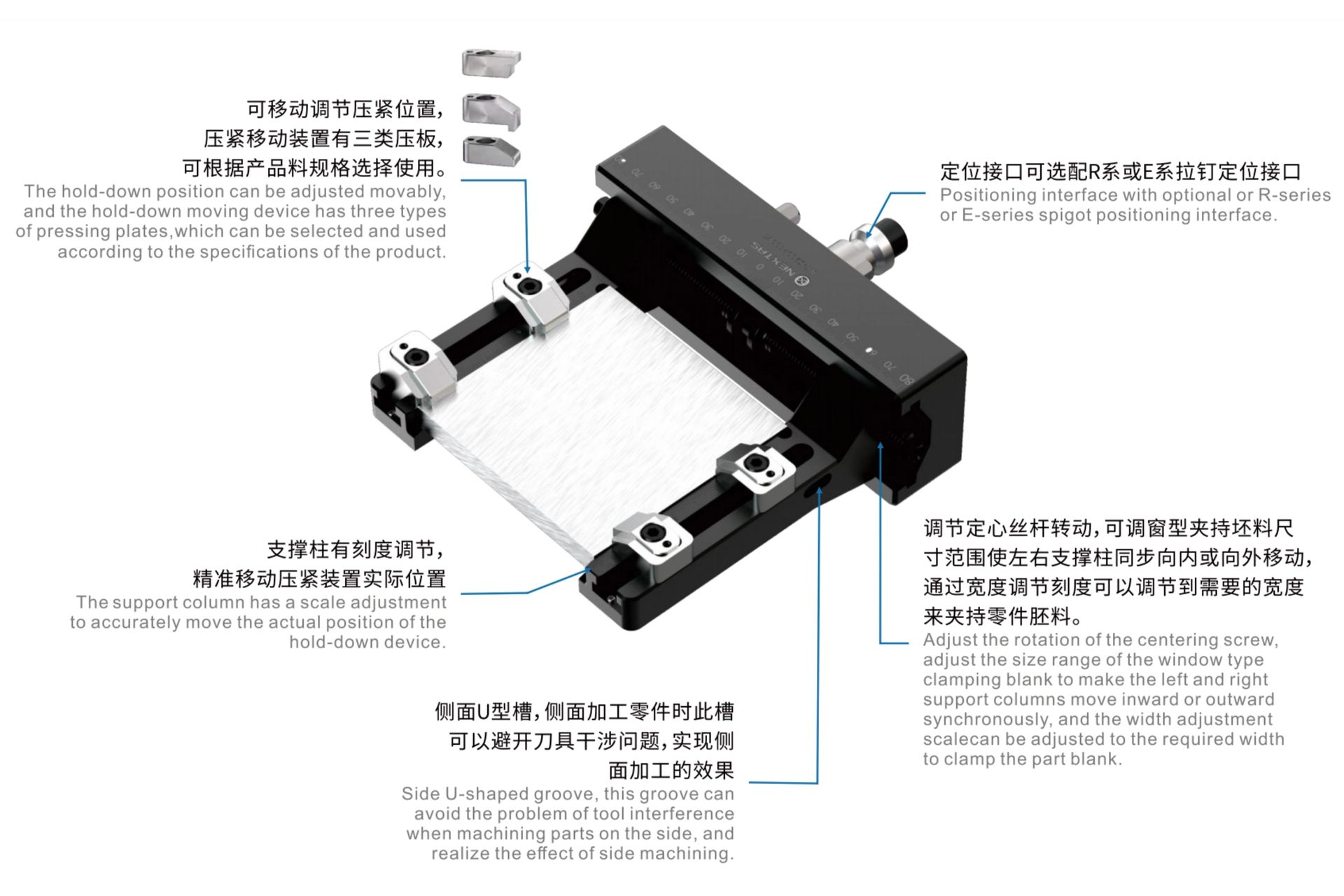
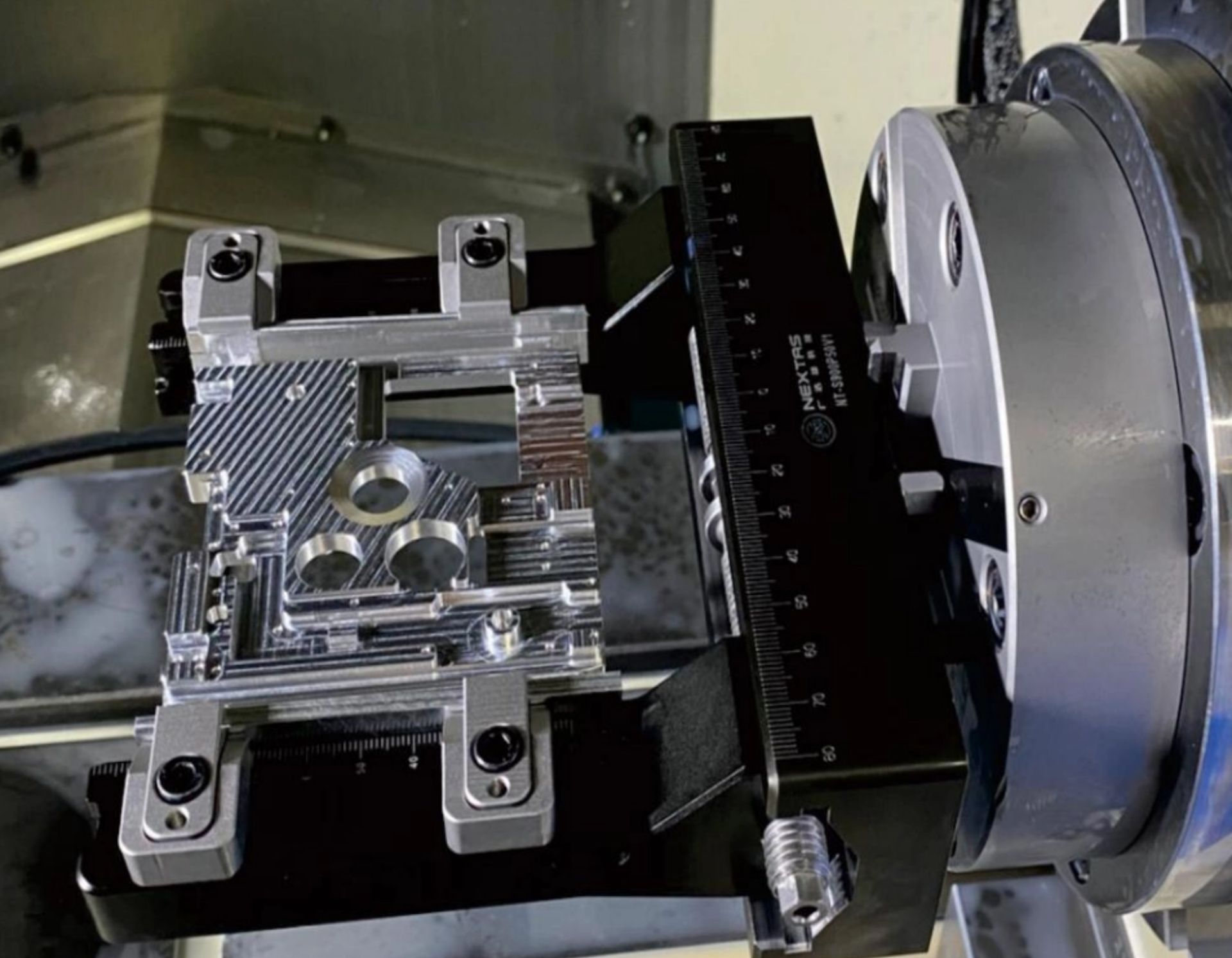
The dovetail fixtures use locating features and reference surfaces to control seating when parts are changed. Actual machining accuracy and finish still depend on the prepared dovetail, cutter load, overhang, setup stiffness, and the acceptance checks used on the machine.
The fixture can follow a 52 mm or 96 mm interface path. Compatibility with a zero-point plate, quick-change system, or automation pallet depends on the selected model and approved interface drawing; station density and changeover performance remain machine- and process-dependent.
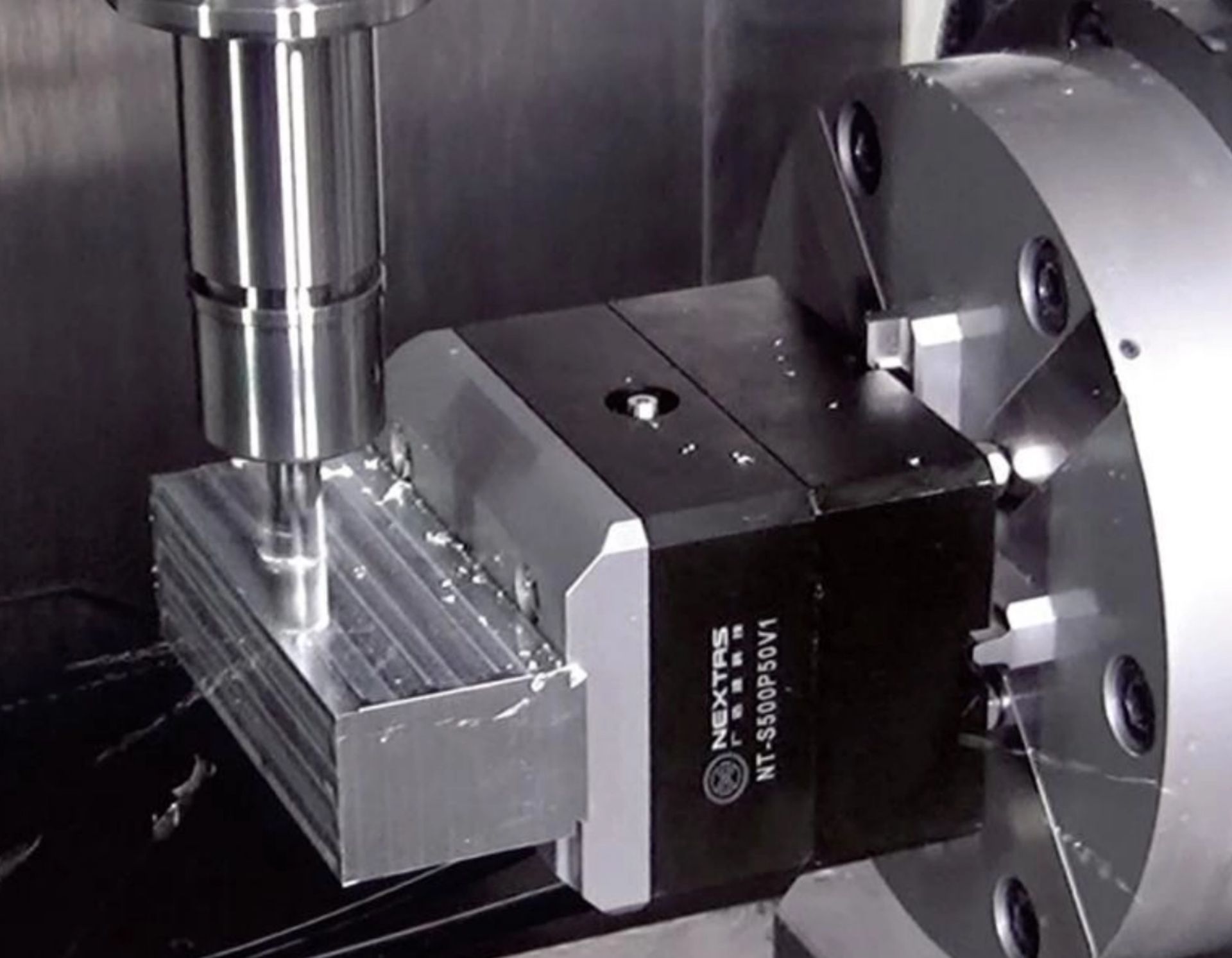
The dovetail fixture works with the pneumatic zero-point plate, enabling fast, precise clamping of thin-sheet products in industrial automation. A pre-milled dovetail can support controlled seating when its geometry, contact faces, clamp condition, and on-machine process are validated for the run.
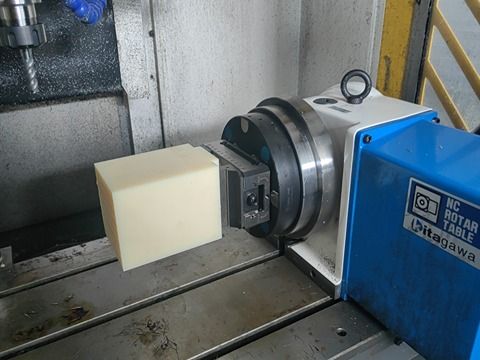
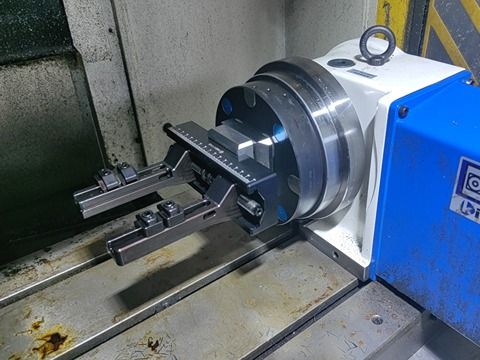
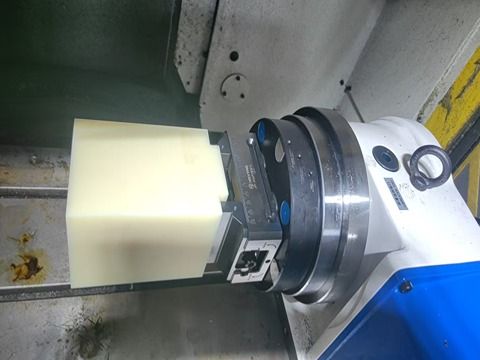
Ideal for titanium and aerospace parts requiring full-surface access. The dovetail fixture exposes five faces, allowing intricate features to be milled in one setup without repositioning.
A selected 52 / 96 mm interface can support job changeovers after the fixture, receiver, and pallet stack are verified against the approved drawings. Robotic pallet-changer use depends on payload, clearance, controls, and cell-level process validation.
Material suitability depends on the blank geometry, prepared dovetail, cutting load, support strategy, and validated clamp position. Verify distortion and stability on the target process before prototype or series production.
Plan dovetail workholding like a system: fixture size, zero-point base, pallet/automation strategy, and chip/coolant flow all affect real-world repeatability.
A clean, consistent 45° dovetail is the difference between “it holds” and “it runs production.” These steps help you get stable clamping and predictable cycle times.
Use a matching dovetail cutter and keep the depth consistent across batches. Deburr the profile so the fixture seats fully.
Clamp close to stiff regions. For thin or window-style parts, use support columns/pressing plates to avoid bending.
Run a short rough+finish program, then check key datums. If needed, add stops/locators to prevent axial slip.
Chip contamination is the #1 enemy of repeatability—clean the dovetail and the zero-point interface before every swap.
Share your part size, material, and machine model. We’ll propose a proven 45° dovetail workholding setup (fixture size, station layout, and zero-point stack) to match your tolerance and takt time.
Even a great 45° dovetail fixture can lose repeatability if chips, distortion, or excessive tool load creep in. Use this quick table to diagnose the most common issues in 5-axis dovetail workholding and zero-point setups.
If you’re running lights-out production, pair this fixture with a pneumatic zero-point plate and pallet changer so docking is consistent across stations.
Verify fit, rigidity, and automation-readiness before committing the clamping stack to production.
The 5-axis dovetail fixture grips raw stock with a 45-degree dovetail profile, exposing five sides for machining in a single setup. This cheatsheet covers dovetail depth and material selection, integration onto zero-point plates, and maintaining consistent grip force and surface finish over long production runs.
Need a dovetail cutter recommendation, clearance simulation, or fixture layout for your 5-axis machine?
Contact usFor optimal clamping, prepare a 45° dovetail on the raw stock with a depth of about 3–5 mm. This small engagement delivers strong pull-down holding while keeping five faces open for machining, reducing stock waste versus traditional vises.
The 52 and 96 designations distinguish mounting and size variants. Select for the part and planned layout; a wider base does not certify fit with another plate or pallet. Check the selected model drawing, interface, height, loads and tool access, and validate the setup on the intended machine.
Yes. Even on 3-axis/4-axis machines, dovetail workholding improves rigidity and tool access, and it speeds up changeovers—especially for high-mix production.
The fixtures are designed around a 45° dovetail. Use a matching dovetail cutter sized to your stock and leave a clean, burr-free profile. If you’re unsure, share your part drawing and material and we’ll recommend a proven dovetail spec.
A self-centering vise grips two parallel sides, which blocks tool access and needs taller stock. A dovetail fixture grips a small 45° profile at the base, creating pull-down clamping and leaving five faces unobstructed—ideal for true 5-side machining.
Keep overhang low, ensure the dovetail is consistent and deburred, and match fixture size to load (System 96 for heavier cuts). For high torque operations, add stops/locators where needed and validate the process with a trial cut and inspection.
Yes. For thin or window-style parts, use the appropriate pressing plates/support columns and place the clamp point close to the stiffest area of the part to minimize distortion.
Repeatability depends on the zero-point base and your dovetail consistency. With clean interfaces, consistent dovetail prep, and proper seating, many shops can swap parts quickly with minimal touch-off—always verify to your tolerance requirements.
Request available model data and selection guidance. Engineering confirms the information scope for the quoted project.
Engineering confirms which project-specific 2D or 3D files are available after reviewing the selected model, interface, intended use, and confidentiality scope. STEP, IGES, assembly drawings, or circuit documents are configuration-dependent and are not guaranteed by the website.
Fast quote
Three fields are enough — our engineers reply after reviewing the request with pricing and configuration advice.