Blog

FMS for Small-to-Medium Manufacturers (SMMs): Affordable Solutions to Scale Production

How a right-sized FMS — built on in-house ±0.005 mm fixtures — lets a small or mid-size shop automate 2–8 machines without a six-month integration project or a big-plant budget.

Published on November 11, 20256 min read
Table of contents
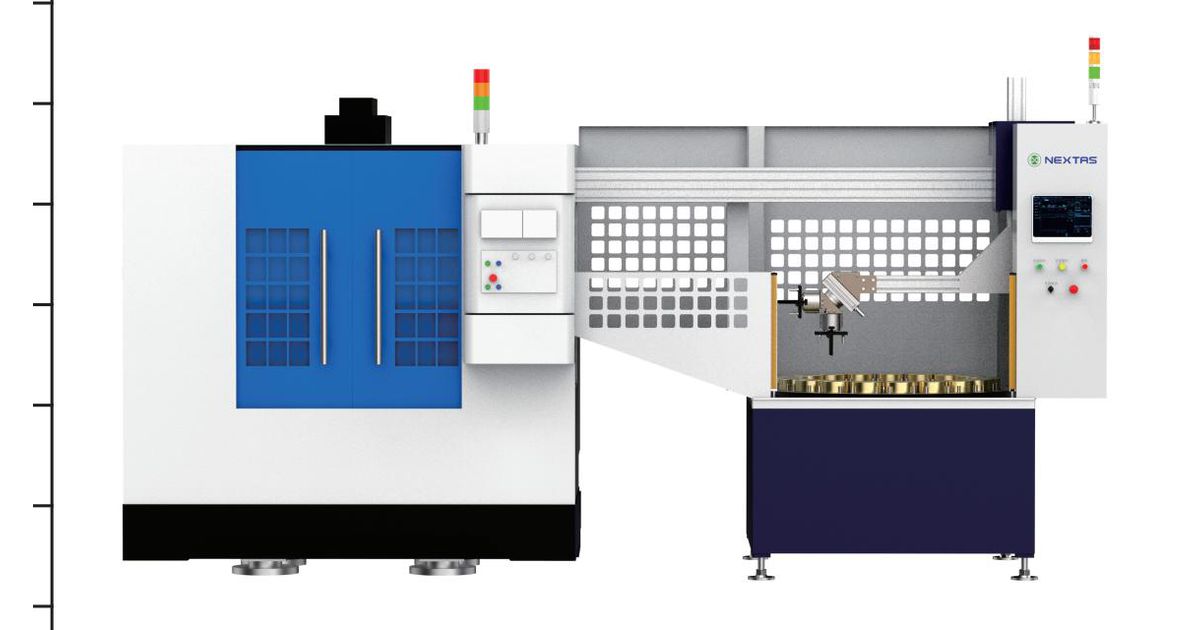
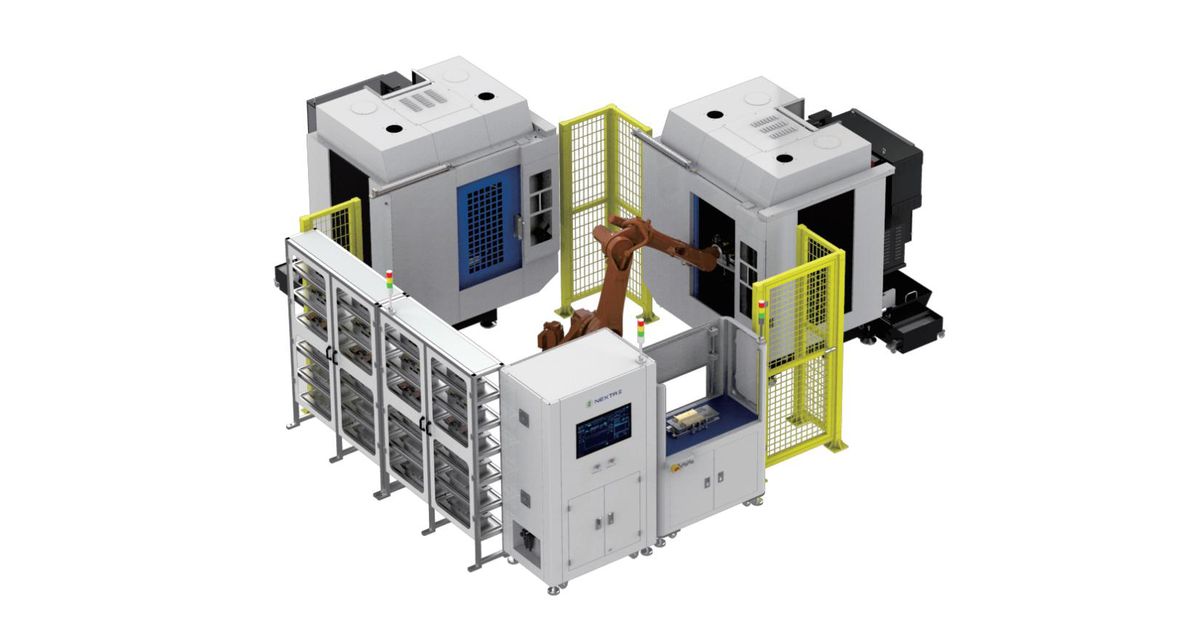
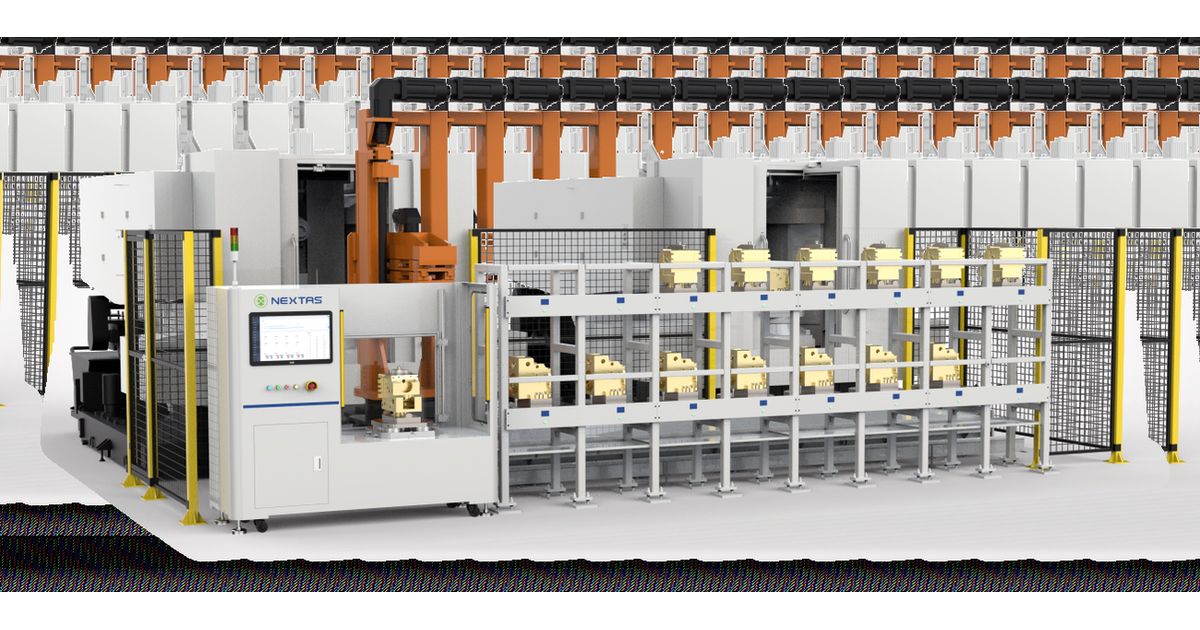
NEXTAS FMS System
Featured Product

NEXTAS FMS System

Flexible Manufacturing System integrating robots, pallet pools and zero-point workholding under one scheduling platform — built for SMM 24/7 production.

  • Robot + pallet pool + zero-point integration
  • Real-time scheduling & production data
  • Scales from 1 machine to a full cell

Related Solutions: Zero-Point Clamping Systems and High-Precision Vises

At a glance
Best fitSMM shops that need automation without a full-scale automotive budget.
Main gainShorter changeovers, lower scrap, and better spindle utilization.
Watch-outFixture precision and software visibility matter more than robot speed alone.

Flexible Manufacturing Systems have traditionally been priced and scoped for large plants. Most SMMs could not justify the upfront cost or the integration complexity. We built our FMS package specifically for that gap: shops running 2–8 machines that need automation they can afford and actually deploy without a six-month integration project. This article covers how the system works, what doing the fixtures and software in-house changes, and a real project we completed for Aowei.

The SMM Dilemma: Scalability Without the Budget

SMMs hit a ceiling when manual setups and fragmented tooling start limiting throughput. The problems usually look like this:

  • One operator per machine. Repetitive manual loading ties up labor and lets output drift part to part, and it gets worse as volume climbs.
  • Slow to switch parts. A rigid line is costly to re-tool between variants or custom orders, which hurts when lead times are tight.
  • Automation priced for big plants. Legacy FMS wants a large upfront spend on hardware, software, and outside integration before it pays anything back.
  • Too many vendors. Sourcing fixtures, software, and electrical from separate suppliers means gaps in communication, slipped schedules, and parts that do not talk to each other.

The common thread is that SMMs need a system that fits their budget and shop floor today, but does not box them in when volumes change. Our approach is to keep the fixtures, controls, and software under one roof so there is one team responsible for making the whole thing work.

What Makes the Nextas Tech FMS Fit an SMM

Our FMS is built around three things we do in-house rather than subcontracting: high-precision fixtures, electrical panel and wiring design, and the scheduling/control software. Keeping all three under one engineering team means faster commissioning and fewer integration headaches.

Proprietary High-Precision Fixtures

In an automated cell the fixture decides whether a part lands in the same spot every time, and that repeatability drives the scrap rate. Many FMS providers buy off-the-shelf or third-party fixtures and modify them to fit, which adds tolerance stack-up at exactly the interface you need to trust. We design and machine our own fixtures to each part instead, so the locating geometry is ours to control.

Designing and building the fixtures ourselves changes a few things on the shop floor:

  • Precision (±0.005mm) for Consistent Quality: Our fixtures are engineered to tolerances as tight as ±0.005mm, maintaining accurate positioning. This eliminates variability, reducing scrap rates and rework.
  • Works with FMS: Designed in tandem with our FMS, our fixtures connect directly with robotic arms and conveyors, reducing setup time by up to 40% compared to third-party solutions.
  • Customization for Niche Applications: We create custom fixtures for unique workpiece shapes, from complex aerospace parts to medical devices.
  • Durability and Cost Efficiency: Using high-grade materials like hardened steel, our fixtures last 2-3 times longer than standard alternatives, cutting out the middleman and passing savings to clients.
  • Easy Maintenance and Upgrades: Modular components make for easy part replacement, and we can upgrade existing fixtures as your production needs evolve.

In-House Electrical & Software

A great FMS is a cohesive system. Unlike providers who outsource, Nextas Tech has dedicated in-house teams for electrical engineering and software development, so the mechanical, electrical, and software sides all work together without finger-pointing between vendors.

Electrical Engineering: Reliability and Efficiency

Our engineers design the control systems and panels in-house and spec drives and components that cut power consumption by up to 25%. Because the panel is ours, when something faults at 2 a.m. the wiring and logic are documented by the people who built it, not three vendors away.

Software Development: Flexibility and Visibility

Our custom FMS software handles real-time production monitoring, quick changeovers that bring setup from hours down to minutes, and integration with your existing ERP/MES. You can start it on one machine and add cells later without rewriting the scheduling logic.

Before you invest in FMS, validate these three items

  1. Part-family overlap: Confirm which parts can share pallets, datums, and loading logic.
  2. Changeover loss: Measure the minutes currently lost to setup, probing, and manual re-clamping.
  3. Operator bottlenecks: Identify which manual steps create the most scrap or waiting time.

Case Study: Aowei

To understand the real-world impact, look at our partnership with Aowei, an automotive component manufacturer. Before Nextas Tech, Aowei faced a 15% scrap rate, 8-hour changeover times, and high labor costs.

Our Approach: Custom FMS with Proprietary Fixtures

We audited their process and designed a custom FMS solution.

Step 1: Proprietary Fixtures for Precision and Speed

We designed custom fixtures with ±0.005mm tolerances, integrated with robotic arms. These included modular designs and built-in sensors to verify positioning.

Step 2: In-House Electrical Control System

We designed an intuitive control panel and implemented energy-efficient systems, reducing Aowei’s power consumption by 22%.

Step 3: Custom Software for Visibility and Flexibility

Our software provided a real-time dashboard and pre-programmed settings for 12 variants, reducing changeover time from 8 hours to just 30 minutes.

Results: 40% Higher Productivity and 90% Reduction in Scrap Rate

Within three months, Aowei reported the following changes:

  • Scrap Rate Reduced by 90%: From 15% down to just 1.5%.
  • Productivity Increased by 40%: More components per shift with no added labor.
  • Labor Costs Reduced by 30%: Automated manual tasks, reducing the need for 6 operators.
  • Improved Customer Satisfaction: Secured two new major clients, increasing revenue by 25%.
  • Enhanced Visibility: Improved overall operational efficiency by 28%.

Why Nextas Tech FMS Is the Right Choice for Your SMM

Investing in FMS doesn't have to be risky. Nextas Tech's approach minimizes risk and maximizes return:

  • 1. Lower cost, no third-party markup. Building the fixtures, panels, and software in-house keeps roughly 30% of cost out of the quote.
  • 2. Built around your part mix. The fixtures and software workflows are designed for the parts you actually run, not adapted from a generic line.
  • 3. One team for support. Training, technical support, and maintenance come from the people who built the cell, so there is no vendor hand-off when something breaks.

Practical next step

Want to know whether FMS pays back in your shop?

Send us your part mix, current setup time, and target output per shift. We can help estimate where modular fixtures, zero-point standards, or pallet automation will create the fastest return.

Conclusion

The Aowei project showed that a modular FMS approach—starting with a small cell and expanding as demand justified it—can work for shops that do not have the budget or the floor space for a full-scale system on day one. If the economics look similar for your operation, send us your machine list and part mix and we can help scope the first phase.


Free Resource

Get the free workholding selection guide

Send your work email — we'll send the PDF selection guide + a 1-page workholding checklist within 1 business day. No spam, no obligation.

Reply within 1 business day · No spam · Data used for your enquiry only

Comparison, Selection & Cost Guide (Quick Tables)

Scaling output in a small or mid-size shop comes down to a few trade-offs. The tables below rank the workholding and automation options by changeover time, repeatability, automation readiness, and total cost.

Quick comparison: common workholding options

Zero-point system / zero-point clamping plate
Best for
Frequent part changes, multi-part families, modular setups
Strengths
Fast repeatable locating, scalable, automation-ready
Watch-outs
Needs clean interfaces; plan for chip control
Typical changeover
30–120 sec
Pneumatic vise
Best for
High mix + unattended runs where cycle time matters
Strengths
Stable clamping force, easy automation, consistent loading
Watch-outs
Air quality + pressure stability; safety interlocks
Typical changeover
1–3 min
Self-centering vise
Best for
Symmetric parts, 5-axis access, quick centering
Strengths
Centers fast, reduces setup errors, good for 5-axis
Watch-outs
Jaw travel limits; verify part envelope
Typical changeover
1–5 min
Hydraulic fixture
Best for
High-volume or high-clamp-force machining
Strengths
Strong & stable, great for tight tolerances
Watch-outs
Higher upfront cost; maintenance & leak checks
Typical changeover
5–20 min
Custom dedicated fixture / jig
Best for
One part, very stable process, repeat production
Strengths
Max stability, lowest unit cost at scale
Watch-outs
Slow to change; redesign needed for new parts
Typical changeover
10–60 min
Pallet changer
Best for
Parallel setup + spindle utilization gains
Strengths
Setup off-machine, better OEE, easier lights-out
Watch-outs
Needs process discipline + pallet standards
Typical changeover
Varies (2–10 min off-machine)
FMS / pallet pool (automation)
Best for
Many SKUs + long unattended windows
Strengths
Best throughput + scheduling flexibility
Watch-outs
Highest system complexity; needs planning
Typical changeover
N/A (system-level)

Fast selection: match your scenario

Target 6–24h unattended machining
Recommended setup
Automatic Pallet Changer + zero-point pallets
Notes
Add tool-life monitoring + “recover from stop” SOP.
1–10 pcs, frequent changeovers, < 0.02 mm targets
Recommended setup
Zero-point system + modular base
Notes
Build a “standardized base” and swap top tooling.
10–200 pcs, operator present, mixed geometries
Recommended setup
Self-centering vise or pneumatic vise + soft jaws
Notes
Add quick jaw change + pre-set stops.
200+ pcs, high clamp force, stable part family
Recommended setup
Hydraulic fixture or dedicated fixture
Notes
Optimize for cycle time + tool access.
Lights-out / unmanned shift (2–8+ hours)
Recommended setup
Pneumatic vise + pallet changer or FMS
Notes
Prioritize sensing, chip evacuation, and fail-safe clamping.

What affects price (and how to control it)

Integration + safety
Why it changes price
Sensors, interlocks, and commissioning drive total cost
How to reduce cost
Start small (2–4 pallets); expand after stable run.
Repeatability requirement (e.g., ≤0.01 mm)
Why it changes price
Tighter repeatability needs higher precision interfaces and QC
How to reduce cost
Standardize datums; use proven modules; avoid over-spec.
Changeover frequency
Why it changes price
More swaps reward quick-change systems (ROI grows fast)
How to reduce cost
Measure setup time; prioritize the biggest bottleneck.
Automation level (sensors, interlocks, palletization)
Why it changes price
Adds hardware + integration time
How to reduce cost
Start with one cell; reuse components across machines.
Workpiece size & material
Why it changes price
Large/heavy parts need stronger clamping + bigger bases
How to reduce cost
Use modular plates; right-size the fixture footprint.
Engineering time (custom vs modular)
Why it changes price
Custom design drives NRE cost
How to reduce cost
Prefer modular stacks; keep custom parts minimal.

Common mistakes (and quick fixes)

No recovery strategy

Symptom: Cell stops at night; lost hours

Fix: Define alarm flow, spare tools, and restart steps.

Inconsistent pallet standards

Symptom: Setup errors and crash risk

Fix: Lock one datum/pattern; label and audit pallets.

Skipping chip control on locating surfaces

Symptom: Repeatability drifts; “mystery” setup errors

Fix: Add air blast, covers, and a cleaning routine.

Over-clamping thin parts

Symptom: Warping, chatter, tolerance issues

Fix: Use proper jaw support + controlled clamping force.

No standard datum / pallet standard

Symptom: Every setup becomes a one-off

Fix: Define a shop standard (datums, pallet, bolt pattern).

Choosing by lowest price only

Symptom: Higher labor cost + downtime

Fix: Evaluate total cost: labor, scrap, changeover time.

Want a recommendation for your parts? Send us your machine model, material, and tolerance target — we’ll suggest a practical setup.

Frequently Asked Questions

What is the real cost-benefit of a custom FMS vs. just buying more standalone CNC machines?

This is a critical consideration for SMMs. Buying standalone CNCs increases capacity, but it doesn't solve core inefficiencies. You still require one operator per machine, face inconsistent manual loading, and suffer downtime during manual changeovers. A Nextas Tech FMS provides a holistic ROI:

1. Labor Multiplication: One operator can oversee an entire FMS cell (e.g., 3-5 machines) instead of just one.
2. 24/7 Production: The FMS can run "lights-out," completing entire production runs overnight or on weekends without supervision.
3. Drastic Downtime Reduction: Automated changeovers (like Aowei's 8 hours to 30 minutes) mean your machines spend more time cutting and less time idle.
4. Quality Consistency: Proprietary fixtures (±0.005mm) and robotic loading eliminate human error, cutting scrap rates from 15% to 1.5% as seen in our case study.

While the upfront cost might be higher than one CNC, the FMS delivers a much faster ROI by cutting labor costs, eliminating scrap, and maximizing machine utilization, leading to a lower cost-per-part.

How does a ±0.005mm proprietary fixture practically improve my production?

That ±0.005mm tolerance is the foundation of quality and efficiency. A standard, less precise fixture allows for micro-movements, vibration, and inconsistent positioning. This directly causes:

- Increased Scrap: Parts are not held in the *exact* same spot every time, leading to tolerance stacking and failures.
- Tool Wear: Vibration and chatter from poor workholding sharply reduce the life of expensive cutting tools.
- Poor Surface Finish: You cannot achieve a high-quality surface finish if the part is chattering, requiring secondary finishing operations.

Our ±0.005mm fixtures, made from hardened steel, provide absolute rigidity. This means every part is positioned identically, vibration is eliminated, tool life is extended, and you can achieve final-part quality in a single operation. It's the difference between "close enough" and "perfect every time."

My SMM has an existing ERP system. How complex is the software integration?

This is a major advantage of our in-house software team. We don't force you into a closed, proprietary box. Our FMS software is built on standard protocols and APIs (Application Programming Interfaces) specifically to communicate with existing business systems.

Our team handles the integration as part of the project. We work with your IT department or ERP vendor to map data fields. This allows, for example, a new order in your ERP to automatically schedule a production run in the FMS, and for the FMS to report back part counts, cycle times, and quality data directly to your inventory and management dashboards. This eliminates manual data entry and provides management with true, real-time visibility.

What is the typical installation and training timeline for an SMM?

While every project is custom, our "one-stop-shop" approach significantly shortens the timeline. A typical project timeline is:

1. Design & Audit (2-4 weeks): Our team audits your process, identifies bottlenecks, and designs the custom FMS, including fixture and software mockups.
2. Manufacturing (6-10 weeks): We manufacture your proprietary fixtures, build the control systems, and configure the software.
3. Installation & Integration (1-2 weeks): This is where we shine. Because our hardware and software are pre-integrated, on-site installation is rapid. We are not troubleshooting compatibility issues from three different vendors.
4. Training & Go-Live (1 week): We provide hands-on training for your operators on the control panels and for your managers on the monitoring dashboards.

From initial order to a fully-trained team running production, a typical SMM can be fully operational in 3-4 months, as seen with Aowei.

Keep exploring

Continue with closely matched guides on pallet flow, automation architecture and lights-out production planning.

Browse all articles →

Match the hardware

These product pages are the most direct next step if you are comparing automation cells, pallet flow and quick-change infrastructure.

Browse all products →

Planning an automation project?

Share your machine list, loading method, target output, and changeover constraints. We’ll help scope a practical automation path, from single-machine tending to pallet pools and FMS cells.

Discuss Your Automation Plan →