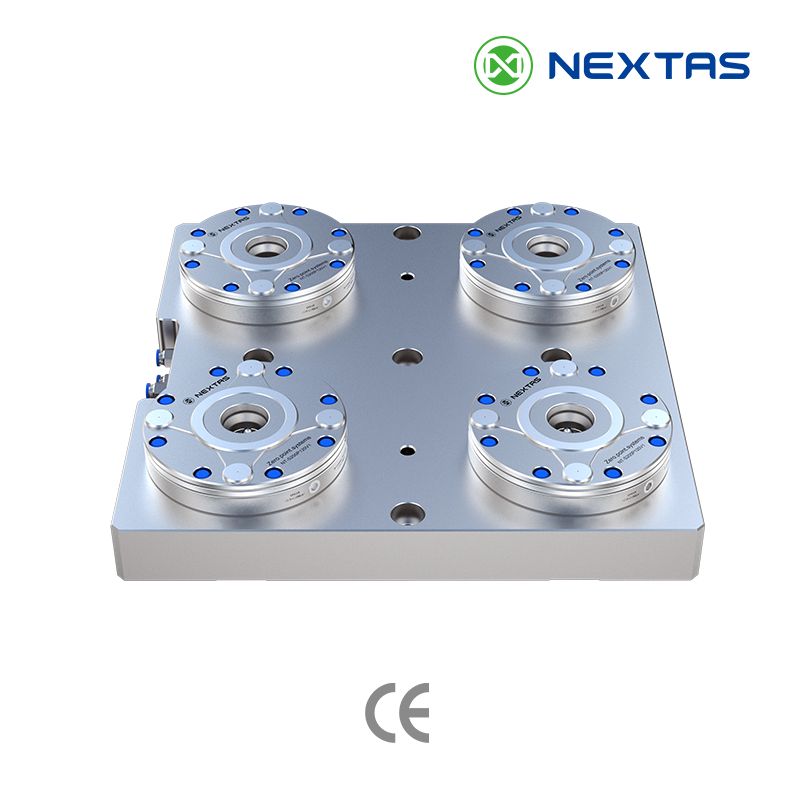
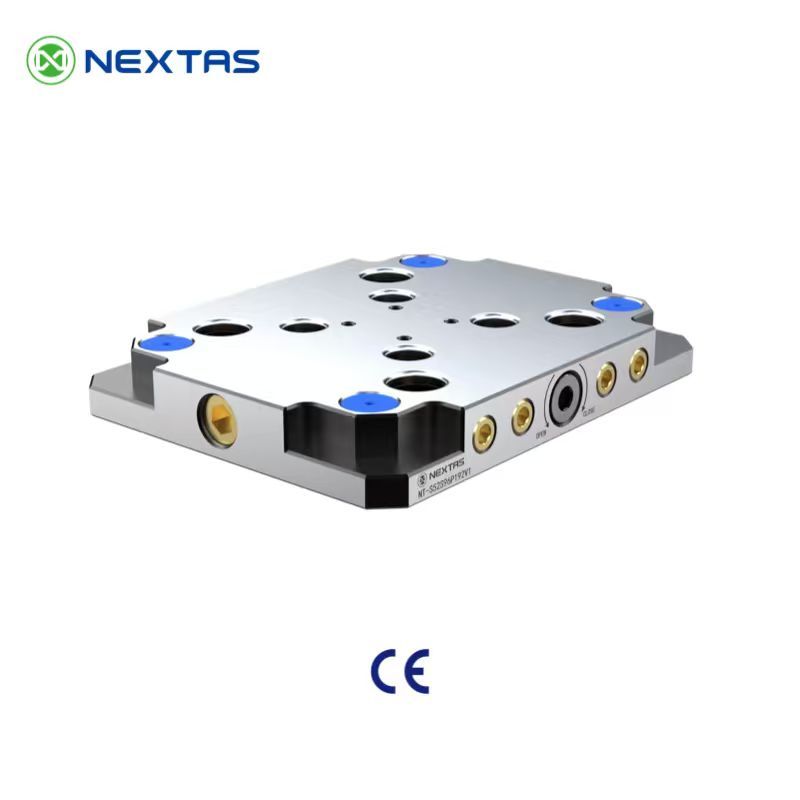
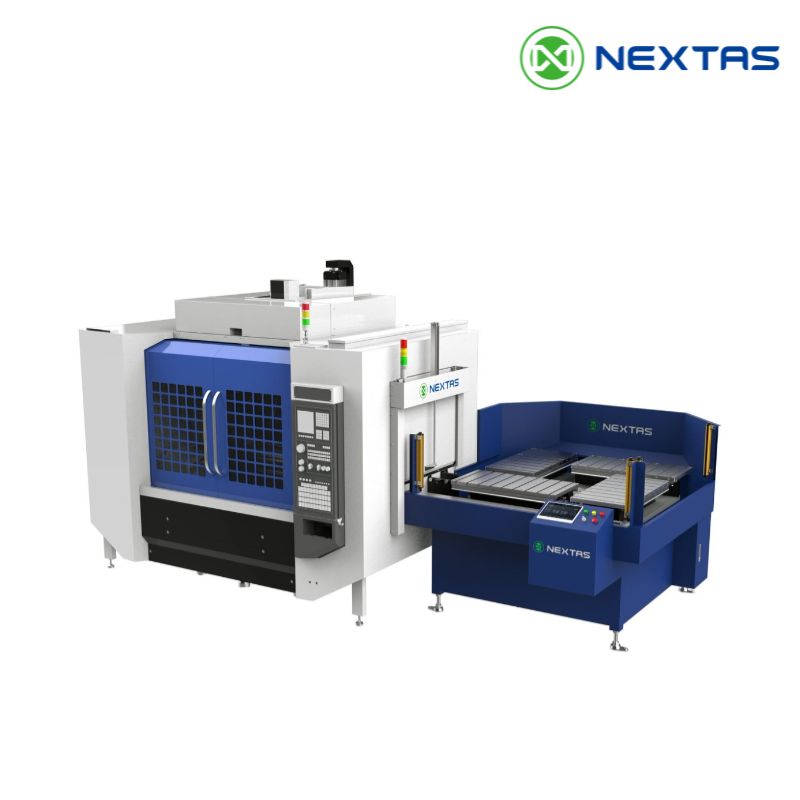
Choose BDS when space is tight
A compact machine table, fixture carrier, or robot end interface often benefits more from BDS than from a larger receiver format.
BDS A024 / B024 positioning datum for compact pallets, fixture carriers and automation handoff
BDS is built for compact pallets and fixture carriers that need a smaller datum footprint than a large zero-point receiver, while still delivering repeat transfer accuracy, four-side indexing and protection for positioning surfaces during handling.

BDS works best when you need a smaller datum footprint without giving up repeatability, pallet discipline, or automation-friendly handling.
A compact machine table, fixture carrier, or robot end interface often benefits more from BDS than from a larger receiver format.
It is a good fit for pallets that move between prep, machining, inspection, and compact automation cells with one reference logic.
If the main requirement is a bigger contact area for heavier roughing loads, a larger zero-point architecture may be the safer starting point.
Both families keep the same compact-datum logic, but the better choice usually comes down to carrier footprint, workpiece mass and how much support you want around the pallet.
You need the smallest practical datum footprint for compact pallets, lighter fixture carriers or tighter machine-table layouts.
You want more carrier support, a slightly larger datum body or extra confidence when pallet size and transferred mass increase.
The same pallet must move between setup, machining, inspection and robot transfer without changing the locating logic or carrier orientation.
Use BDS when the fixture, pallet or robot end-effector benefits from a smaller interface than a larger receiver family.
The catalogue highlights a center lifting structure that can protect the datum surface when mounting heavier workpieces.
Seal-ring protection and air-jet cleaning help reduce chip and coolant intrusion that would otherwise affect accuracy over time.
Spring and steel-ball locking with compressed-air unlocking supports repeatable automated clamp / unclamp cycles.
Available footprint, mounting pattern, and whether the datum is going on a pallet, fixture carrier, robot gripper, or machine table.
Part weight, fixture weight, expected cutting loads, repeatability target, and whether inspection transfer is included.
Tell us whether pickup is manual, robot-based, top loading, or side access, so we can avoid interference issues early.
Share whether you need matched pallets, anti-rotation logic, direction control, and future automation expansion on the same datum family.
Compare A024 and B024 as compact datum families for pallets, fixture carriers and robot handoff. The best match depends on available footprint, supported mass and how much pallet stiffness you need around the interface.
| Family | Product code | Type | Repeatability | Clamping force | Indexing | Material | Weight |
|---|---|---|---|---|---|---|---|
| BDS A024 | NT-S1100P120A | Positioning datum | <0.003 mm | 60,000 N | 4 × 90° | Hardened stainless steel | 24 kg |
| BDS A024 | NT-S1100P240A | Datum pallet | Uses datum indexing | — | 4 × 90° | Aluminum | 7.5 kg |
| BDS B024 | NT-S1100P160B | Positioning datum | <0.003 mm | 60,000 N | 4 × 90° | Hardened stainless steel | 29 kg |
| BDS B024 | NT-S1100P240B | Datum pallet | Uses datum indexing | — | 4 × 90° | Aluminum | 10 kg |
The main datum bodies use pneumatic unlocking at 0.5–0.8 MPa, supporting clean clamp / unclamp sequencing in automation cells.
The catalogue highlights sealing, anti-chip cleaning, and air-tightness checking to protect datum accuracy over repeated cycles.
A center lifting structure helps protect the datum face during loading and unloading of heavier pallets or workpieces.
Two compact datum bodies support different pallet layouts. Confirm the matched body, pallet, part numbers, indexing and interface drawing; a shared locking principle does not establish interchangeability.
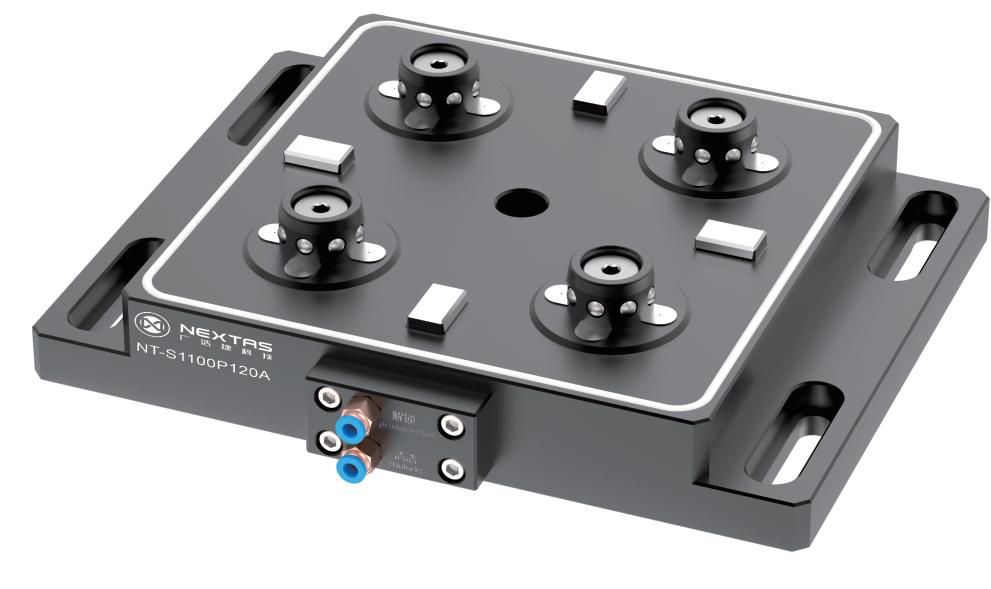
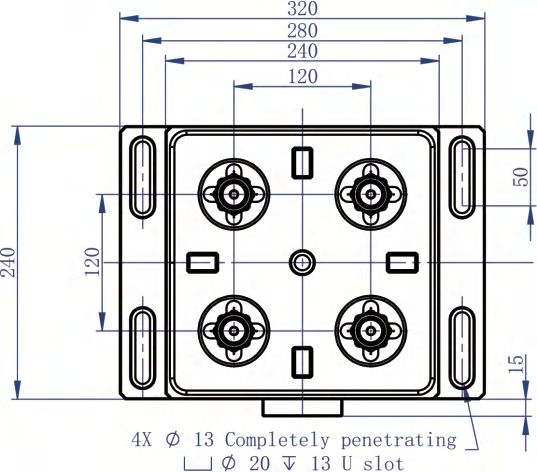
Smaller datum body for compact pallets, lighter fixture carriers and tighter machine-table layouts.
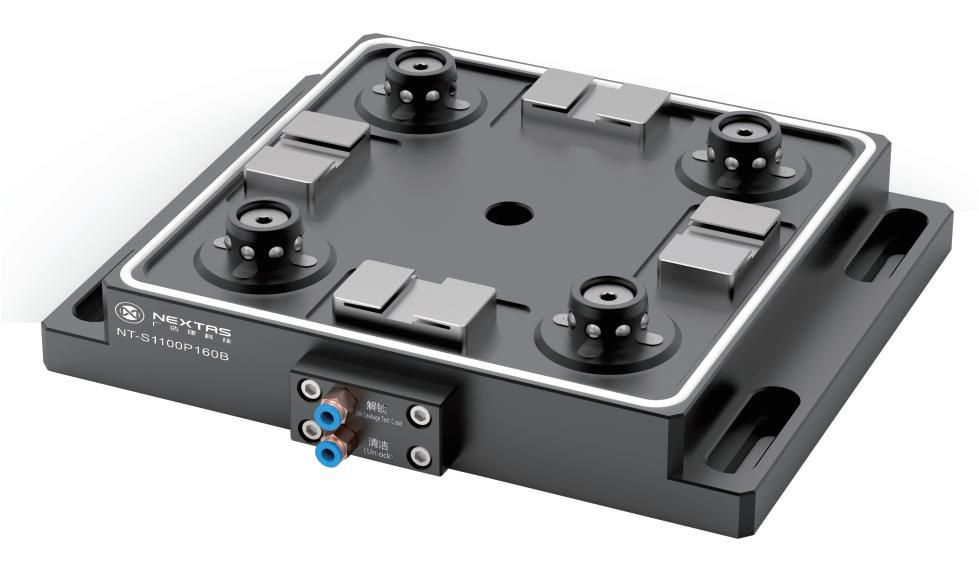
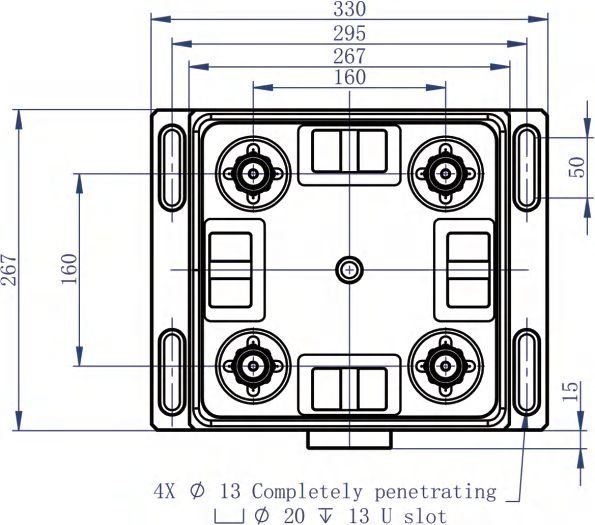
Use B024 when pallet size, mass or fixture-carrier stiffness goes up — same datum logic, larger body.
APPLICATION PLANNING
These concepts show possible receiver, pallet, and transfer arrangements for planning. Final geometry, payload, repeatability, transfer direction, and cell integration are confirmed for the selected project; the examples are not evidence of a production deployment.
Mount BDS receivers directly on the table to reduce re-indicating and keep repeat positioning stable across recurring setups.
Pair the datum body with matching pallets when a robot or transfer module needs a compact but repeatable handoff interface.
The protected lifting concept is valuable when heavier parts could otherwise damage the datum face during clamp and location.
Use BDS on fixture carriers to keep setups transferable between prep, machining and checking stations with less manual touch-up.
Request available model data and selection guidance. Engineering confirms the information scope for the quoted project.
Request engineering data and selection supportShort answers to the most common selection and integration questions for the BDS positioning datum family.
The page lists <0.003 mm for A024/B024 as a selection reference. The selected model drawing and agreed measurement conditions must confirm the applicable value; it is not a guarantee for every assembled system.
The page lists 60,000 N as a selection reference for A024/B024. Confirm the selected model drawing, load direction, pallet and acceptance conditions before using this value.
The datum body is the clamping receiver mounted to the machine or fixture base, while the datum pallet is the mating carrier designed for repeatable transfer and automated handling.
The datum bodies are listed with pneumatic unlocking at 0.5–0.8 MPa. Clean, dry air is recommended for stable long-term operation.
Choose BDS when you want a more compact datum interface for automation cells, fixture carriers, or machine-table setups while still keeping high repeatability and strong clamping.
BDS lead time depends on the selected A024 or B024 body, pallet and pickup stack, interface drawing, quantity, pneumatic options, inspection scope, and acceptance method. Engineering confirms the schedule in the quotation; the website does not guarantee a fixed lead time.
The agreed records may cover the selected body, pallet and pickup configuration, dimensional or repeat-positioning inspection, material traceability, and the approved interface drawing. The quotation or order confirmation defines what is included; the website does not promise a complete report with every unit.
Fast quote
Three fields are enough — our engineers reply after reviewing the request with pricing and configuration advice.