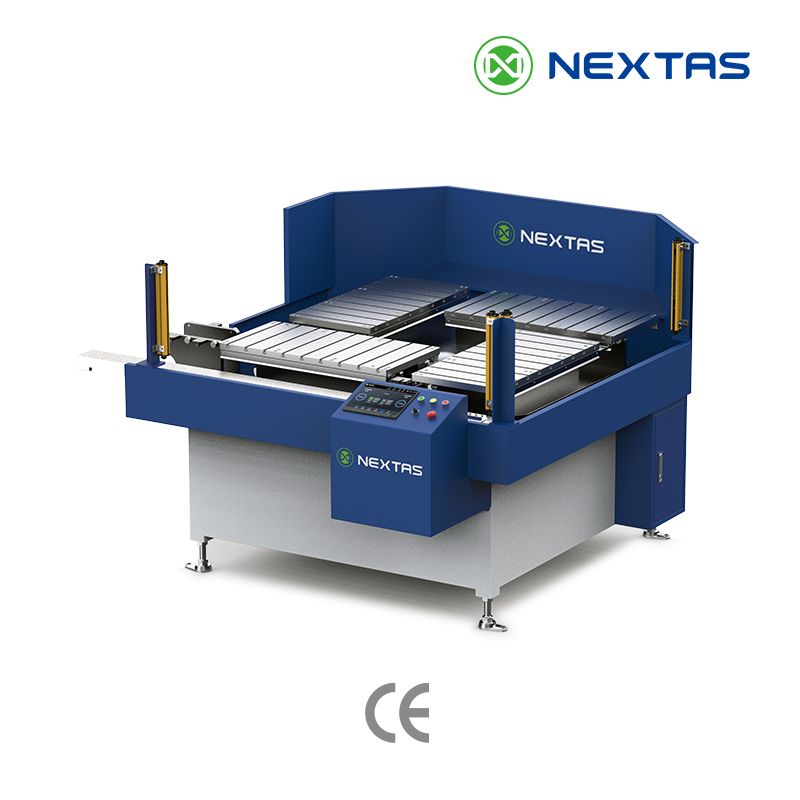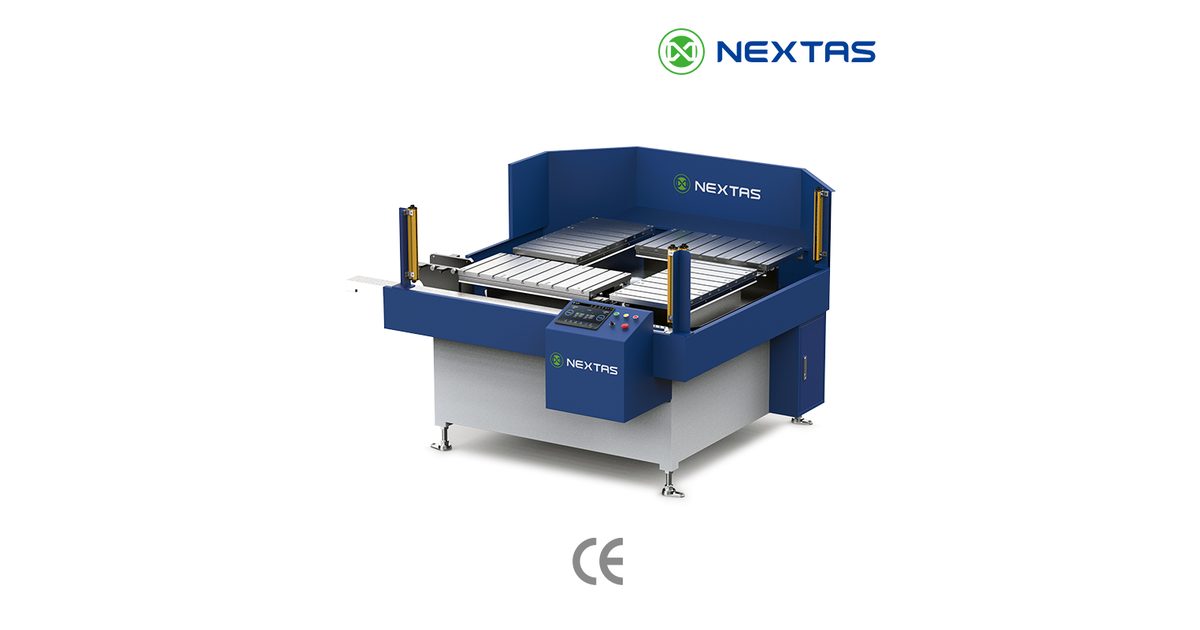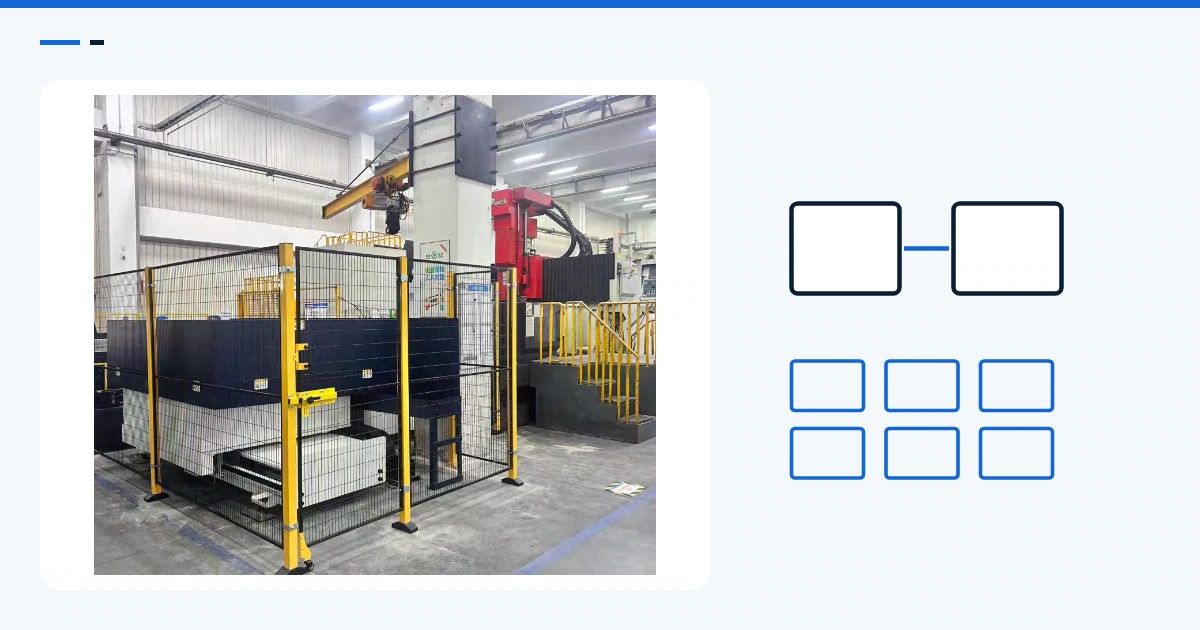
Most high-mix, low-volume (HMLV) vertical machining centers lose more hours to loading than anyone wants to admit. The spindle is ready. The next vise or fixture is not. Someone is still indicating a datum, chasing chips, or waiting for a crane to clear the table. That idle stretch shows up every time the part number changes.
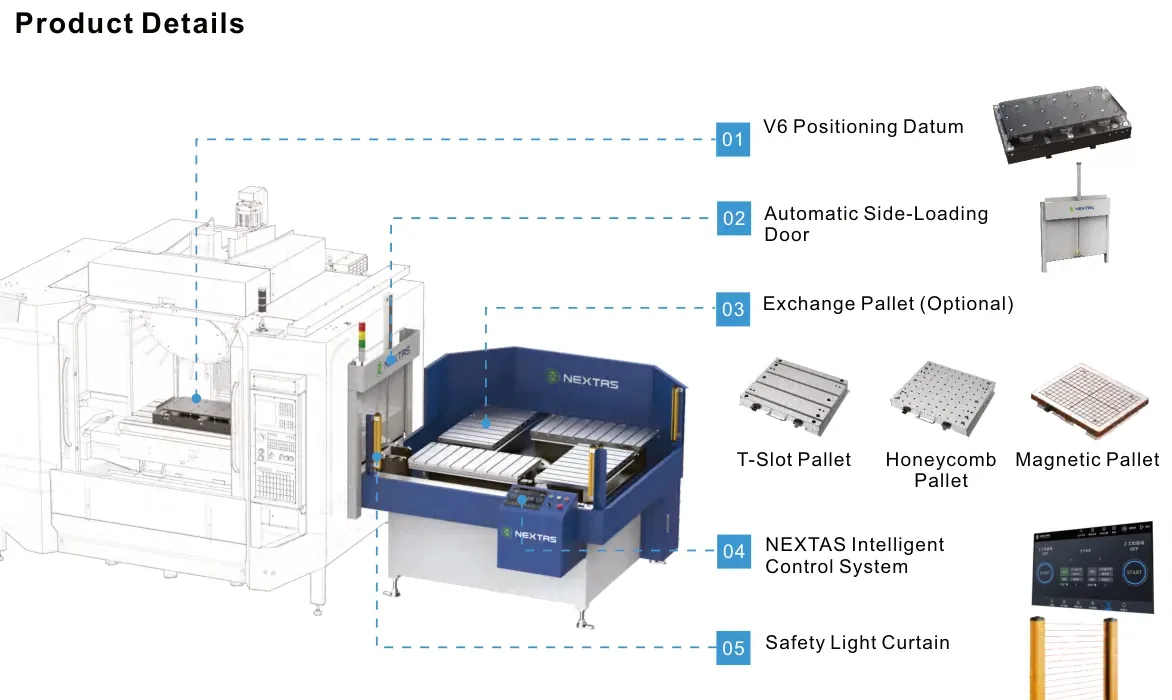
The 2026 automation catalog lists a basic fix: a vertical machining center with a dual-pallet system for automatic off-machine pallet loading and unloading in HMLV. Under Success Case Data — Case 1, that layout carries two printed results:
- Monthly productivity increased by 66.7%
- 6-month payback period
Those are the only outcome numbers Case 1 gets. Below is why a dual-pallet cell can move the needle that far on a mixed schedule — without inventing a customer or claiming a shop-floor audit beyond the catalog row.
What “dual-pallet” actually changes on the floor
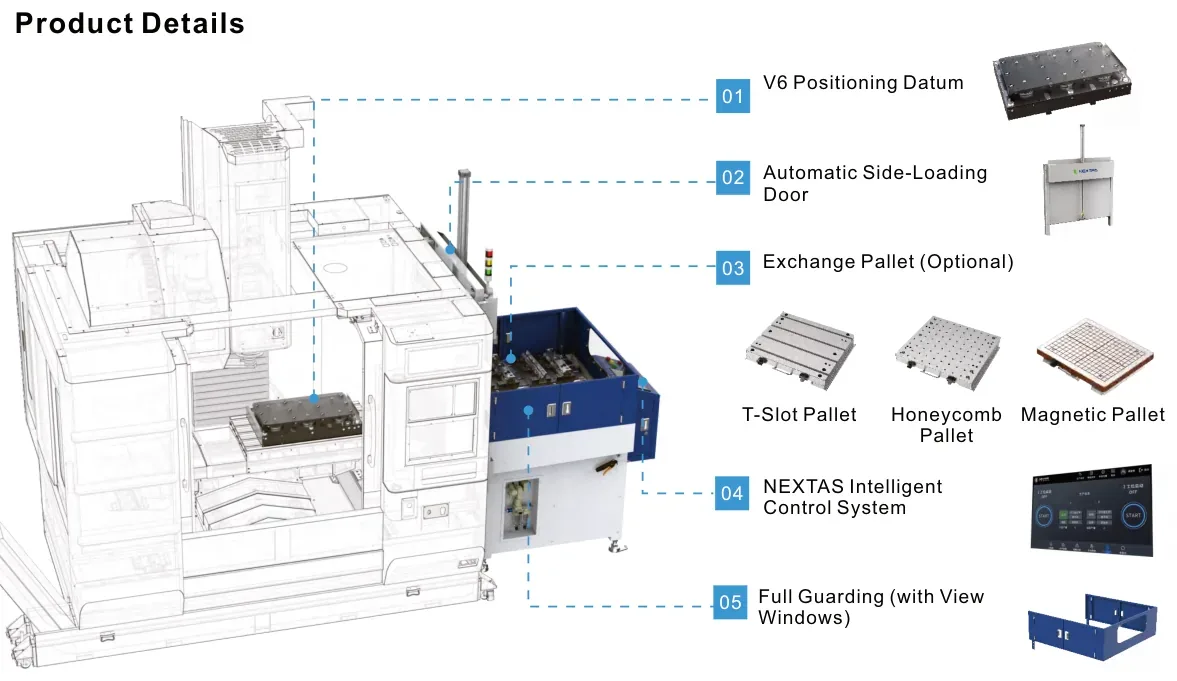
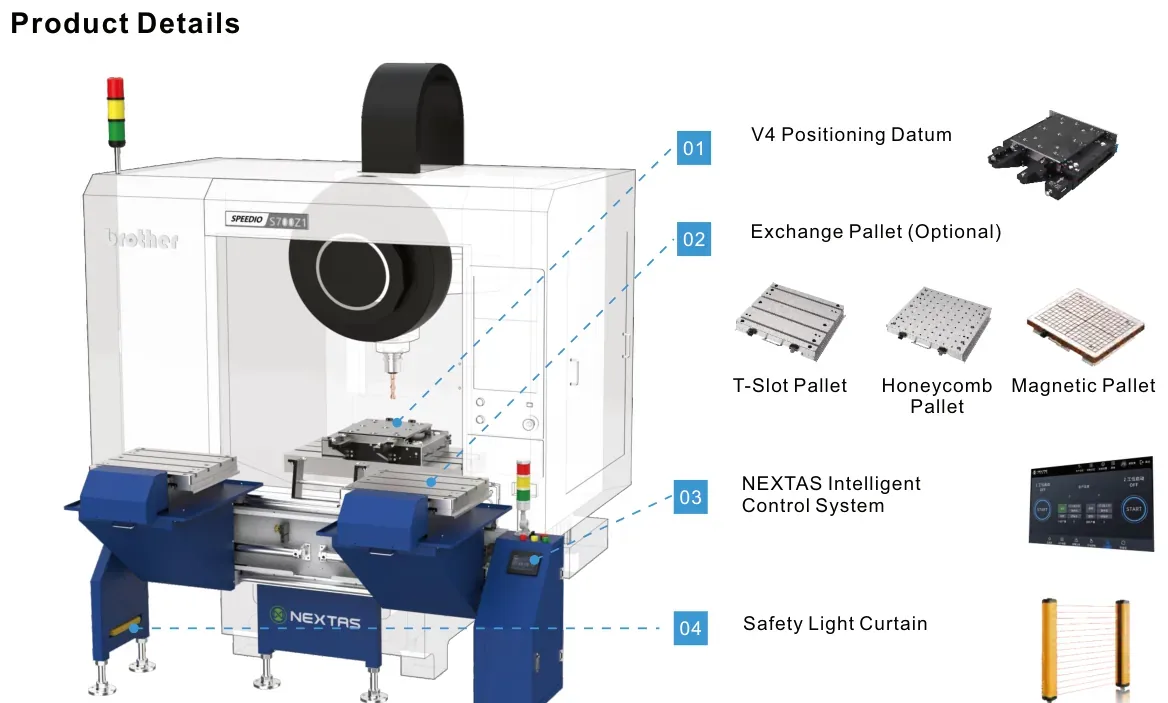
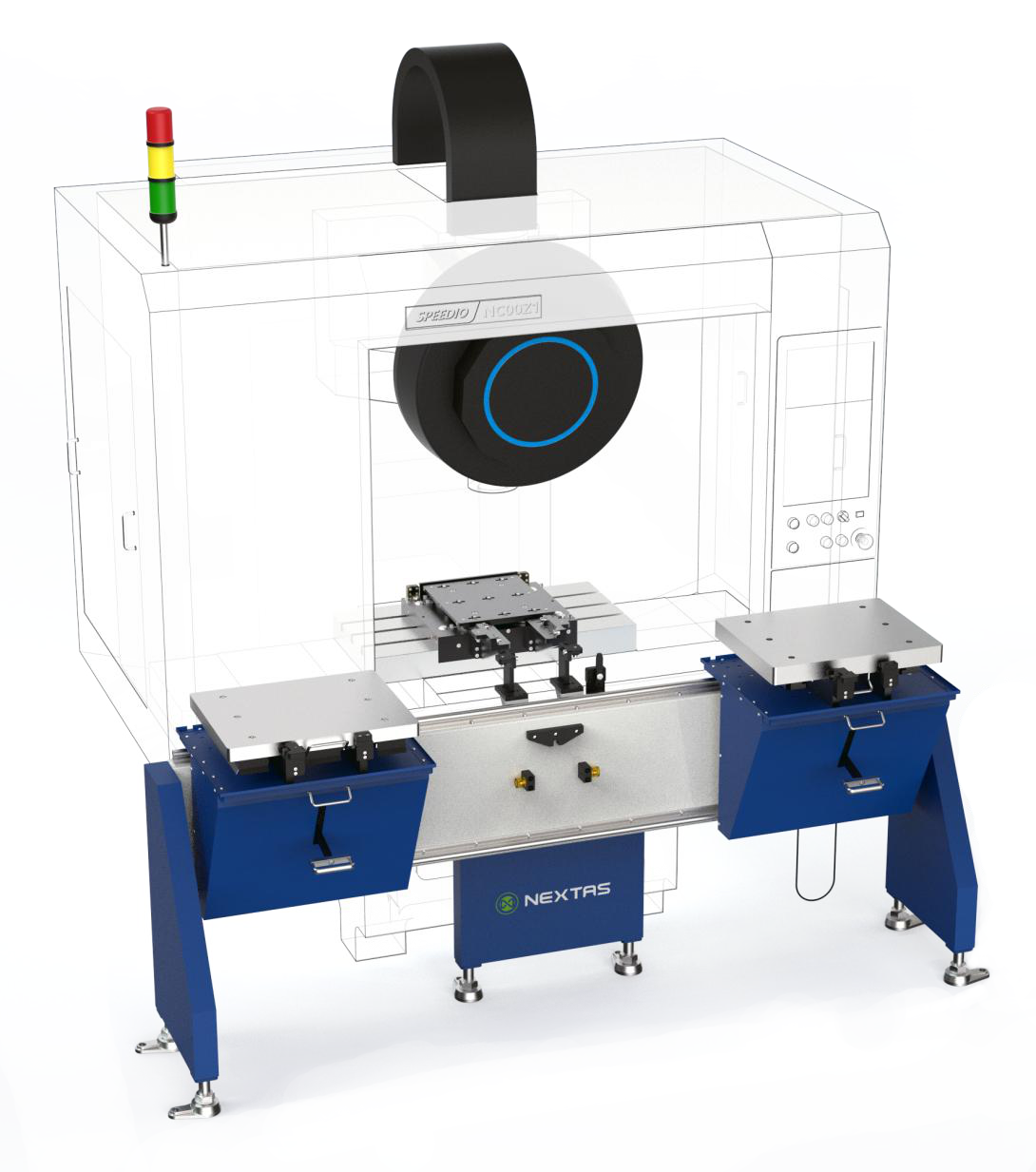
One pallet is under the spindle; the other sits outside where an operator (or later an APC sequence) clamps the next job. When the cut finishes, the exchange brings the prepared pallet in. Setup runs in parallel with cutting instead of blocking it.
On a job-shop VMC that is the difference between:
- Stop → open door → unclamp → wipe → load → indicate → probe → restart, and
- Cut while the next fixture is already locked on the outside pallet, then swap.
The catalog groups this under Solution 1: Basic Efficiency Enhancement — dual-pallet changer for HMLV off-machine exchange. It is the entry step before a multi-pallet FMC or a full FMS. Two well-used pallets already separate “make chips” from “build the next setup.”
Catalog comparison ranges (not Case 1’s measured log)
On the same takt-comparison spread, the catalog prints general before/after ranges versus a traditional table load. These ranges are not labeled as Case 1’s stopwatch log. Catalog context only:
| Metric (catalog takt comparison) | Traditional way | With pallet changer system | Catalog claim |
|---|---|---|---|
| Workpiece changeover time | 15–45 min | 0.5–2 min | >90% reduction |
| Effective machining time per shift | 4–4.5 h | 7–7.5 h | +50–80% |
| Changeover setup time | 2–4 h | 10–2 min (as printed) | 85–90% reduction |
Keep the “catalog comparison ranges” label. Do not merge these rows into Case 1 as if that shop’s QMS recorded them. Case 1’s own published results remain 66.7% monthly productivity and 6-month payback. The same spread also prints wider bands — utilization 50–90%, capacity gain 60–200%, payback 6–18 months — brochure bands for the dual-pallet / FMC / FMS ladder, not one audited plant tour.
Why HMLV feels the gain first
Low-volume work changes fixtures often. Every change pays a fixed setup cost; small batches make that cost eat a large share of the shift. Offline pallet loading attacks the fixed cost without redesigning the part.
When shops typically size a dual-pallet cell for HMLV, they:
- Keep one pallet family per fixture style (vise jaw set, plate, small tombstone).
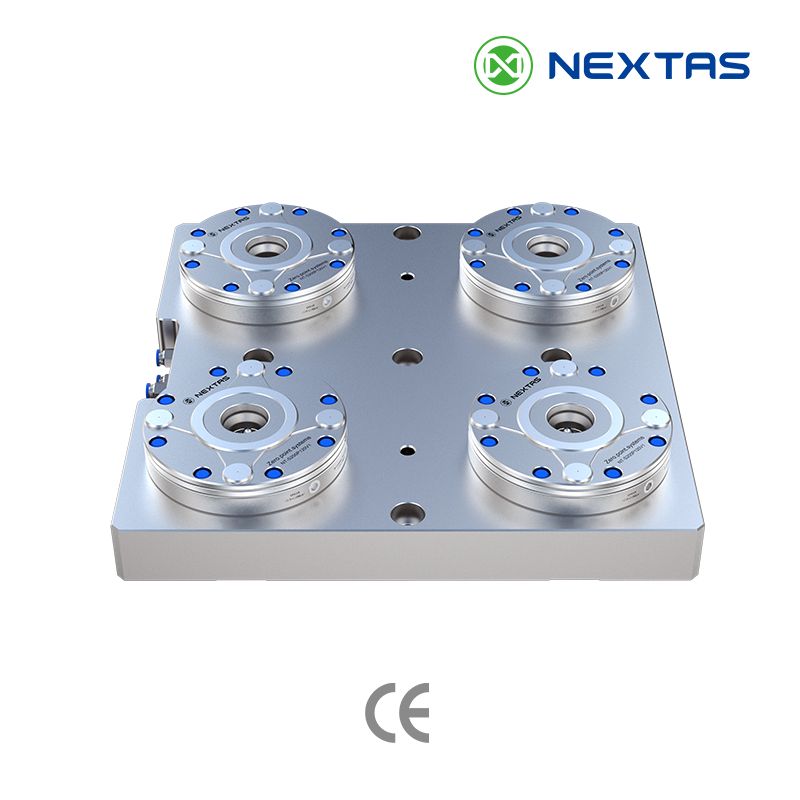
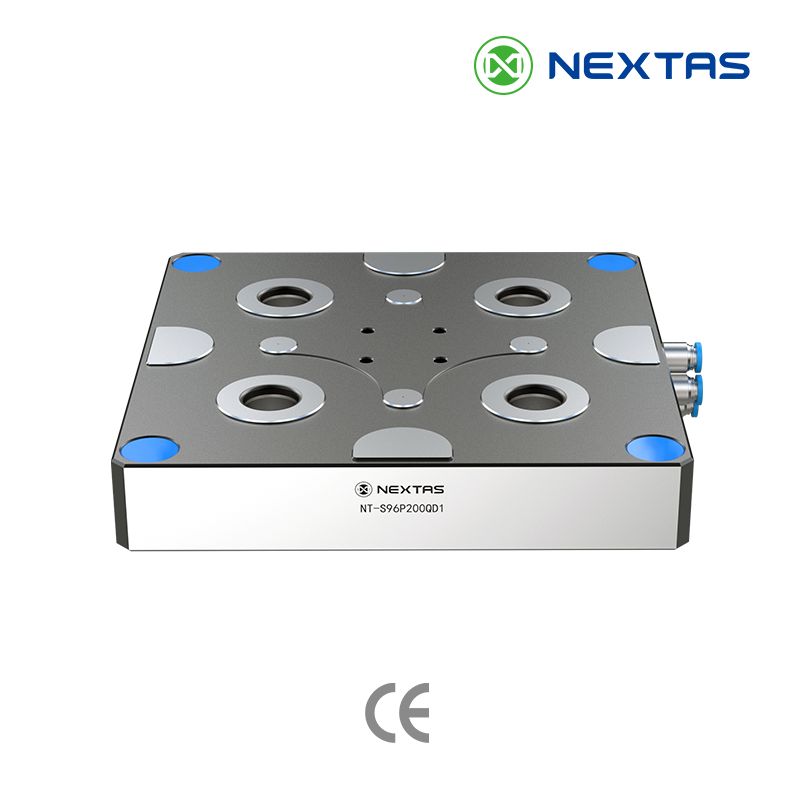
- Standardize the pallet-to-machine interface — zero-point top or V-series positioning datum — so every exchange seats on the same faces and the team stops re-indicating after every swap.
- Measure stopped-spindle minutes on three representative SKUs before promising ROI. Catalog payback is a printed case; plant payback is mix, labor rate, and second-shift coverage.
Case 1’s 6-month payback sits at the fast end of the catalog’s 6–18 month band — plausible when the baseline was heavy on changeovers, not when one fixture already runs for days.
Where this links on nextastech.com
Same equipment class as Case 1:
- Automatic pallet changer — front, side, four-station, gantry; V4 / V6 / V8 bases
- Dual-station manual pallet changer when the exchange stays operator-push
- Zero-point clamping system or pneumatic zero-point plate for air unlock on APC / robot release
- NEXTAS FMS system when two pallets are no longer enough buffer
- Automation series for the wider cell layouts around this pallet class
RFQ: three numbers from your floor
- Average stopped-spindle minutes per changeover today
- Distinct fixtures through the VMC in a typical week
- Target unattended or lightly attended hours (if any)
With those, an engineer can say whether dual-station is enough or only the first step toward a larger pallet pool. The catalog case shows a dual-pallet VMC on high-mix work can print a large monthly productivity step and a short payback. Acceptance still has to prove exchange time, seating confirmations, and guarding on the selected machine.
Companion: Case 2 (84% monthly productivity, ¥456,000 annual cost reduction) — same equipment class, different catalog outcome row.
Catalog case, your floor
Send the three changeover numbers
Stopped-spindle minutes, fixtures in a typical week, and any lightly attended target. The printed 66.7% and 6-month payback stay catalog Case 1. They are not a quote for your cell.