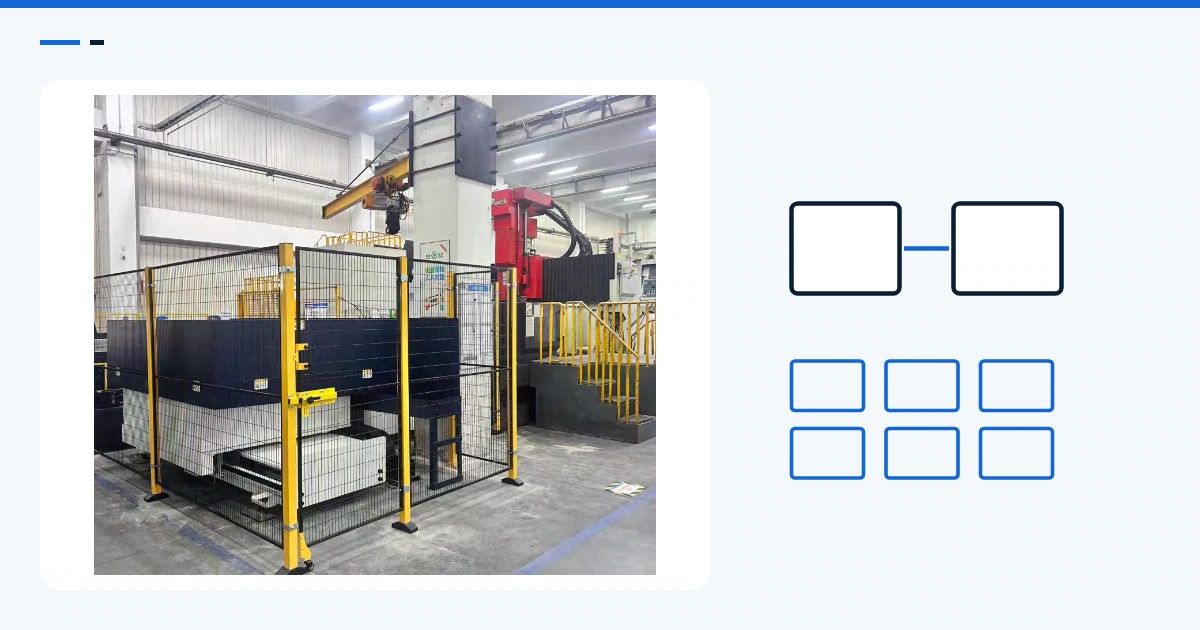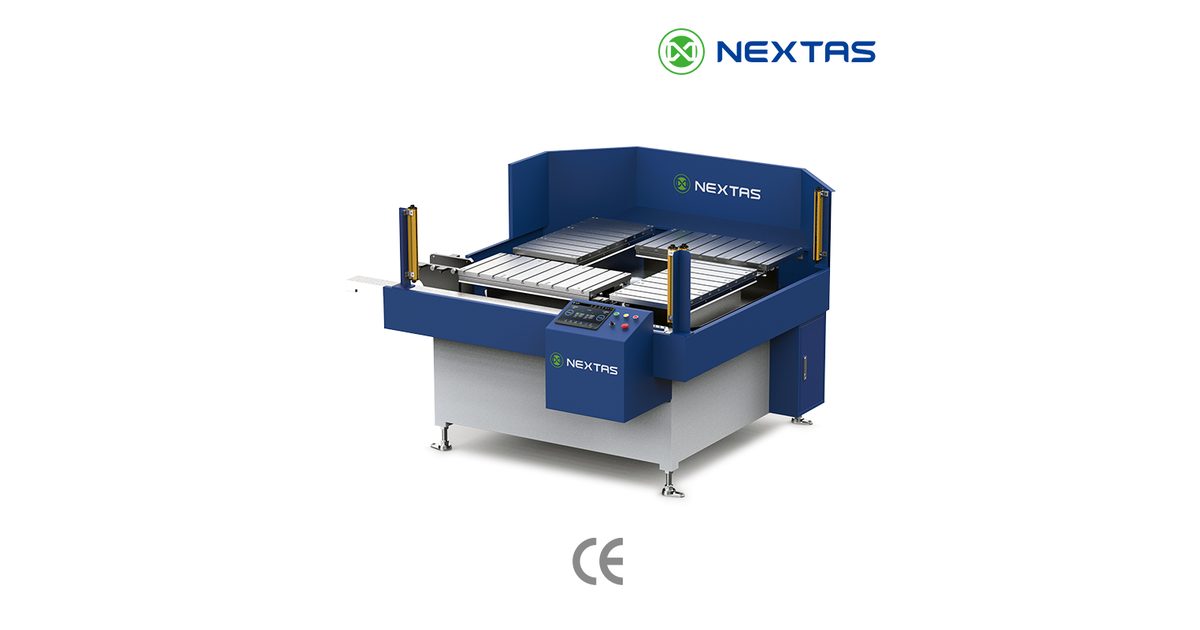
Large, precision parts on a vertical machining center create a different kind of downtime than small vise work. The fixture is heavier. The indicating routine is longer. One wrong clamp and you scrap a blank that already carried hours of upstream cost. In high-mix, low-volume (HMLV) schedules, those changeovers stack until “available” spindle hours look nothing like the hours that actually cut.
The 2026 automation catalog’s Success Case Data — Case 2 sits next to Case 1 on the same spread. The printed line is short:
- Application: High-mix, low-volume production of large, precision parts
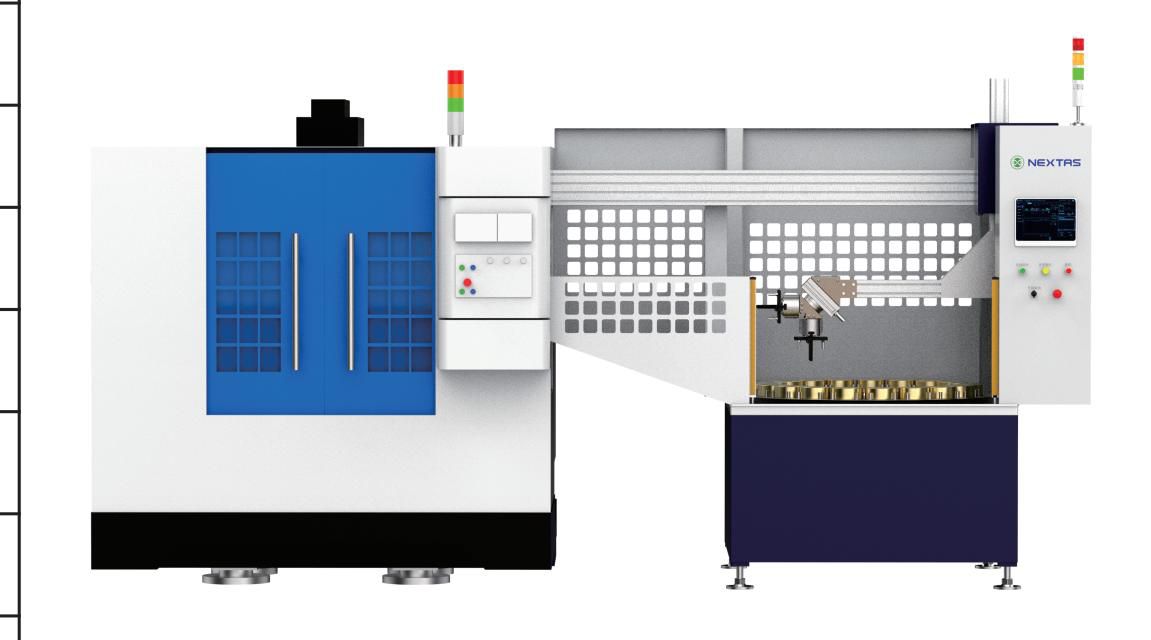
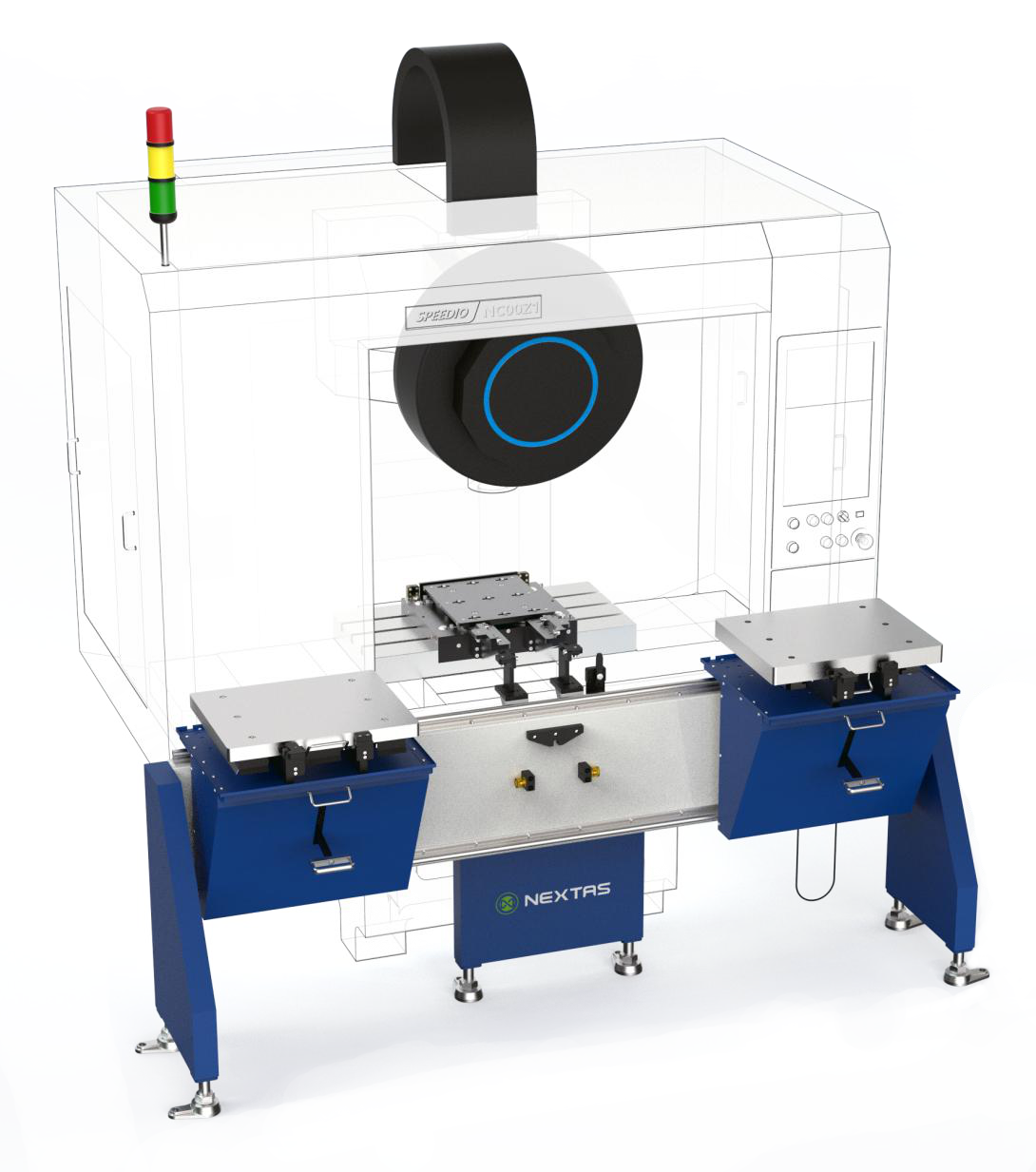
- Equipment: Vertical machining center + dual-pallet system
- Result: Monthly productivity increased by 84%
- Achieves: Annual cost reduction of ¥456,000
Same equipment class as Case 1. Stronger productivity step. A yen cost figure instead of a payback-month figure. Still no customer name — a scenario from catalog success data, not a testimonial banner.
Why “large + precision” makes dual-pallet worth more
On small parts, a clumsy changeover wastes minutes. On large precision parts it wastes the cut and risks the datum. Operators over-check: touch off again, probe again, re-torque, wipe the locator twice. Rational when the blank is expensive — and exactly what keeps effective machining time low.
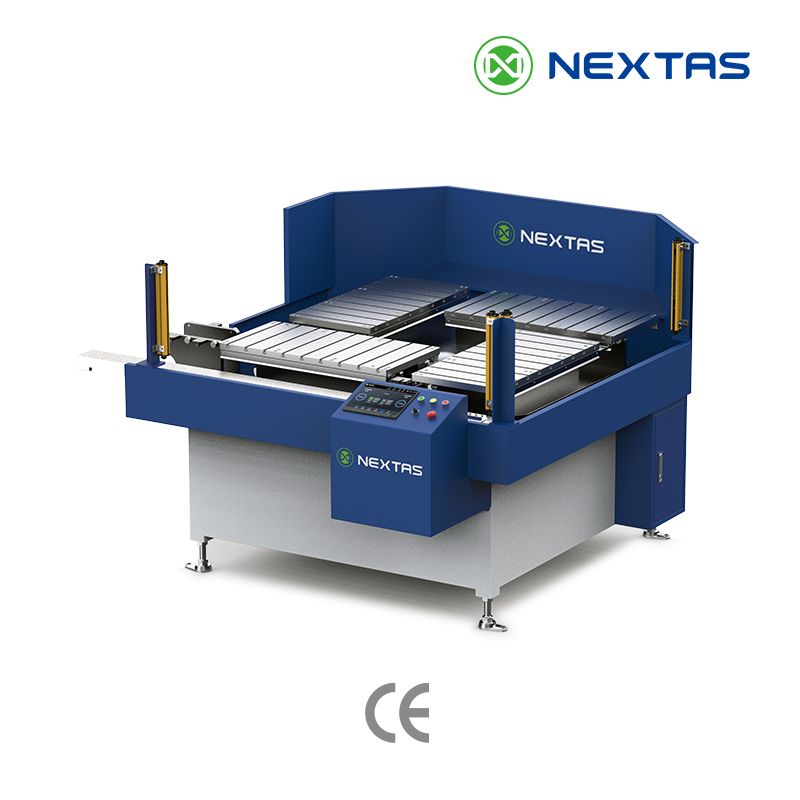
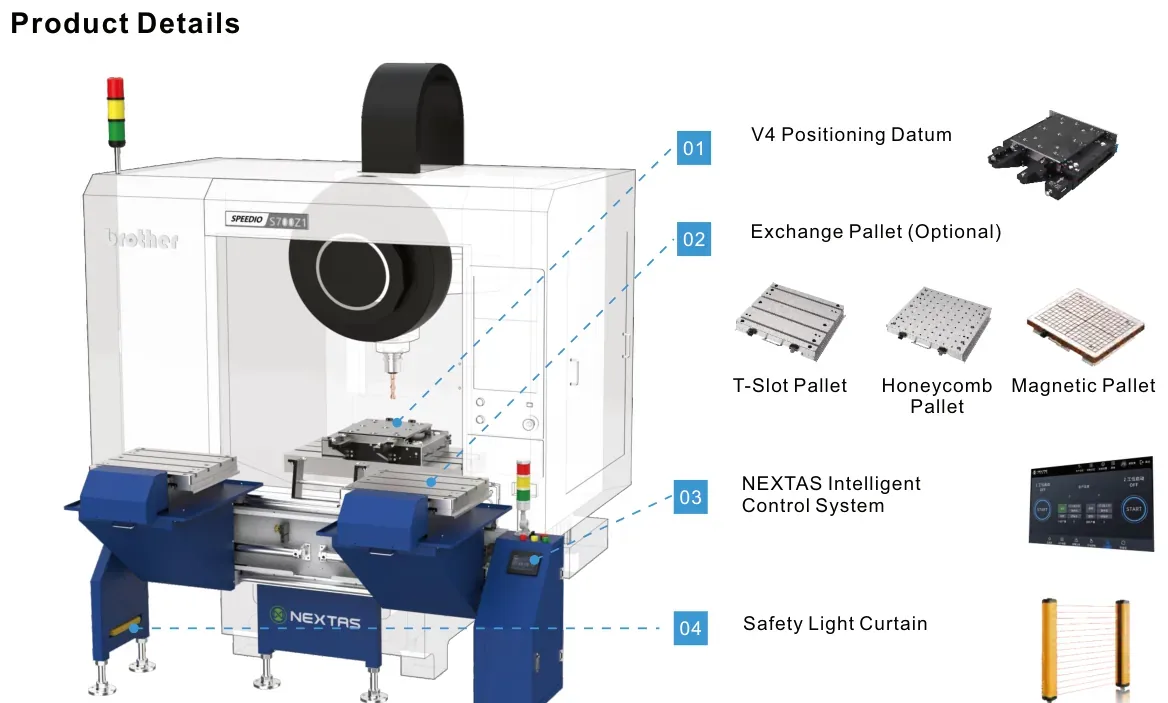
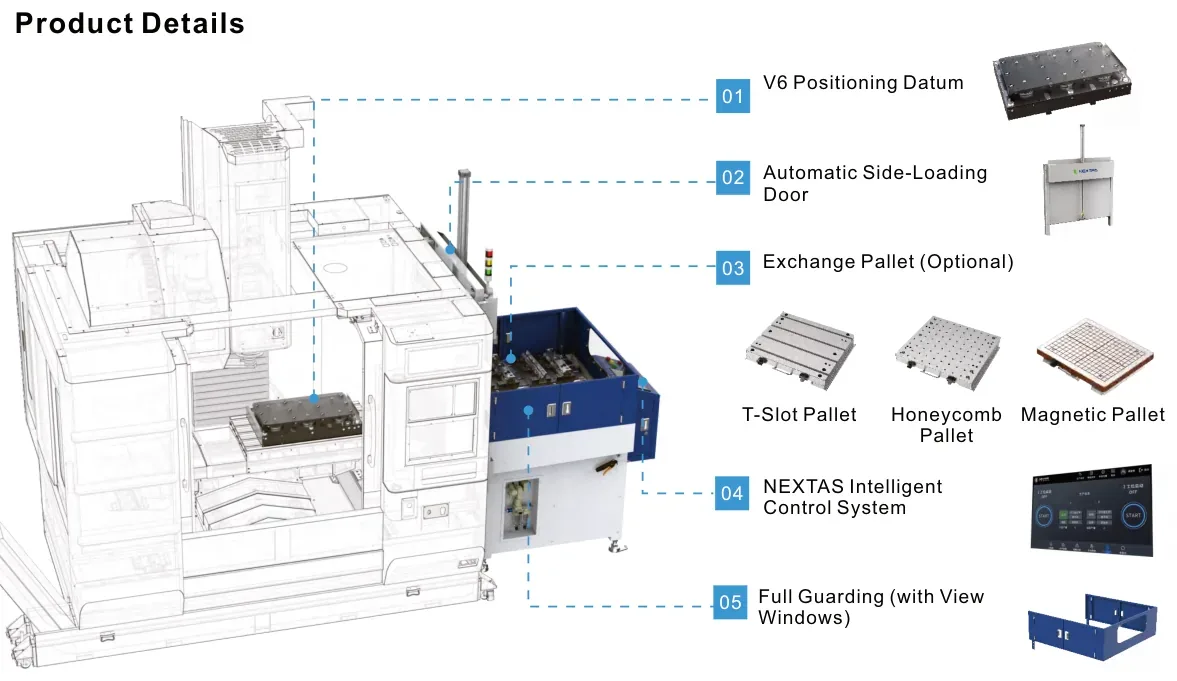
A dual-pallet system moves that careful work offline. While pallet A is in the cut, pallet B is on the outside station. The operator can clean locating faces, seat the part, and torque in sequence without holding the spindle. The exchange then hands the machine a setup finished under less time pressure.
The catalog places large/heavy HMLV off-machine exchange under Solution 2: Flexible Manufacturing Cell (FMC) (2–4 pallet exchange). Case 2’s own equipment line still reads VMC + dual-pallet system. Read that literally: the published success row is the two-pallet class, not a four-station install. Need more buffer? Step up pallet count in the RFQ; do not rewrite Case 2’s hardware line.
Reading the two catalog numbers together
+84% monthly productivity is relative to the shop’s prior baseline. The catalog does not print that baseline (parts per month, spindle hours, or headcount) — do not invent one.
¥456,000 annual cost reduction is the second printed outcome, with no labor / overtime / scrap / floor-space breakdown. State the number as printed. If a prospect asks what sits inside it: the catalog does not itemize; savings can be modeled from measured changeover minutes, labor rate, and scrap risk once the mix is known.
Case 1 on the same page reported +66.7% and a 6-month payback. Case 2 reports a larger productivity step and an annual cost figure — a pattern that fits large precision HMLV (more minutes saved per changeover, higher cost of mistakes), but that is commentary, not extra data.
The same spread also prints general takt-comparison ranges for pallet-changer systems versus traditional table load. Those ranges are not Case 2’s measured log; the full table lives in the Case 1 companion. Case 2’s own published results remain +84% and ¥456,000/year.
Datum discipline for large precision work
Numbers only stick if the pallet seats the same way every exchange:
- A positioning datum (catalog V-series bases) sized for lifted mass — transport payload and lifting capacity are separate columns; size both against pallet + fixture + part.
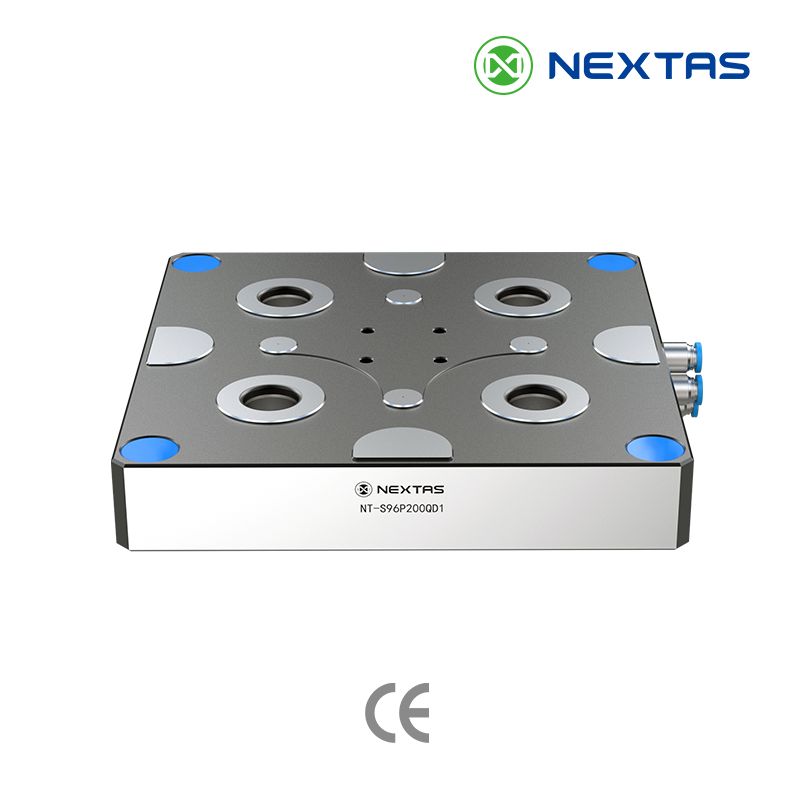
- A repeatable top interface: zero-point receivers in the subplate, or a pneumatic plate when unlock must be by air.
- Chip and coolant control on locating faces. Large fixtures shed more swarf; a dirty taper shows up as a first-article miss.
That is the shop-floor reason a dual-pallet VMC can post an 84% monthly step on precision work instead of moving the bottleneck to rework.
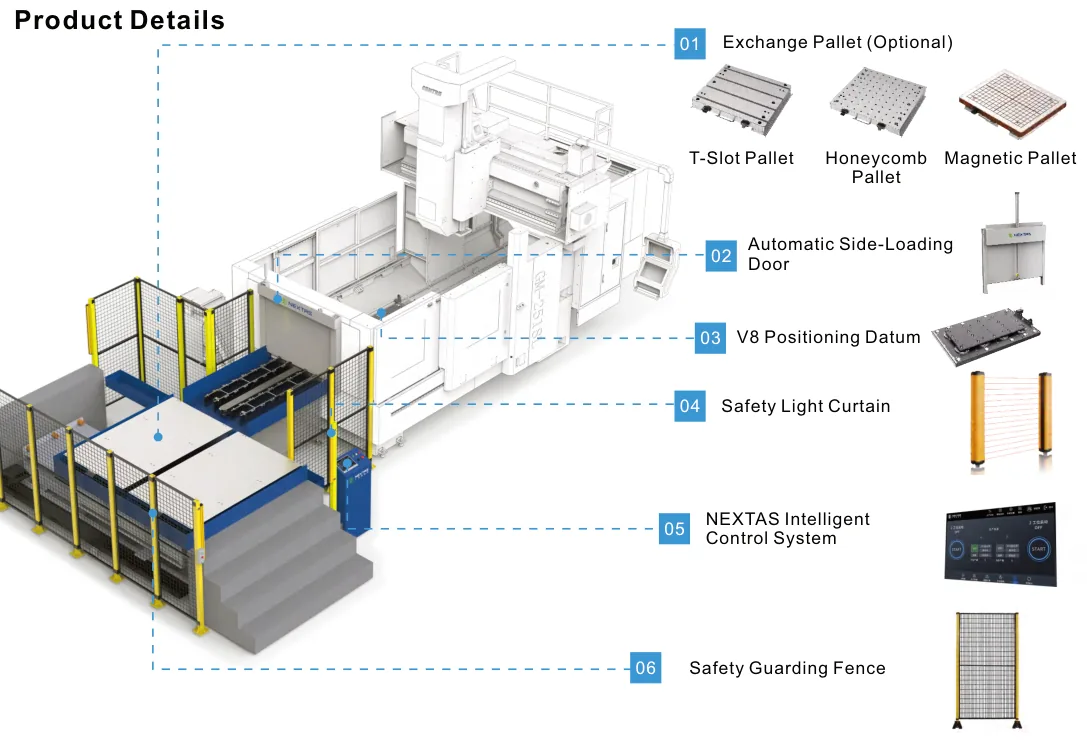
Product path (same family as Case 1)
Start at the automatic pallet changer; add a dual-station manual changer if exchange stays hand-pushed; lock the datum with zero-point systems or a pneumatic zero-point plate. When two pallets are not enough buffer, next catalog rungs are multi-pallet FMC and the NEXTAS FMS system. The automation series is the wider family around those rungs. Separate configurations — Case 2’s success row does not claim AGV or MES.
RFQ checklist if your work looks like Case 2
- Heaviest part + fixture mass and approximate center of gravity
- Pallet envelope and top type (T-slot, grid, or zero-point)
- How often large fixtures change in a week
- Unlock path: manual, APC-driven, or robot-ready
- Precision check already run after a re-clamp (probe routine, indicator map)
With that list, an engineer can tell whether Case 2’s dual-pallet VMC class is the right first buy, or whether payload forces a gantry / higher lift base. The catalog case shows large precision HMLV on a VMC with two pallets can print +84% monthly productivity and ¥456,000 annual cost reduction. Acceptance still has to prove seating, interlocks, and loaded exchange on the selected machine.
Companion: Case 1 (6-month payback figure).
Catalog case, your floor
Send the mass, the pallet, and the re-clamp check
The printed +84% and ¥456,000 stay catalog Case 2. They are not a quote, and the catalog does not itemize that yen figure.