Can you change vise size on this machine without pulling the base plate off the table?
The short answers the motion. A gloved operator sets a small vise on a round plate, turns a hex key, then swaps that vise for a larger one. The plate stays. A third vise waits beside the table.
That is a real changeover. It is not a model number, a torque value, or a repeat test. If you need a price, the drawings still have to come first.
What the clip shows, and what it skips
Trust the hardware you can see. Do not fill in the rest.
| Seen in the short | Still open |
|---|---|
| Round plate already on a machine table | Model number |
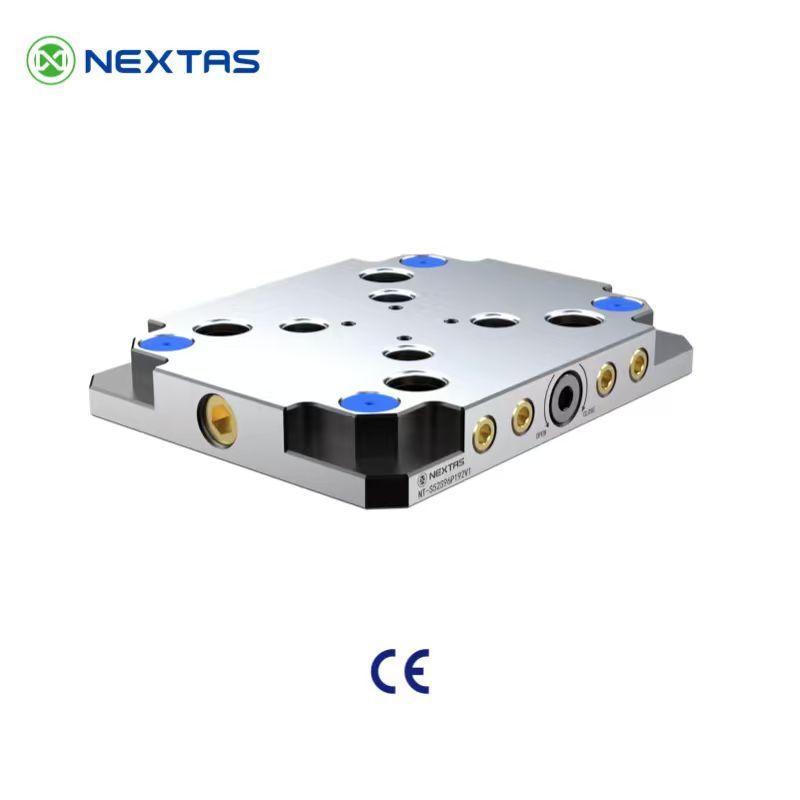
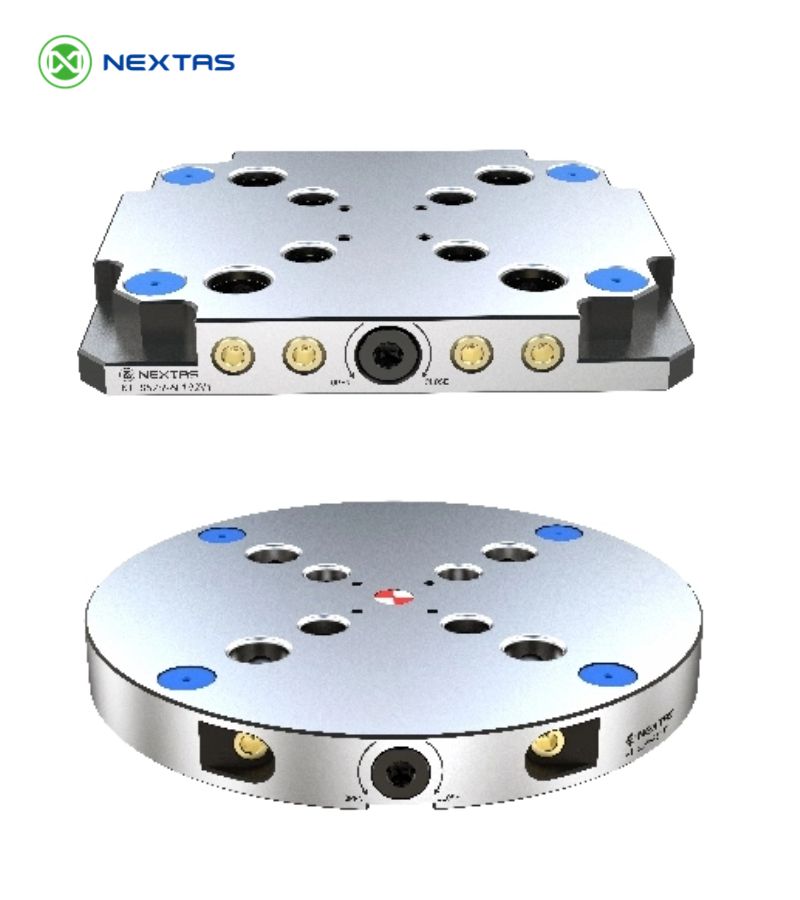
| Blue caps, open bores, brass fittings, and a front hex port marked OPEN and CLOSE | Which stations are 52 mm and which are 96 mm |
| A hand hex key locks one vise, then another | Torque, a lock check, and the chip wipe |
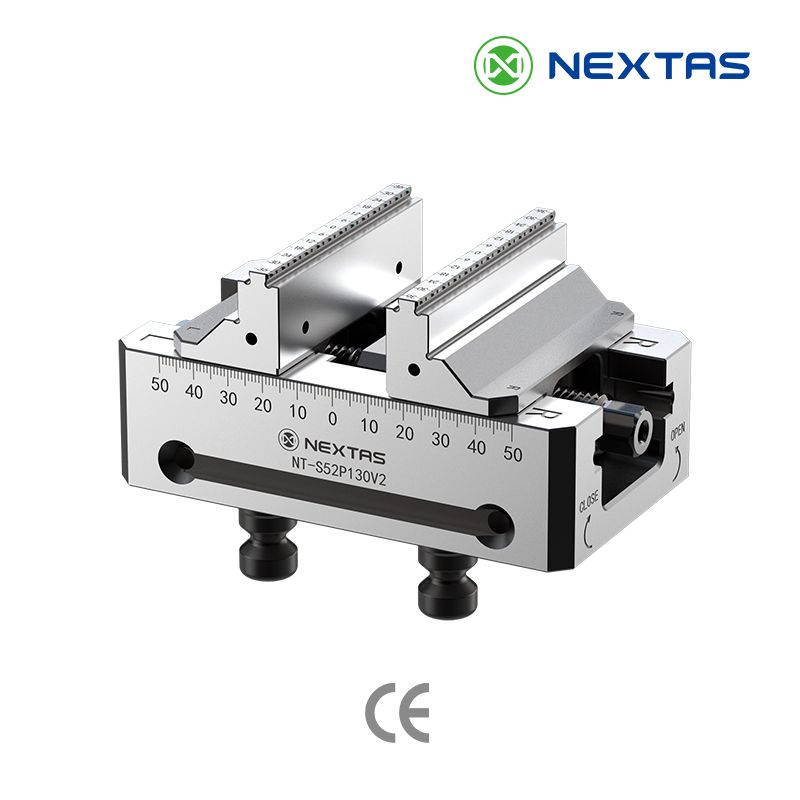
| Two vises trade places. A third sits beside the table | Your studs, jaw opening, and part height |
| On-screen text says 0.005 mm or less | The named model document, and a repeat check on your machine |
The on-screen line also says the plate suits 52 mm and 96 mm vises and workholding fixtures. It does not point to the holes. A combo plate can carry both patterns. It cannot make a 52 mm stud lock in a 96 mm seat.
The plate stays. The vise moves.
The time you save is the plate staying on the table. Nobody unbolts a base, sweeps a new one in, and picks up the datum again. The next vise drops onto the same plate.
That only helps if the next vise was built for that plate. A 52 mm vise and a 96 mm vise can share a combo plate. They cannot share one stud.
Published manual plates already split the hardware. The 52 mm plate uses pull stud NT-S52P16V1. The 96 mm plate uses pull stud NT-S96P20V1. Those are different parts. A combo plate that accepts both still needs the matching stud on each vise.
The catalog splits the force the same way. The manual 52 mm plate lists 20,000 N. The manual 96 mm plate lists 30,000 N. Do not copy either number onto the round plate in the video. Ask which drawing you are buying.

The self-centering vise page is the place to start if the vise itself is still open. The manual zero-point plate page is the place to start if you already have the vises and need the base. Neither page is a photo of the round plate in the short.
A 30-second vertical clip with no spoken track. A gloved operator locks a small vise on a round plate with a hex key, then swaps it for a larger vise. The plate stays on the table.
The 0.005 mm line is on the screen, not on your machine
The opening frame says repeat positioning accuracy of 0.005 mm or less. Keep that line with the video. It is not a test sheet for the plate you will receive, and it is not a promise for every setup.
Named NEXTAS plates publish their own limits. Manual 52 mm and 96 mm plates list a repeat figure below 0.005 mm. The pneumatic zero-point plate lists a repeat figure below 0.003 mm. Each figure belongs to that model and to the check written on its document.
Want the number on a quote? Ask for the drawing of the exact model. Then repeat the check on your machine after the plate is mounted, wiped, and locked. A clean bench and a dirty table are not the same test.
This clip is a hand lock, not an air lock
No hose sits on the lock port. The operator turns a hex key by hand at the port marked OPEN and CLOSE. Plan a hand lock. Do not plan a valve, a robot release, or a clamp signal from this clip.
Air locks exist on other NEXTAS plates. They are a different purchase. If the cell will load itself, say so in the note. We will look at an air plate, not this hand demo.
Wipe the bore before the next vise
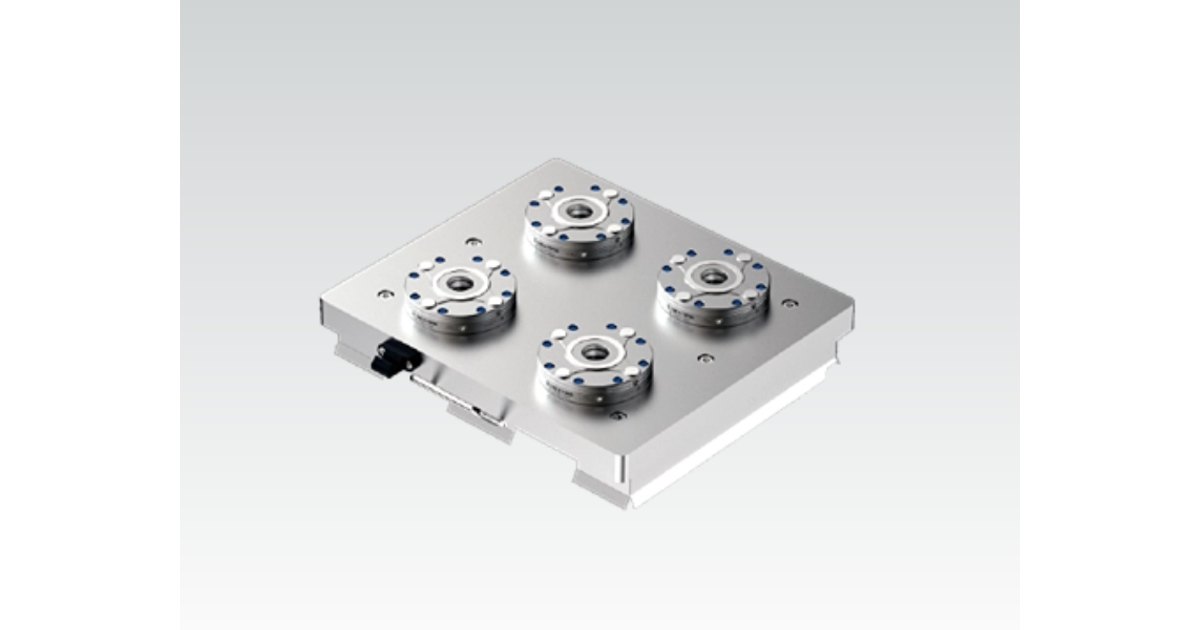
The short skips the dirty part. Chips and coolant land in open bores. A stud that seats on a chip will not return to the same place, no matter what the screen says.
- Leave the blue caps on stations you are not using.
- Pull a cap only for the station this vise needs.
- Wipe the bore and the stud.
- Set the vise down square. Do not drag it across the face.
- Turn the hex key to CLOSE. Tug the vise before you walk away.
The clip does not show a torque value. Use the torque on the drawing for the model you buy. If the drawing has no torque, ask before the first part.
Send four things, then we can price it
- The underside of each vise, with the stud part and the hole spacing.
- The machine table: hole size, spacing, and what the door and the probe must clear.
- The part: length, width, height, and the jaw opening you need.
- Who locks it. A person with a hex key, air, or a robot. This clip is a person with a hex key.
If a vise was made for another brand, say that on the note. We match the interface on the drawing. We do not guess it from 30 seconds of video.
Still deciding whether one plate should carry both pitches? Read the interface check for mixed 52 mm and 96 mm workholding first. That post is about drawings and hole patterns. This one is about the swap you just watched.
Ready for a price?
Send the vise underside and a table sketch. We will say which plate family fits, or we will say the interface is still open.
FAQ
Will any 52 mm or 96 mm vise fit the plate in the short?
No. Pitch is only the spacing family. The stud, the thread, the seat, and the hole pattern still have to match the plate you buy. Send the vise underside.
Is 0.005 mm a guarantee for the plate in the video?
No. It is the line on the screen. Published manual 52 mm and 96 mm plates list a repeat figure below 0.005 mm for those models. Ask for the drawing of the plate you will receive, then check it on your machine.
Does the lock in the short use air?
No. The operator turns a hex key at the port marked OPEN and CLOSE. Do not plan air, valves, or a robot release from this clip.
What should I send to get a price?
The vise underside, the pull studs, the machine table, the part size, and whether the lock stays manual. A model guess from the video is not enough for a quote.