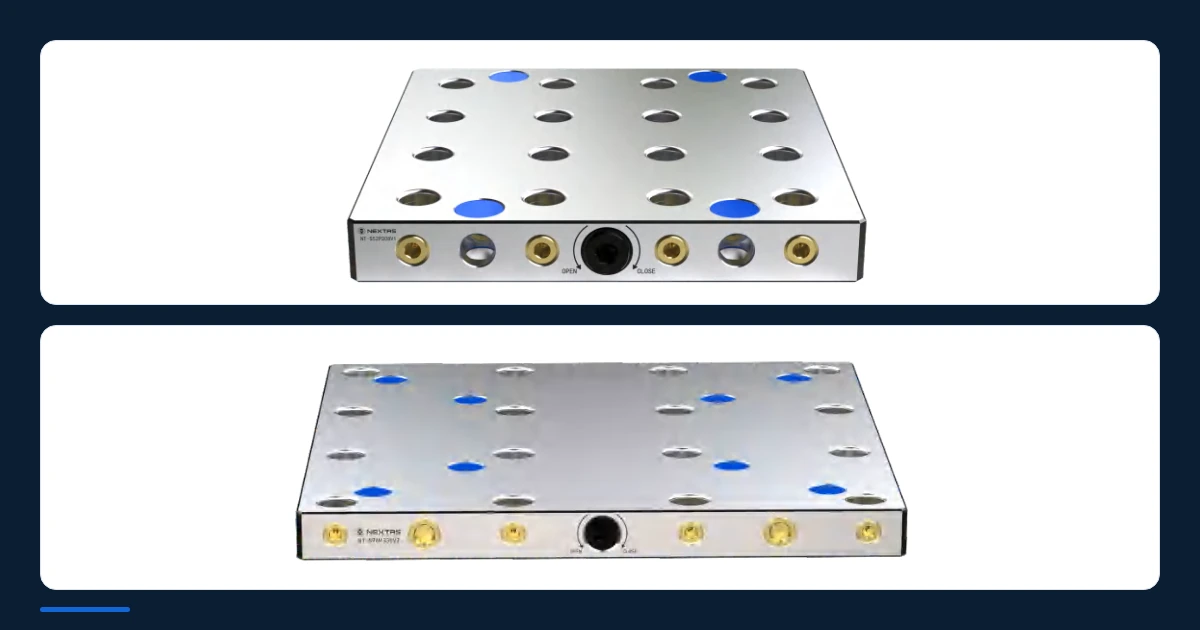
Room around the fixture
An elevated locating face can improve access; verify every required tilt and tool-change position.
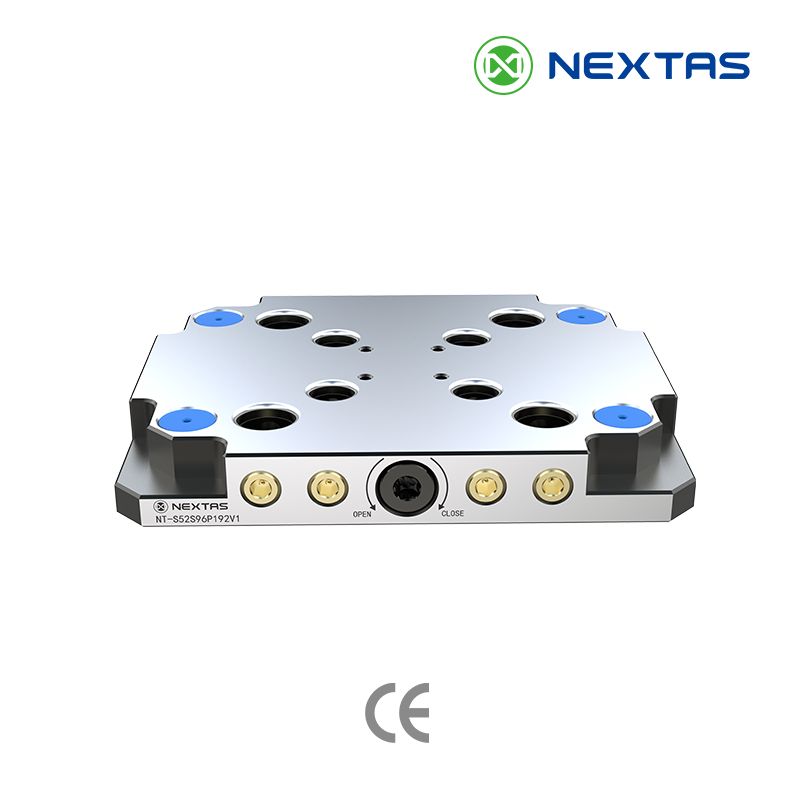
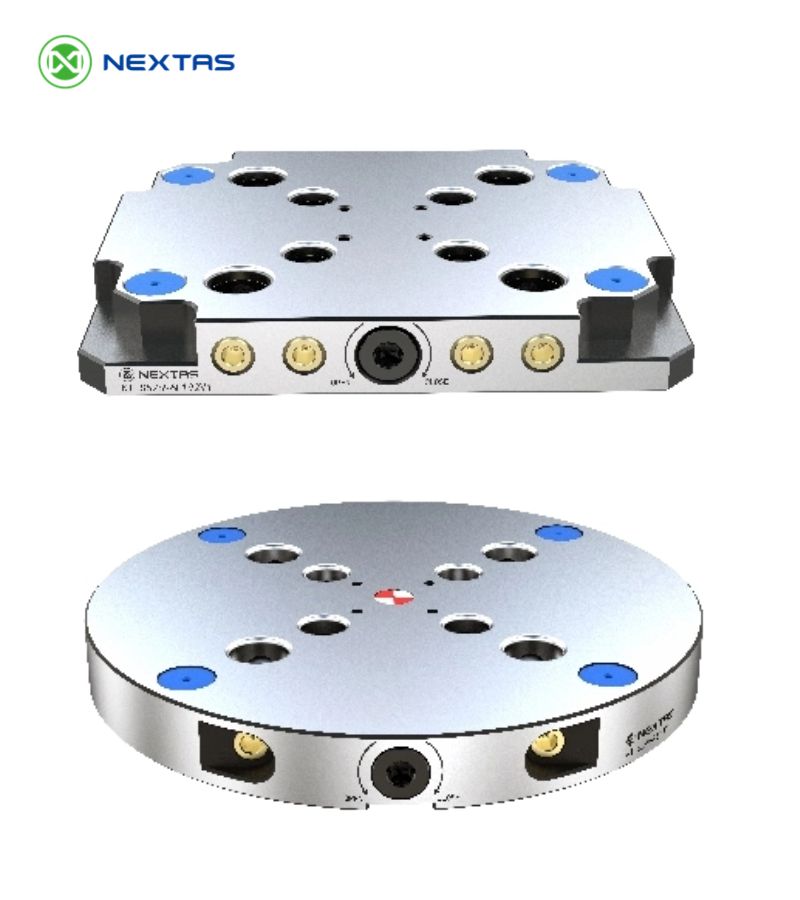
Give the tool and spindle more room around a raised fixture. NEXTAS manual riser plates provide raised zero-point seats for 52 mm or 96 mm stud families. Select the interface first, then check the installed height, fixture rigidity and machine clearance together.
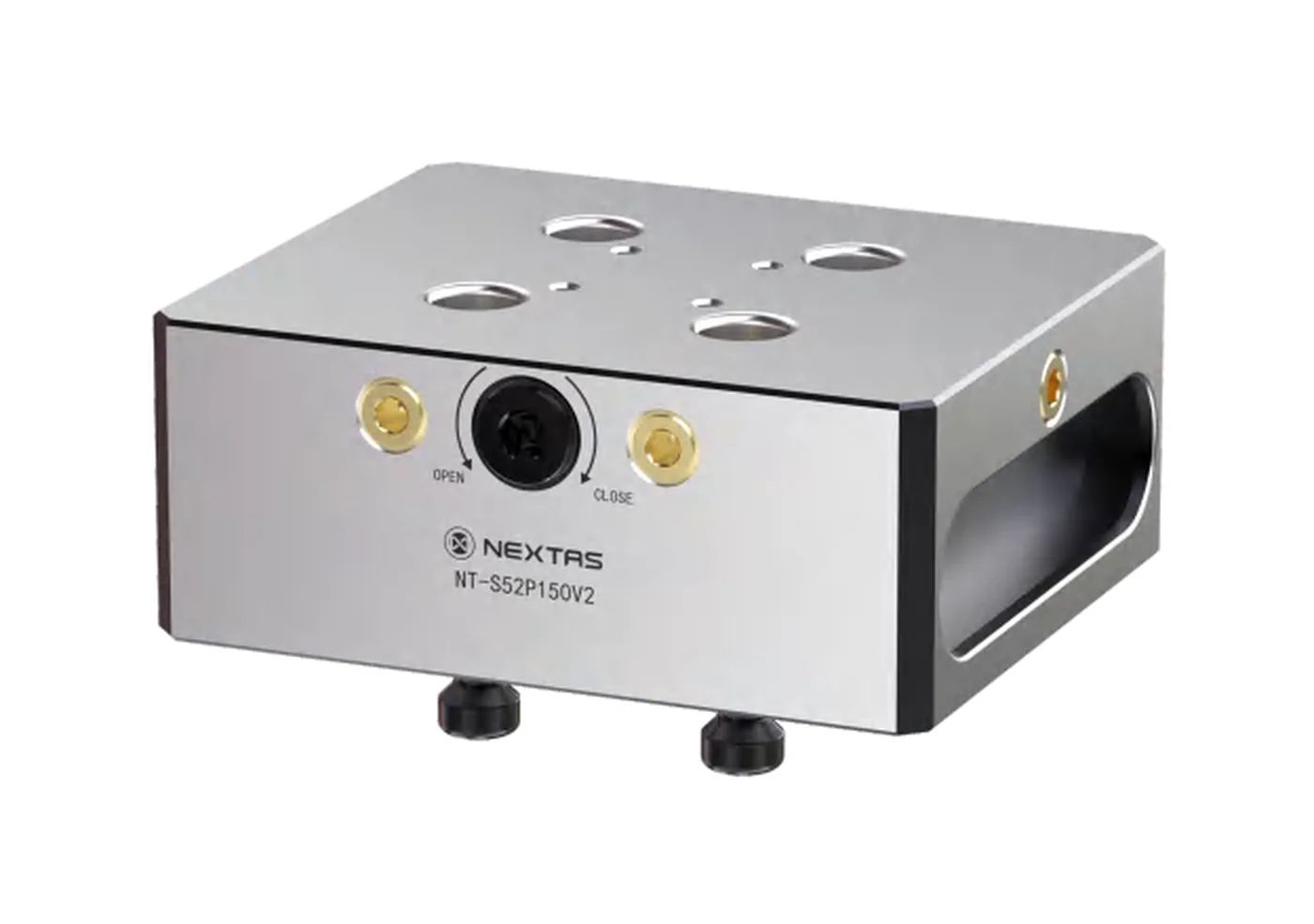
1 / 6Low riser zero-point plate NT-S52P150V2 with side access and locating studs.
Enlarge product imageThe six manual models include riser and riser-seat options. Catalogue names such as Riser 60 and Riser 100 do not define net installed height; use the selected drawing.
These values are the 2026 NEXTAS quick-change catalogue text for the six named models. They do not replace the approved drawing or a machine acceptance check.
| Item | Catalogue name | Clamping force | Pull stud | Weight |
|---|---|---|---|---|
| NT-S52P150V2 | P150 Riser 60 | 20 kN | NT-S52P16V1 | 6.9 kg |
| NT-S52P150V3 | P150 Riser 100 | 20 kN | NT-S52P16V1 | 11.5 kg |
| NT-S52P250V1 | P250 Riser Seat | 20 kN | NT-S52P16V1 | 9.1 kg |
| NT-S96P192V3 | P192 Riser 60 | 30 kN | NT-S96P20V1 | 11.7 kg |
| NT-S96P192V4 | P192 Riser 100 | 30 kN | NT-S96P20V1 | 19.3 kg |
| NT-S96P315V1 | P315 Riser Seat | 30 kN | NT-S96P20V1 | 16 kg |
Selection and mounting
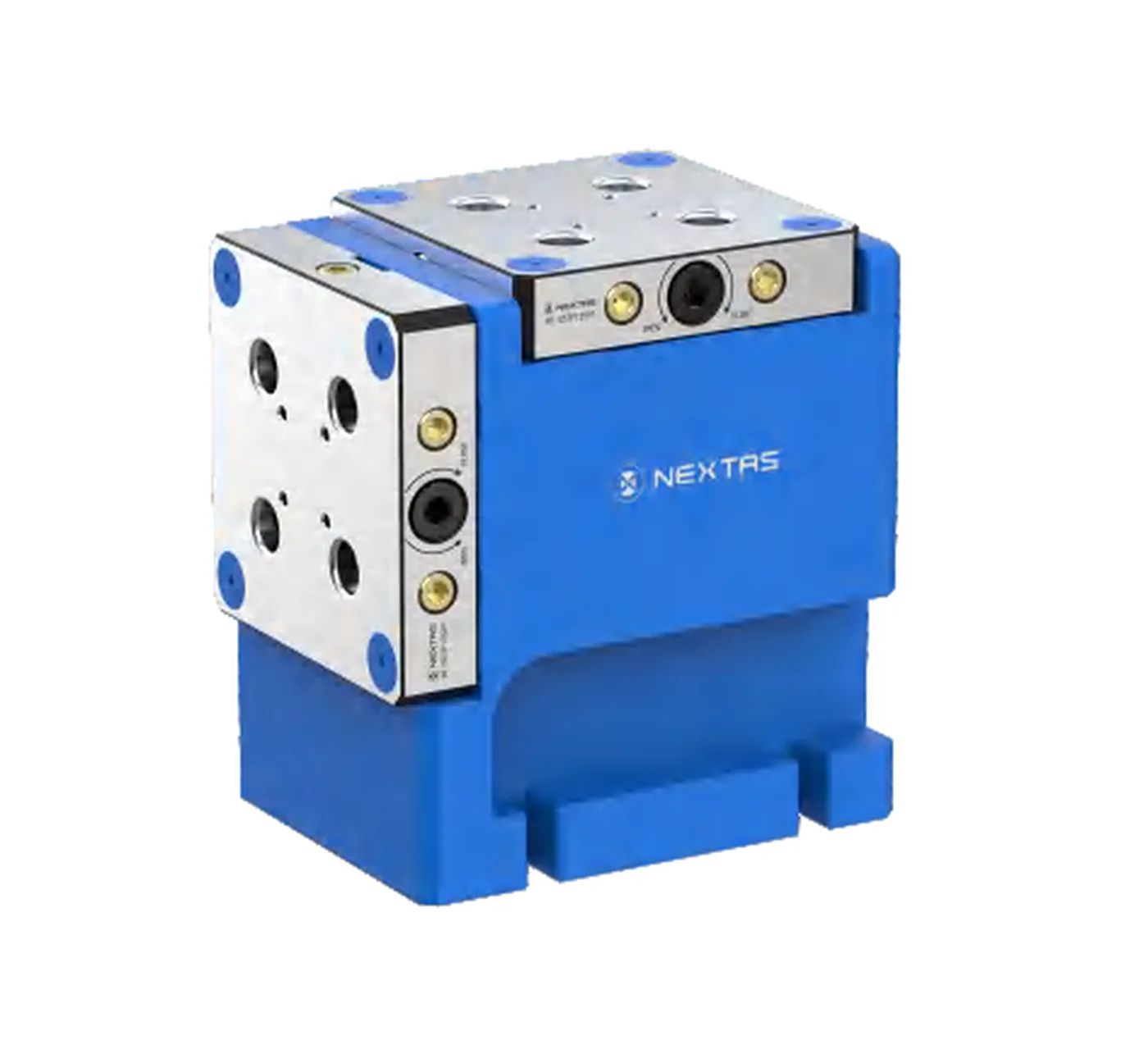
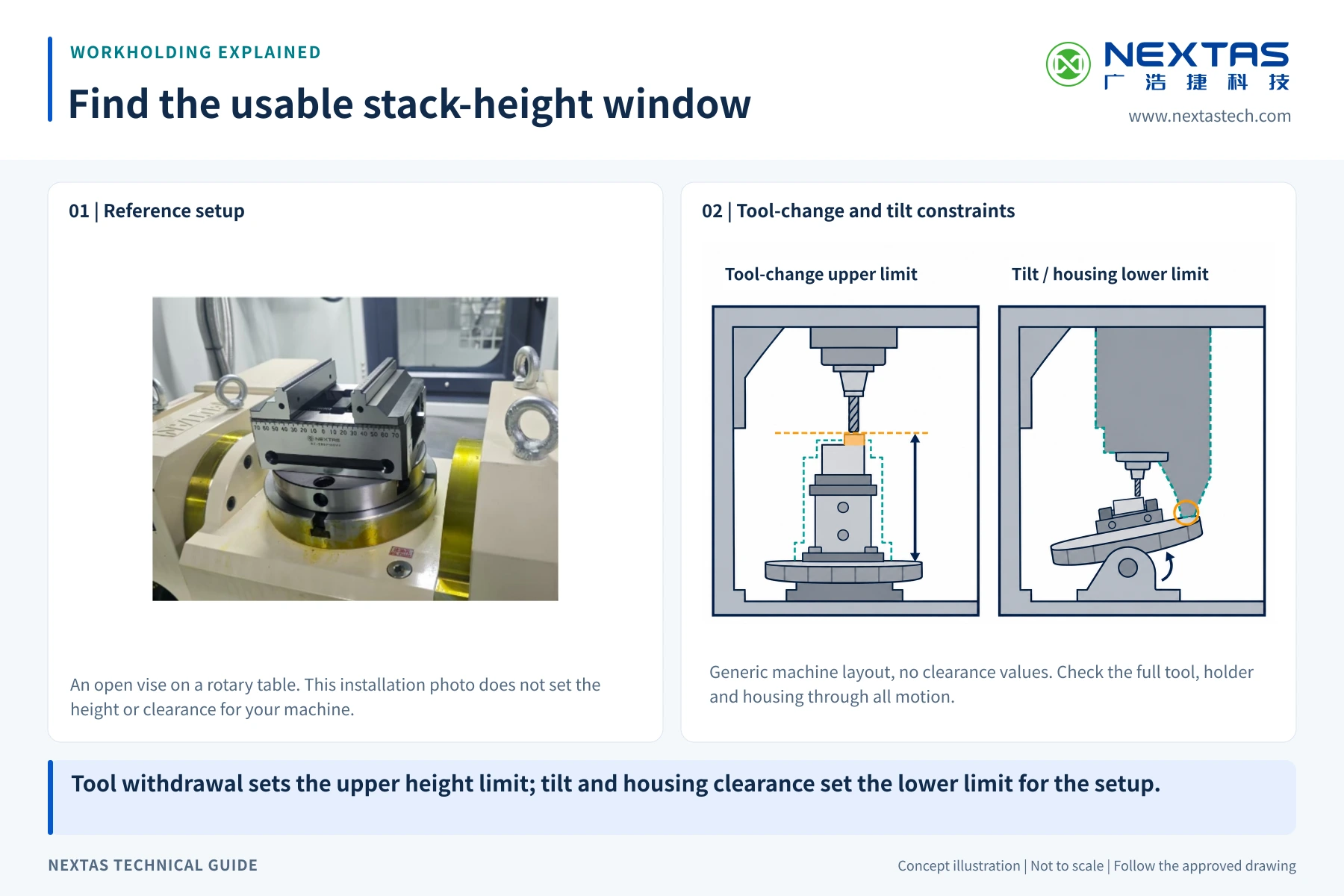
Use a right-angle plate for an upright side-face mounting, a combination plate for both stud families on one base, or a flat manual plate when no raised seat is needed. Confirm Z clearance to the spindle housing, tool carousel and enclosure on the complete machine and fixture drawings.
Applications
An elevated locating face can improve access; verify every required tilt and tool-change position.
Compare the listed riser and riser-seat models, using the drawing for actual installed height.
Keep release access clear and pair the chosen plate with its specified stud.
Page updated . Catalog values for this family come from the 2026 NEXTAS industry quick-change clamping catalog. Confirm drawing-controlled dimensions on the selected model drawing. Request the catalog. Factory, catalogs, and shows.
The catalogue lists NT-S52P16V1 on NT-S52P150V2, NT-S52P150V3, and NT-S52P250V1. Those three rows also list 20 kN.
The catalogue lists NT-S96P20V1 on NT-S96P192V3, NT-S96P192V4, and NT-S96P315V1. Those three rows also list 30 kN.
No. The 52 mm rows list 20 kN. The 96 mm rows list 30 kN. Both figures are catalogue clamping force, not a measured result for a particular cut.
No. The catalogue lists <0.005 mm. Seating, datum, and the cut still have to be confirmed on the approved drawing and on the machine.
The machine table drawing, the item number, the vise or fixture with its pull stud, the workpiece envelope, and the quantity.
Pick a riser when the work needs a raised seat and the drawing names one of the six riser rows. Use a right-angle plate when the seat stands upright for a side face. Use a combination plate when one base must take both 52 mm and 96 mm stud families. Before you release the stack, confirm Z clearance to the spindle, the tool carousel, and the enclosure on the machine drawing and the plate drawing.
Fast quote
Share your machine, fixture or workpiece size, and the access you need. We can review the riser family and available drawings, even if you have not chosen a model.