Start here
Compare by setup goal
Use the filters below to jump straight into zero-point systems, workholding, or automation topics.
NEXTAS Engineering Library
Practical guidance for engineers choosing workholding, validating repeatability, and planning the next level of CNC automation.
Start here
Use the filters below to jump straight into zero-point systems, workholding, or automation topics.
Most practical
These pages are built to help engineers shortlist a workable path, not just browse product news.
Need a faster answer?
When you already know the machine, part, and bottleneck, go straight to contact and share the project details.
Start with these
These articles answer the questions buyers and engineers usually ask first when they are still choosing a workholding direction.
Workholding selection
Choose the upper clamp and machine-side datum as separate decisions. Compare dovetail, self-centering vise and zero-point stack evidence before an RFQ.
Open guide →Zero-point planning
Review both mating drawings, load path, support, stack and acceptance before treating a combo plate as compatible.
Open guide →Automation route
Useful for factories comparing a single quick win against a broader multi-machine automation roadmap.
Open guide →Explore the library
Showing all 66 guides
Complete archive
Showing 1–12 of 66 guides · Page 1 of 6

Too tall, and the longest tool cannot pull back for a tool change. Too short, and the spindle housing hits the table when the part tilts.

Prepare a CNC dovetail tenon with the right stock allowance, flank geometry, toolpath order and over-pins inspection checks before 5-axis machining.

A thin wall that looks good in the fixture can fail after you open the clamps. Put each clamp over a rest. Let extra supports touch, then lock them.

Seat the second cut on first-op faces and holes. Clamp over the rests, use a round pin with a diamond pin, and check springback on the first part.
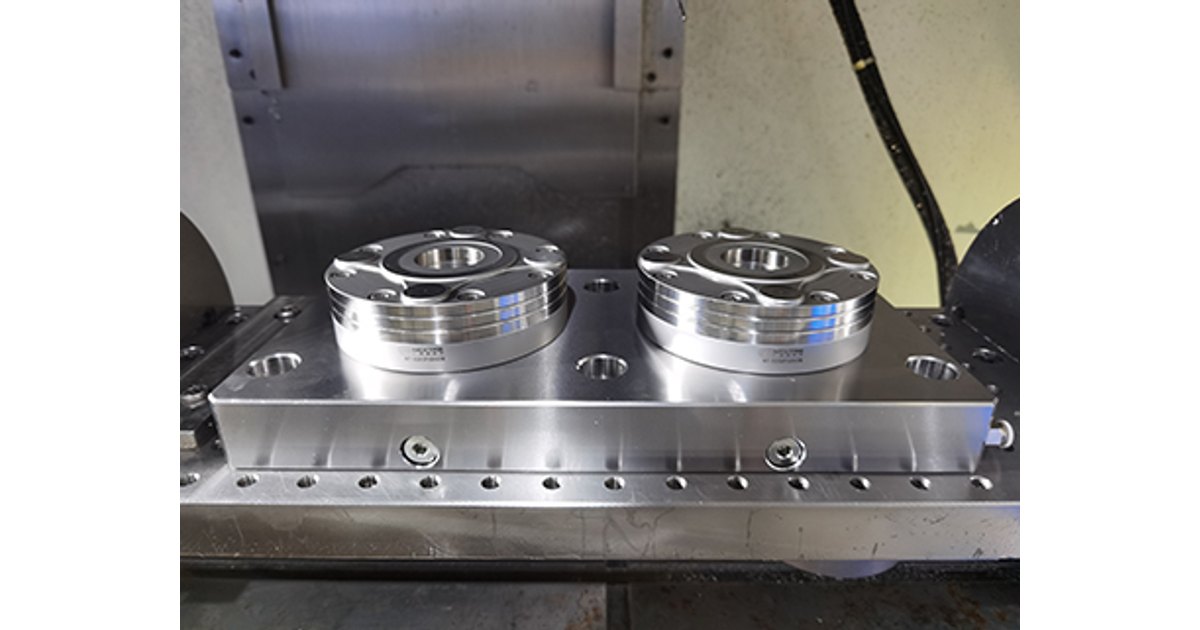
Stock pins, seals, and grease for a zero-point cell. Plan reorder by days versus factory rebuilds, and name the module from its mark, bore, and air ports.

NT-S100P100RV2 and NT-S100P100RV3 list the same minimum clamp and return accuracy. Choose by mounting face, added mass and air routing, then check the drawing.

Clock the holder once, then drop, clamp, and run without a new indicate.

Compare NEXTAS BDS A024 and B024 for robot-handled fixture carriers. Use table size, pallet weight, and tipping risk before you quote.

Use cycle time, mix, tools, and fixtures before you buy.

Match the face to the cut, then send blank and load data for a drawing review.

Compare T-slot receivers, a full-table sub-plate, and a hybrid grid-plate when adding zero-point clamping to an existing mill. Check leftover tool height, chips, mix, and quote data.

Compare the NT-S52P105V2 with longer S52 vises that share 52 mm mounting spacing. Check blank width, jaw setup, length and weight before requesting a quote.

Meet NEXTAS at JIMTOF 2026, October 26–31, Tokyo Big Sight, West Hall 3, Booth W3035. See the workholding systems planned for display.

Plan the pallet handoff from AGV delivery to robot transfer and CNC loading. Check support, grip, machine seating and the return route before choosing hardware.

See how drawing, finish, inspection, quantity, and delivery scope change CNC prototype prices—and how to prepare a comparable request for quotation (RFQ).

Compare 85, 120, 160 and 195 mm zero-point receiver classes, then choose a first-pass module layout from the full load case, span and datum needs.

Calculate pneumatic workholding air per cycle, stroke flow and FRL capacity, then verify minimum pressure at the fixture under simultaneous demand.
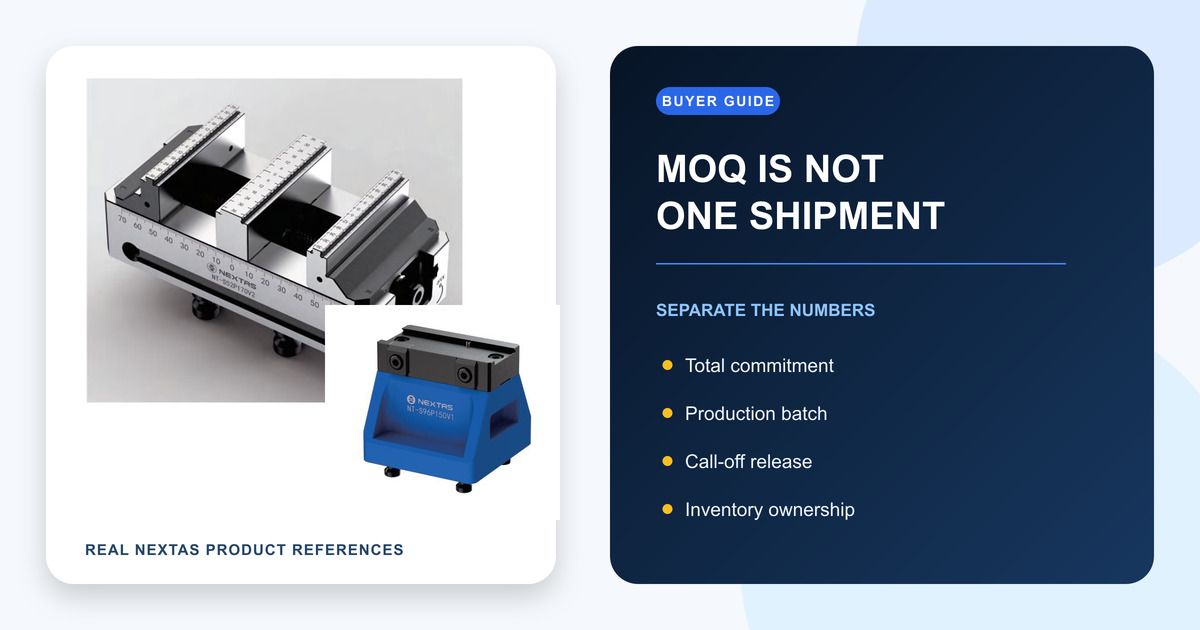
Plan CNC workholding MOQ by separating forecast, firm commitment, production batch, and call-off quantity without hiding excess or obsolete stock risk.
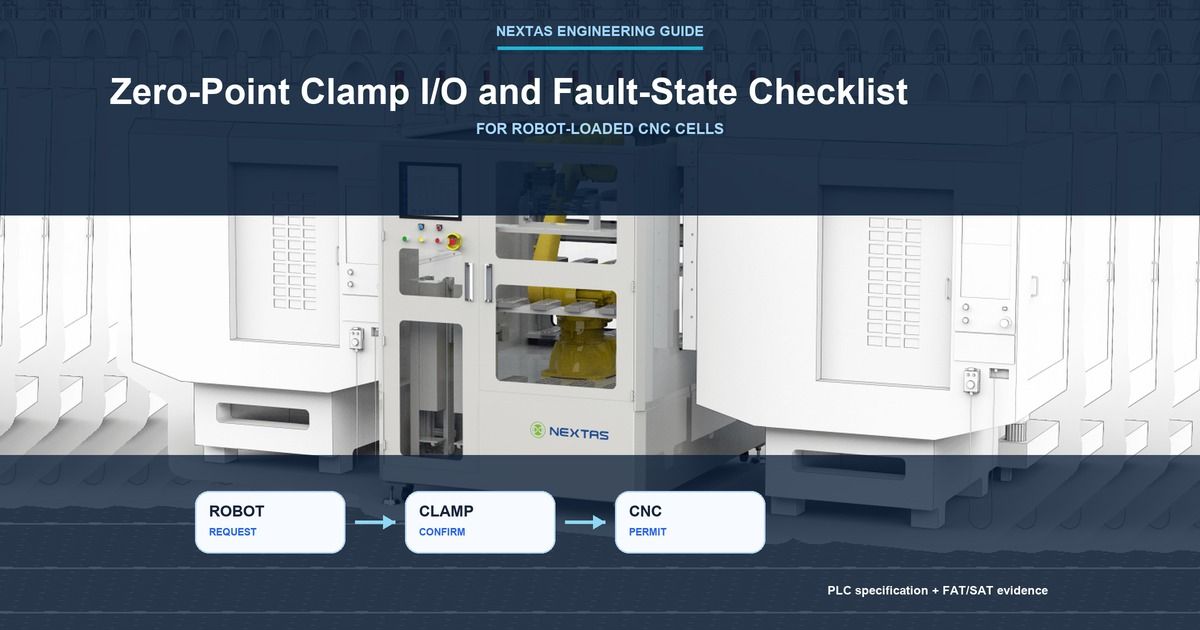
Use this plain-English checklist to confirm clamp signals, plan fault recovery, and test a robot-loaded CNC cell before production.
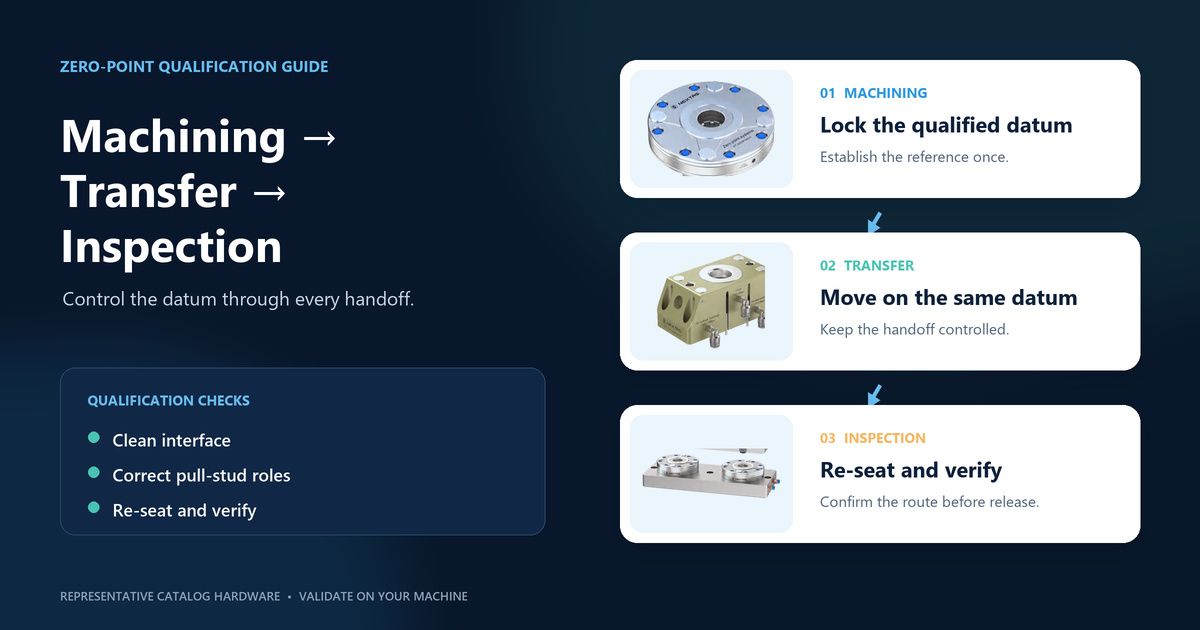
Separate receiver reseating from cross-station datum shift, build the tolerance stack, and qualify zero-point transfer from CNC machining to CMM inspection.
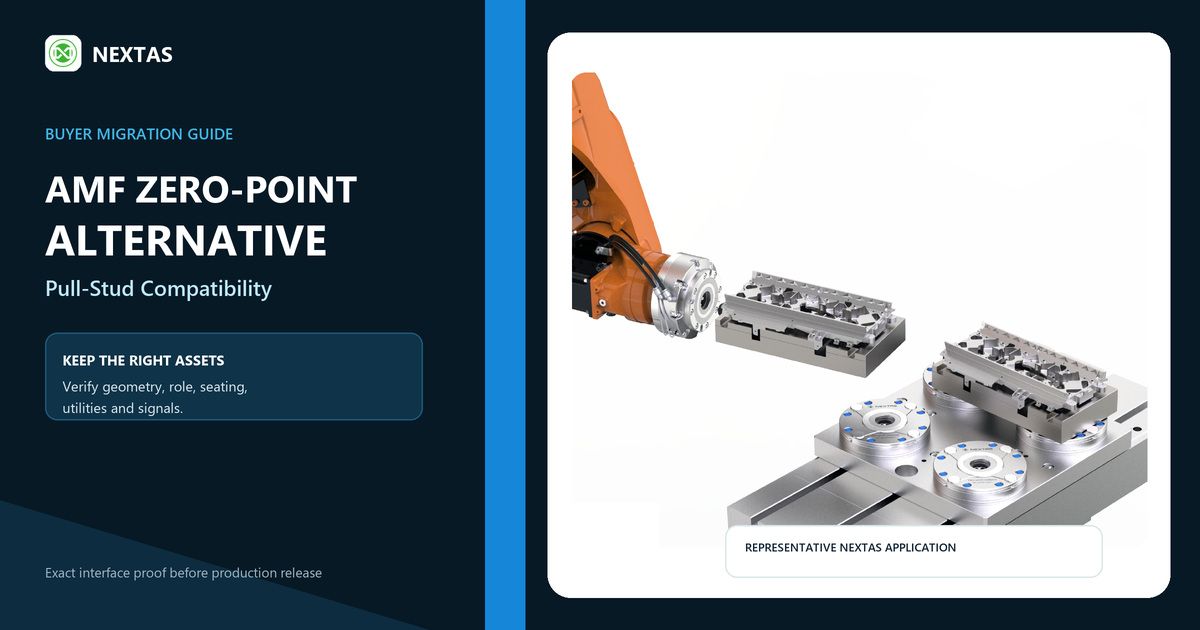
Evaluate an AMF zero-point alternative by pull-stud role, geometry, receiver fit, migration route, pilot acceptance, TCO and quote inputs.
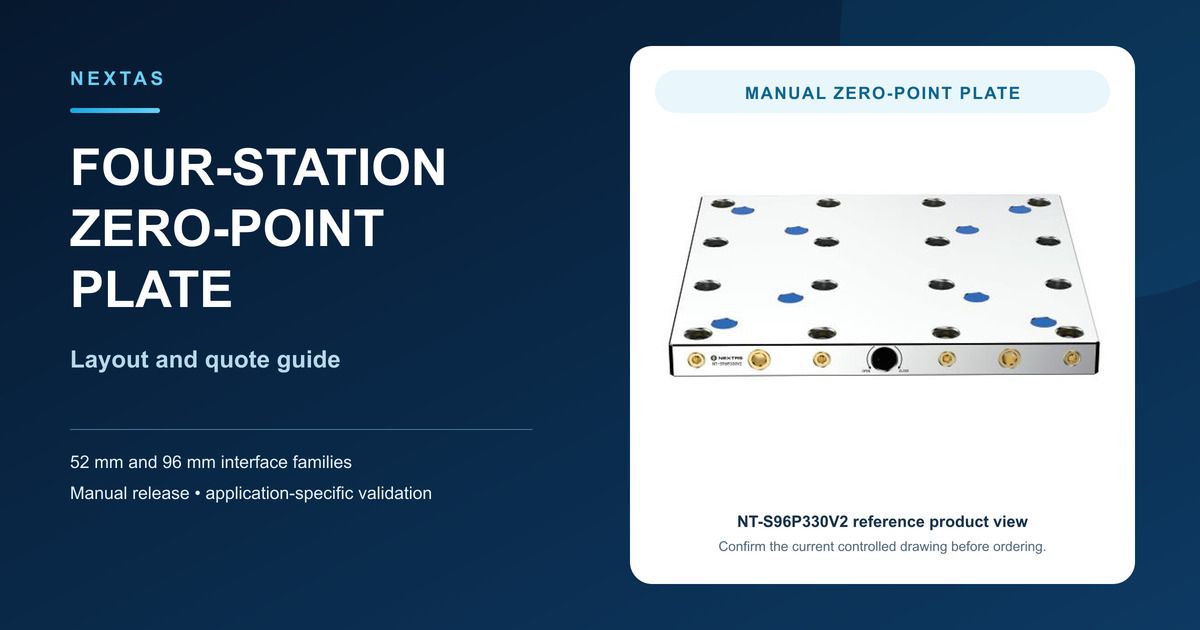
Compare 52 mm and 96 mm NEXTAS four-station plates, check CNC clearance and load paths, and prepare a quote-ready zero-point layout.
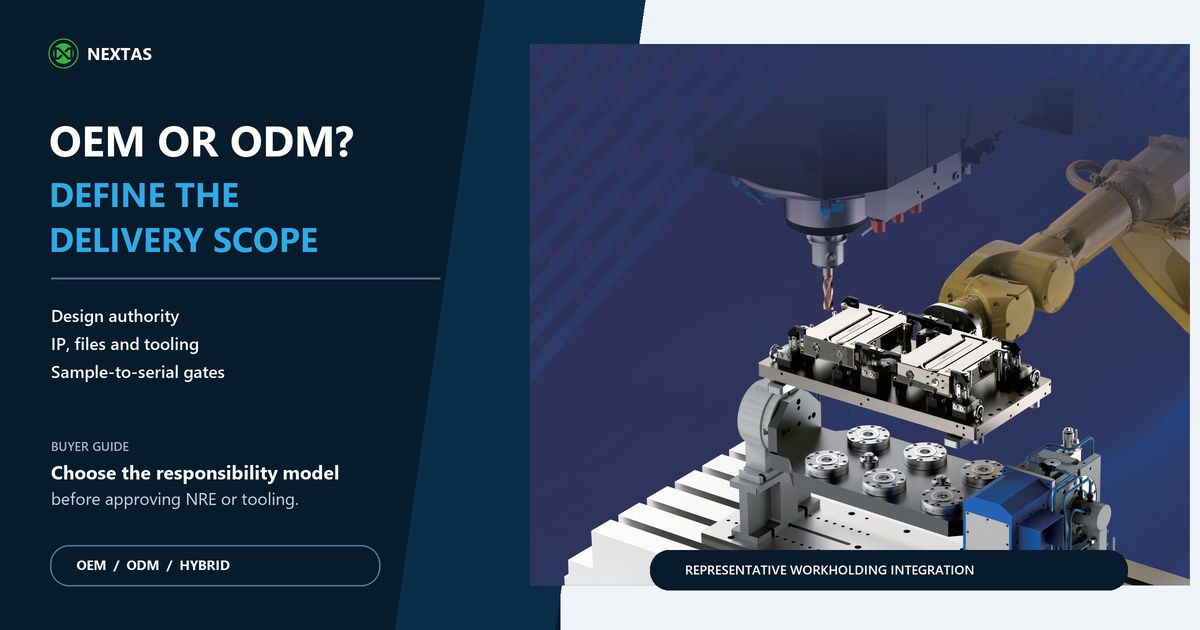
Choose OEM, ODM or hybrid workholding by design authority, IP, tooling, sample gates, cost, MOQ and serial-production change control.
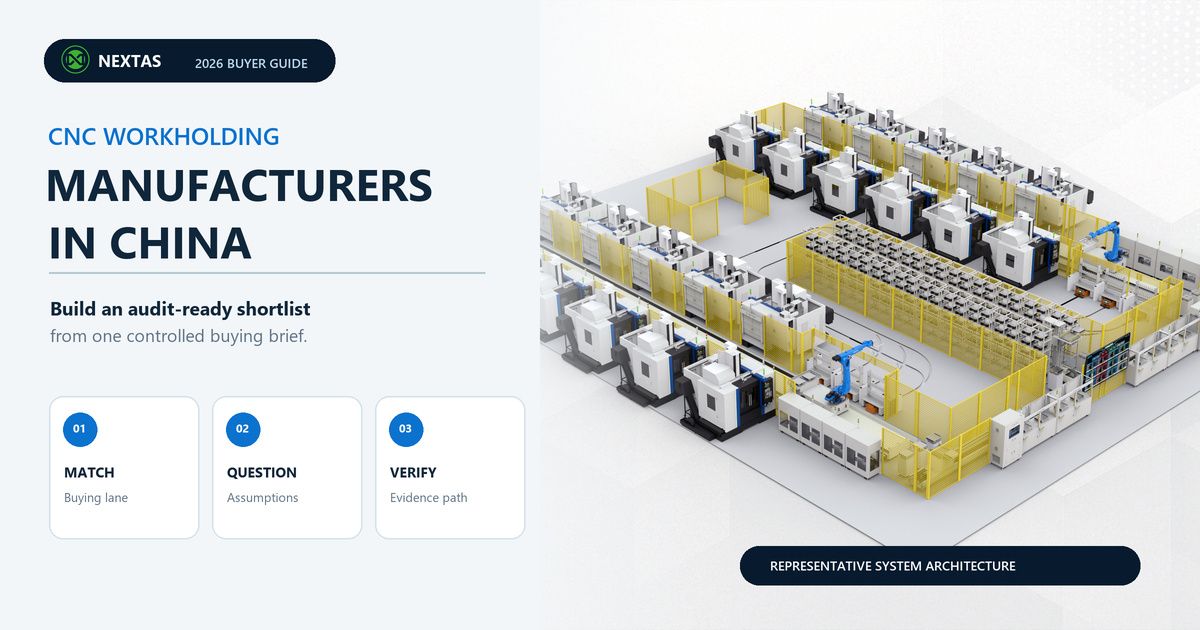
Build an audit-ready shortlist of China CNC workholding manufacturers by application fit, comparable engineering responses, elimination gates and delivered scope.
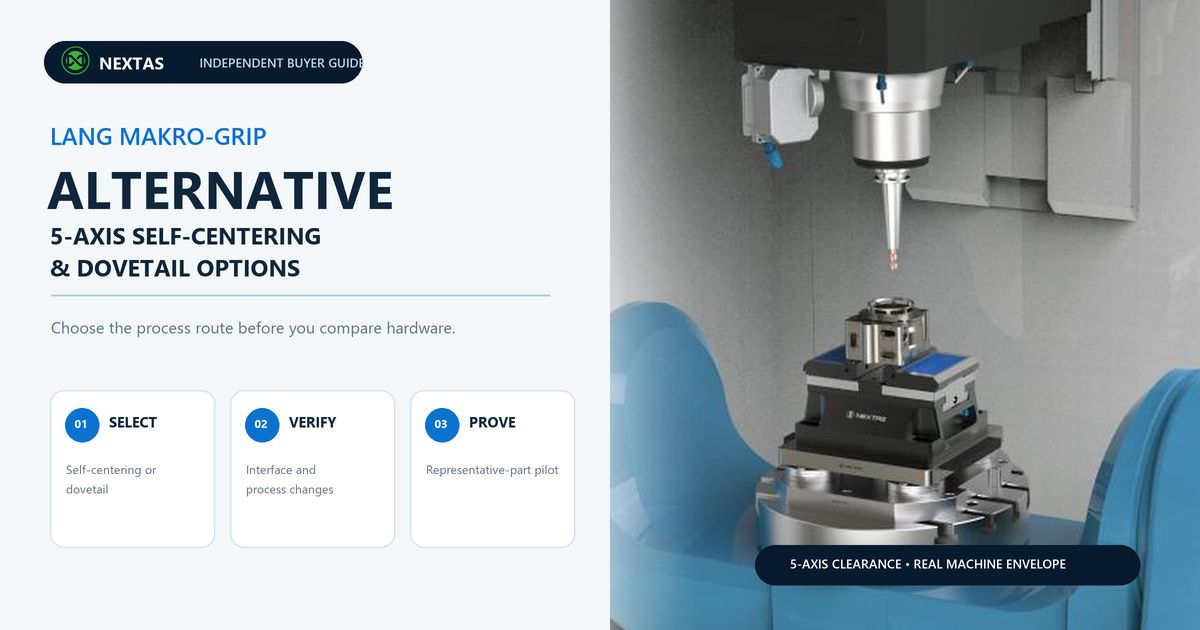
Choose between self-centering and prepared-dovetail routes by process change, interface proof and a representative-part pilot.
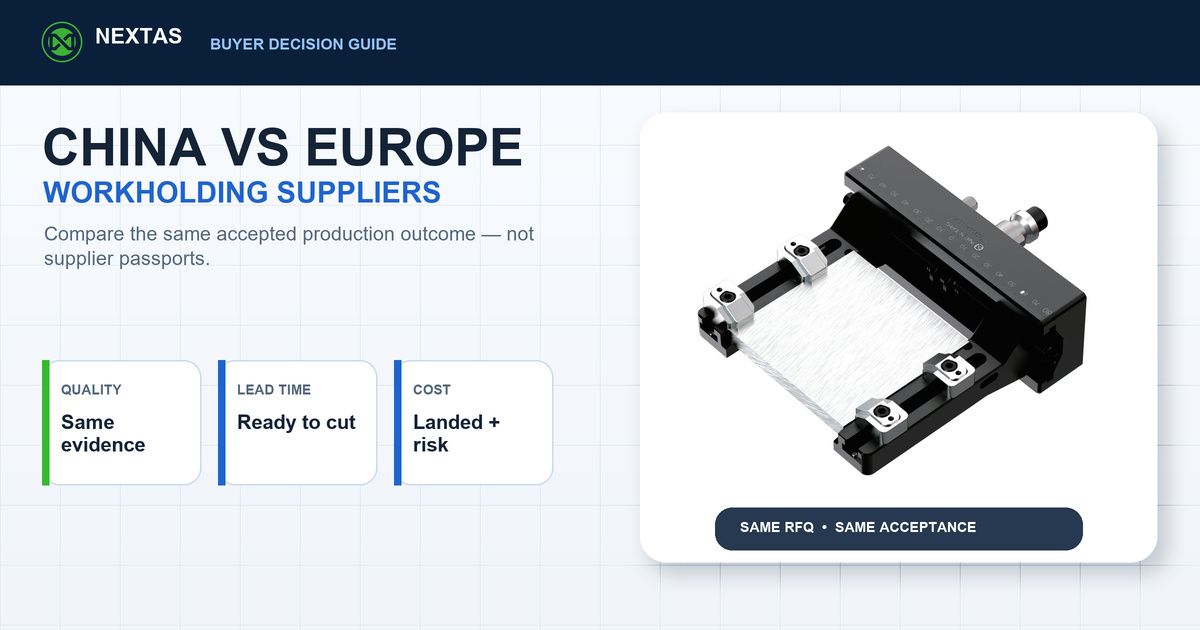
A same-scope buyer framework for quality evidence, ready-to-cut lead time, landed cost, interface risk, spares and supplier qualification.

Certificate verification, QC evidence, metrology checks, bottleneck capacity proof, pilot gates and a weighted factory audit scorecard.
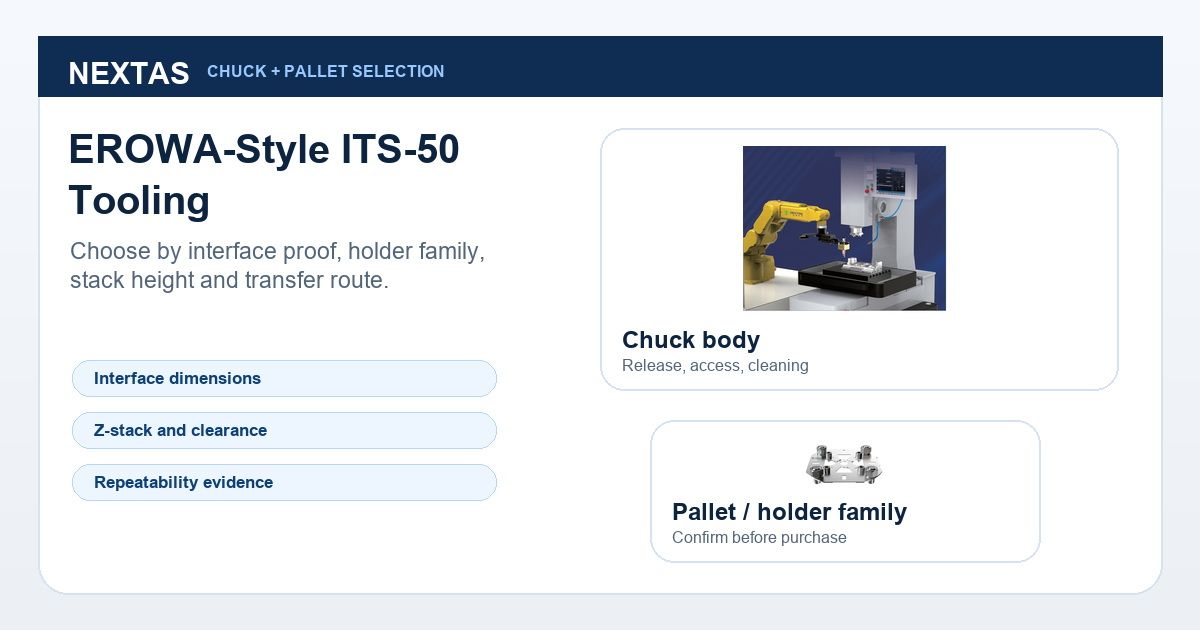
Buyer guide to EROWA-style ITS-50 chucks, holders and pallets: interface fit, stack height, release method, repeatability proof and RFQ scope.
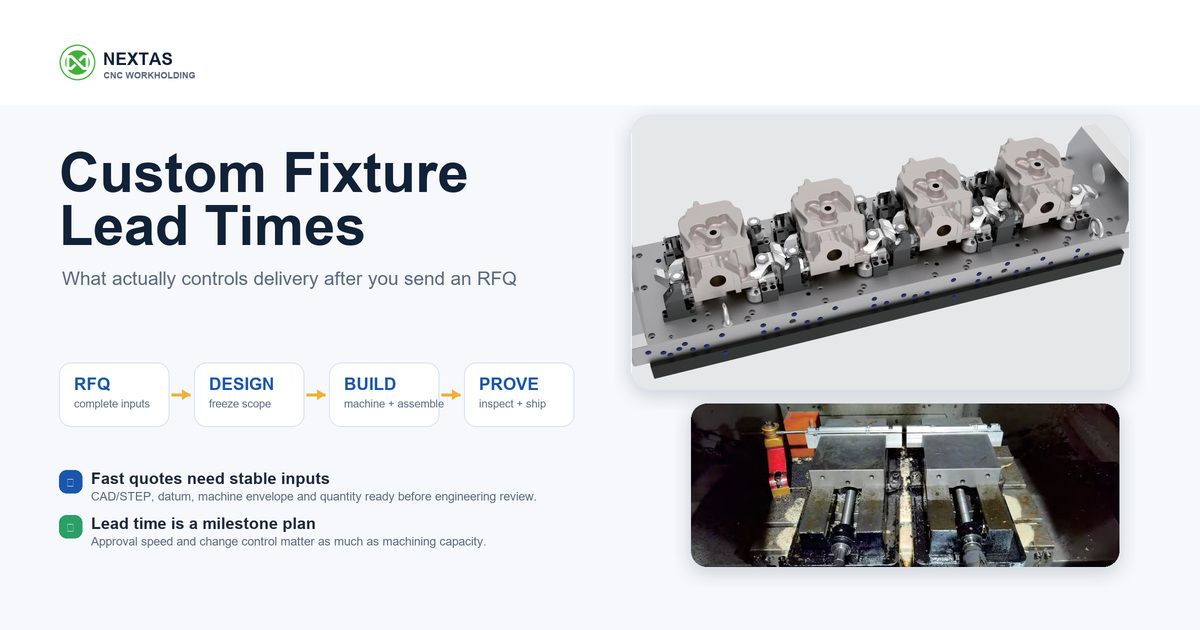
A practical guide to custom CNC fixture lead times: RFQ inputs, design freeze, machining, assembly, inspection and change control.
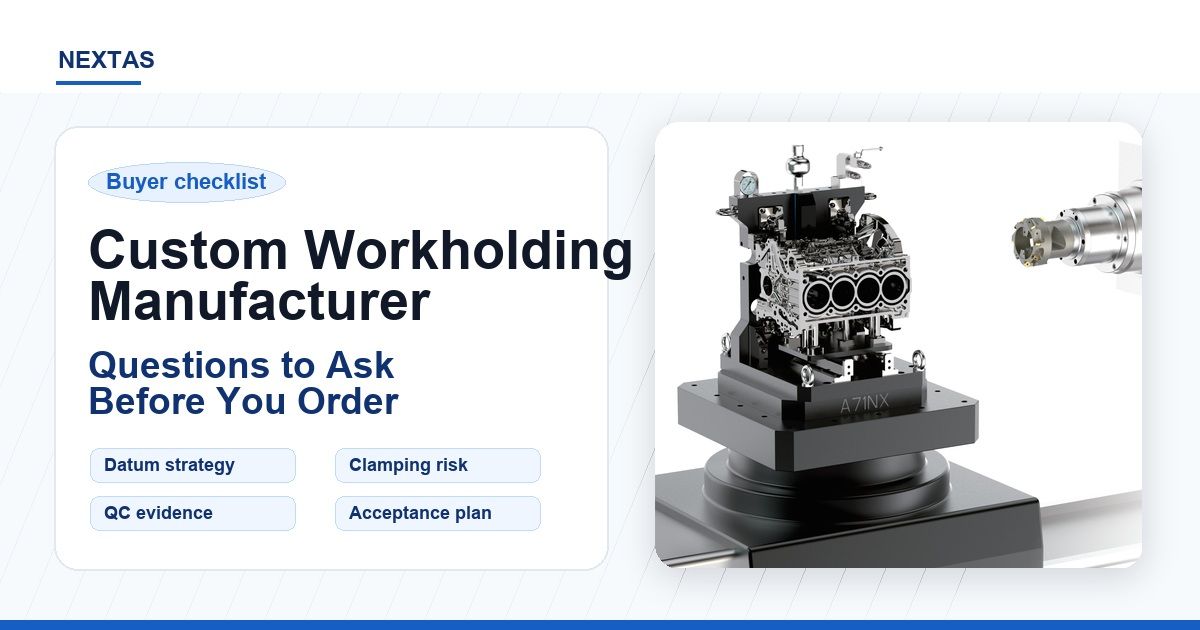
A buyer-focused checklist for choosing a custom workholding manufacturer: datum strategy, clamping risk, DFM review, QC proof, sampling, ownership and RFQ inputs.
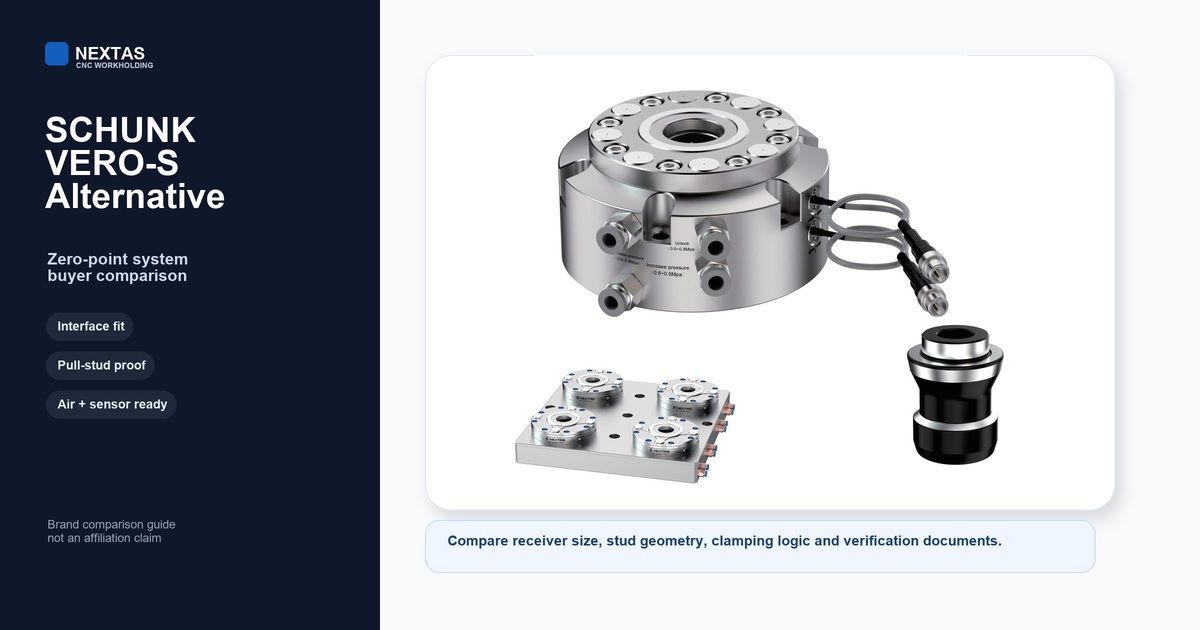
Compare zero-point system alternatives by receiver interface, pull-stud fit, repeatability proof, air routing, sensor readiness and RFQ inputs.
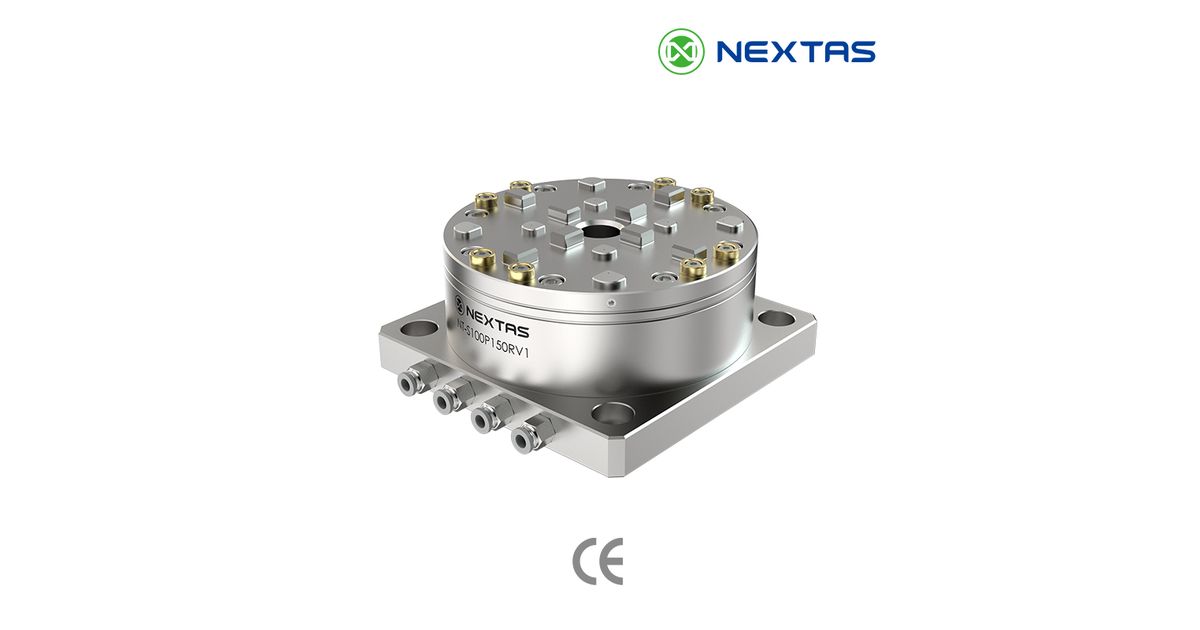
Choose a System 3R-style chuck by the exact holder family, process load and acceptance proof. Learn why ITS 50 is not a System 3R interface name.
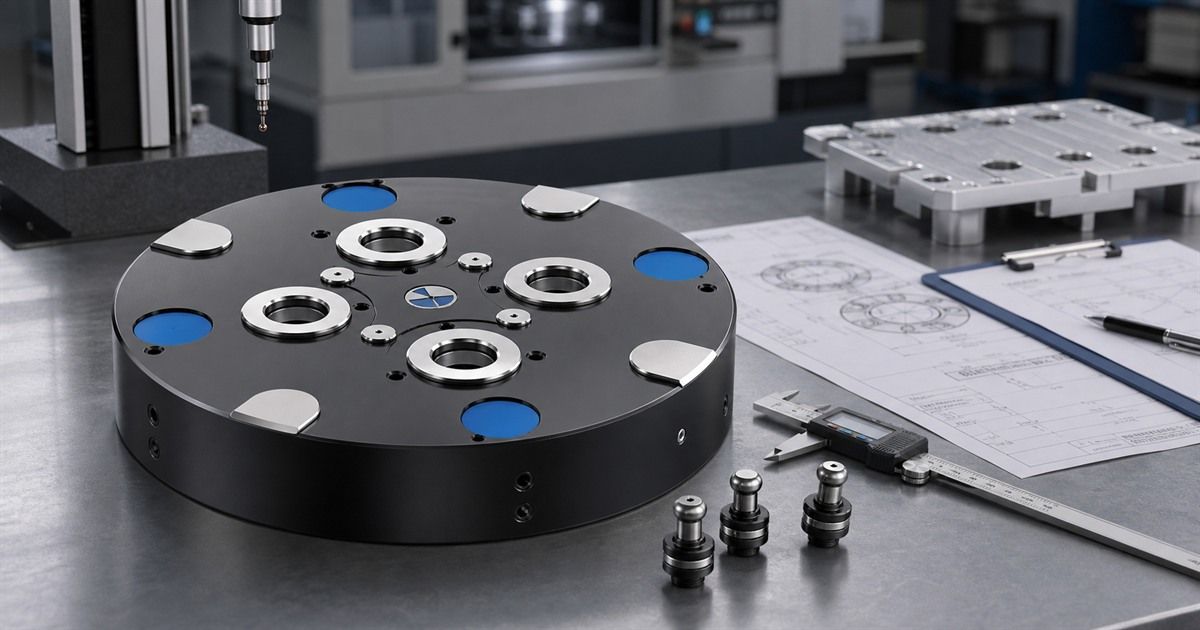
A practical zero point system supplier checklist for CNC buyers: specs, inspection proof, engineering support, quote clarity, integration risk and RFQ inputs.
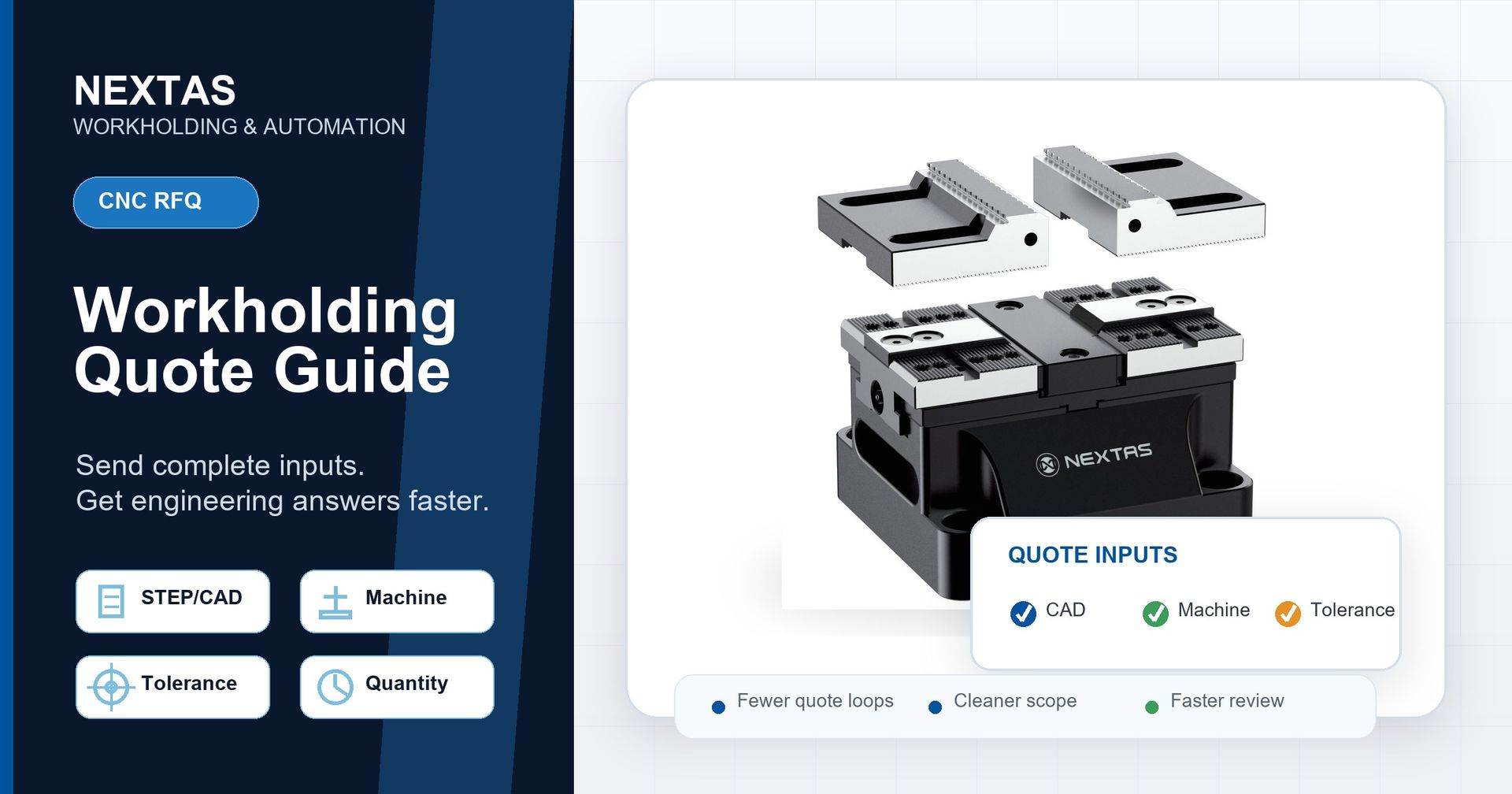
The exact information to send so a CNC workholding supplier can quote fast: part data, CAD/STEP, machine, tolerance, automation plan and quantity — plus a copy-paste RFQ template.
Build a quote-ready budget by separating receiver, mating interface, plate, integration, acceptance, documents, spares and commercial terms.
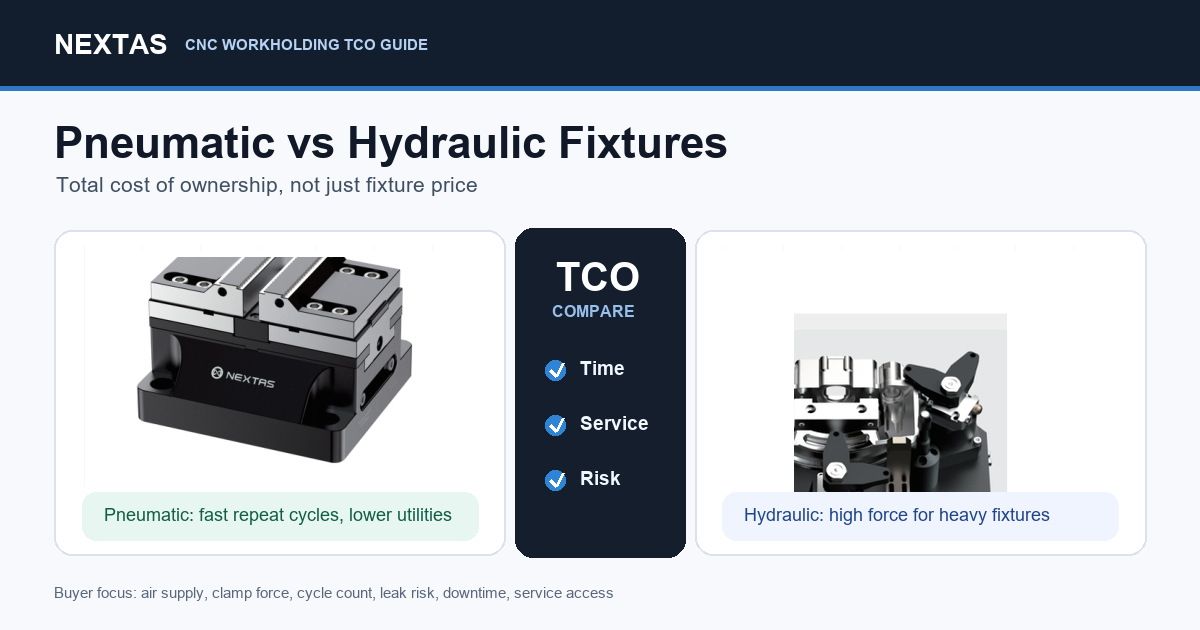
A buyer-focused TCO comparison of pneumatic vs hydraulic fixtures for CNC machining, covering fixture price, utilities, cycle time, maintenance, scrap risk, automation fit and RFQ inputs.
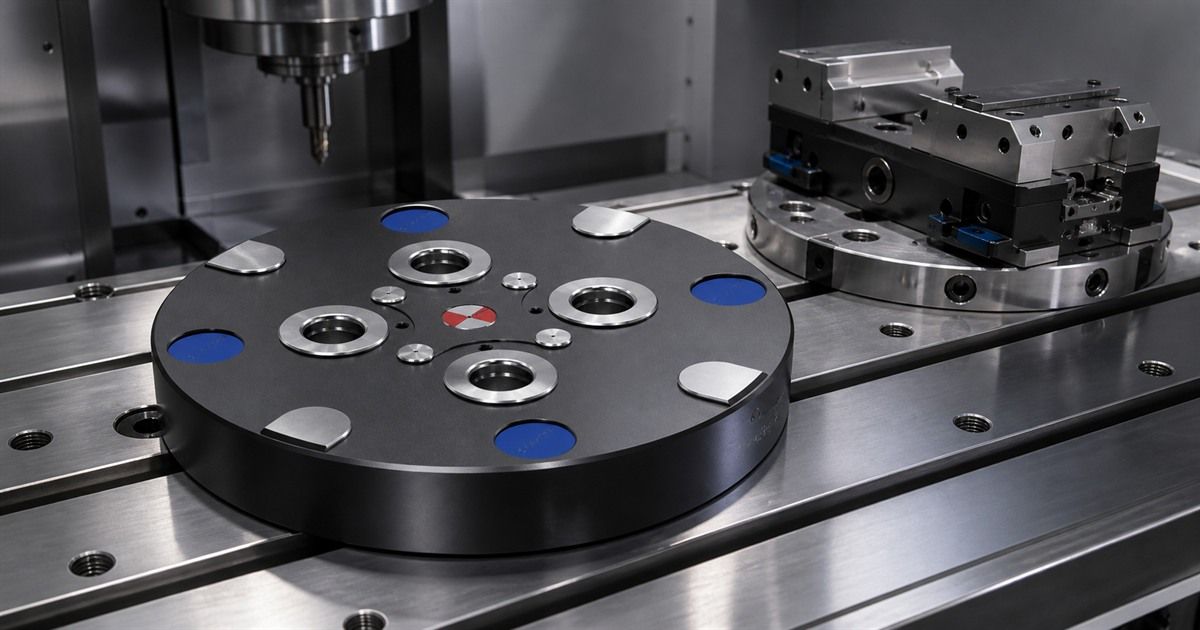
Buyer checklist for comparing zero-point plate alternatives for 5-axis machining: compatibility, grid layout, repeatability, RFQ inputs and risk checks.
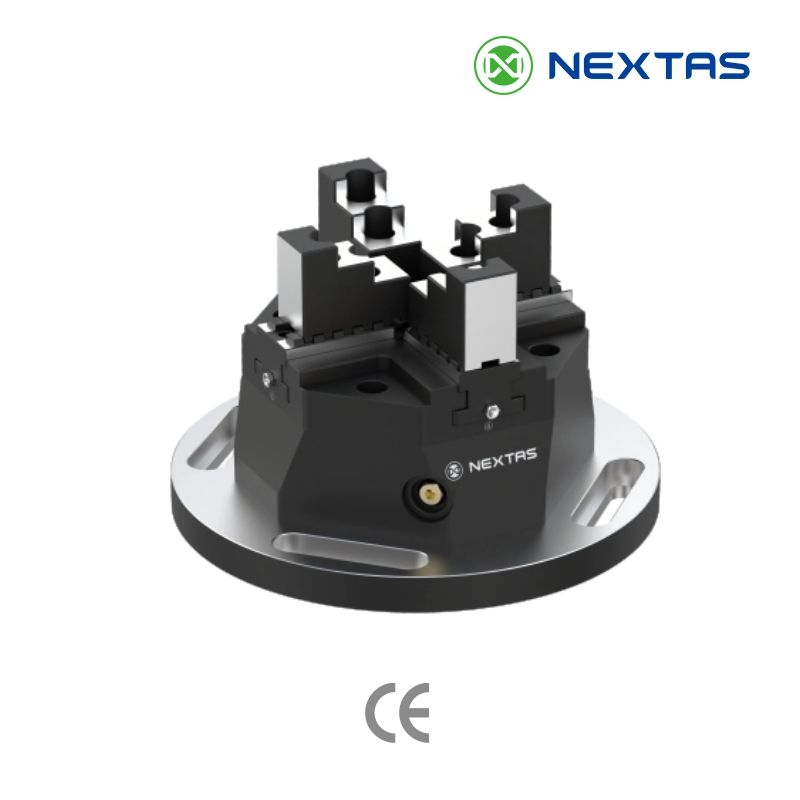
How a four-jaw floating chuck self-centers irregular, asymmetric and round workpieces, with P150/P220 specs, clamping sequence and selection advice.

Choose a CNC tooling column by machine table, axis envelope, total load, face access, mounting pattern, inspection plan and acceptance data.

Plan a zero-point system for a 4-axis rotary table: check the interface, stack, space, mass and centre of gravity, routing, interlocks, and release checks.

Choose manual, pneumatic or hydraulic workholding by part load, support, utilities, control needs and recovery evidence before comparing project cost.

Separate same-interface reseating, cross-station transfer, finished-part results and measurement uncertainty before accepting a model-specific claim.

Check visible contacts, record symptoms, decide when to stop, and plan a controlled service retest without unsafe generic adjustment instructions.
Verify mating drawings, machine mounting, stack height, loads, actuation and acceptance before approving a custom mixed-interface plate.

Choose the upper clamp and machine-side datum as separate decisions. Compare dovetail, self-centering vise and zero-point stack evidence before an RFQ.
Turn a zero-point plan into an exact-model RFQ. Check interface drawings, load and support, pull-stud fit, air and signals, documents and acceptance.

Check controller signals, payload, guarding, fault recovery, unattended readiness and ROI inputs before adding automation to an existing CNC.

Set up an installed pneumatic vise by checking air at the vise, jaw contact, loading, first-piece proof and recovery before production release.

Review NEXTAS FMS software scope, machine, handling and data interfaces, order evidence, FAT/SAT stages and acceptance inputs before purchase.
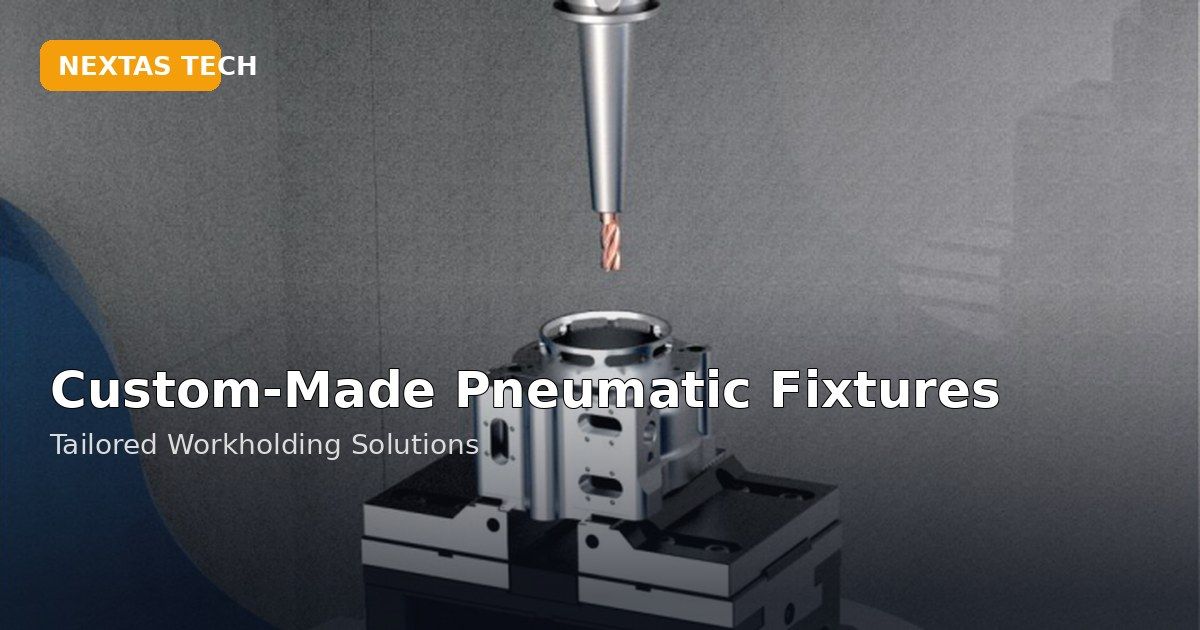
Learn when a custom pneumatic fixture is justified, what a reviewable request for quote needs, and how to plan seating, pressure, trial-cut and recovery checks.
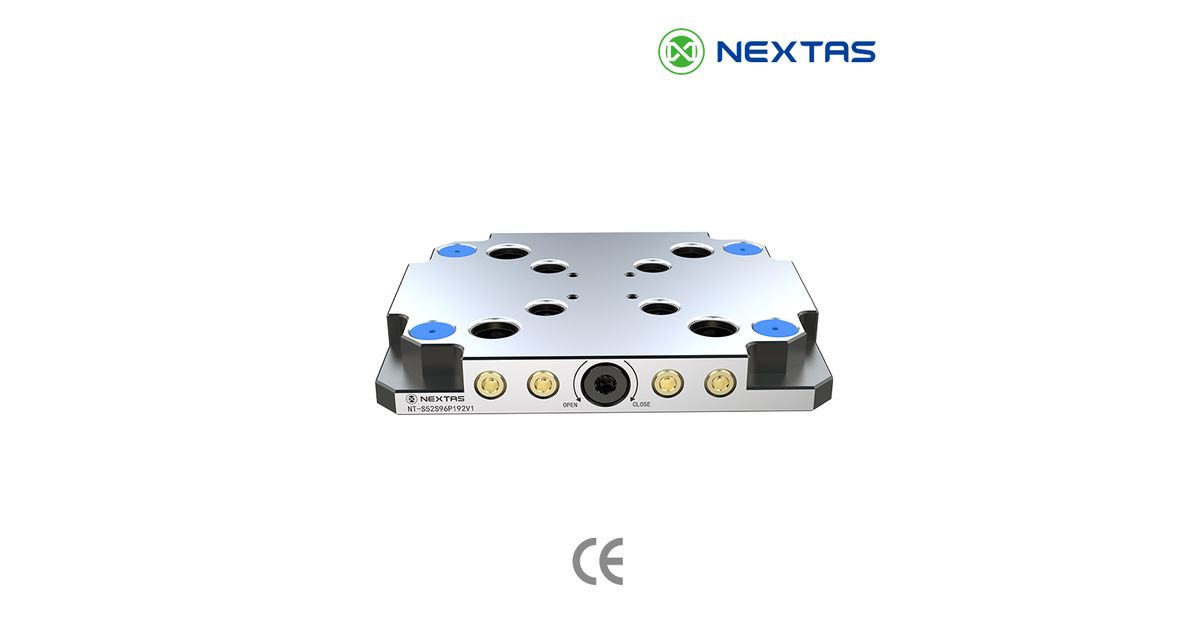
Learn how to standardize manual zero-point plates across CNC machines, check 52 mm and 96 mm interfaces, adapt existing vises, and plan acceptance tests.
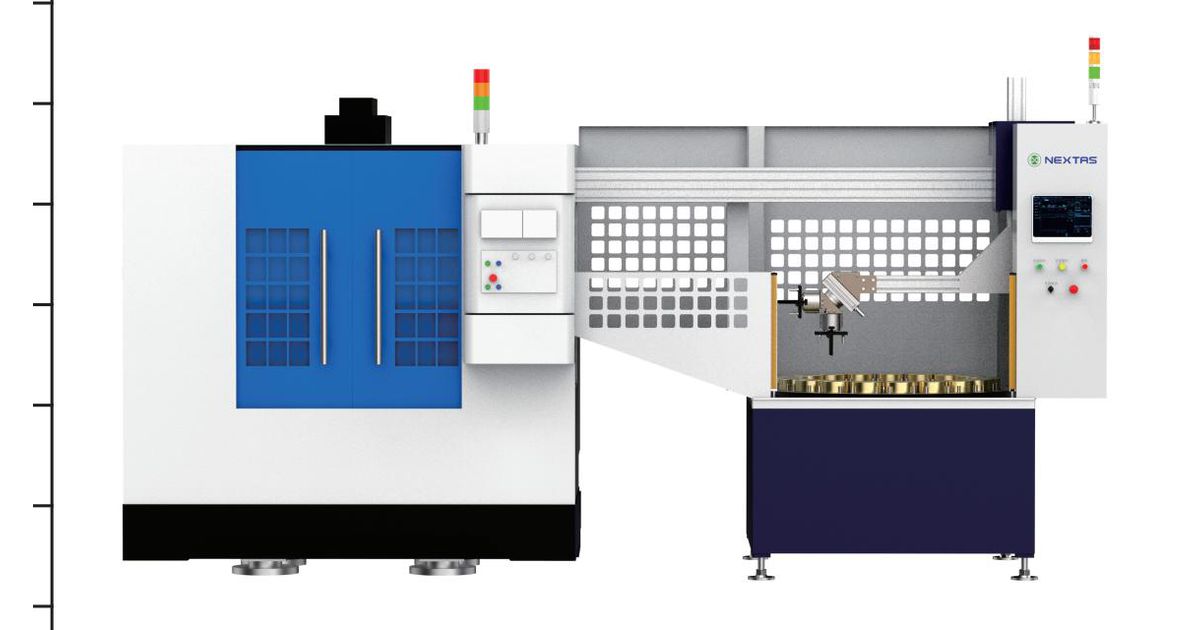
Use measured wait time, part-family stability, data readiness, pilot scope and your own cost inputs to decide whether FMS is worth studying.

Compare a manual pallet changer with an APC or robot cell. Use clamp, setup, cycle, queue and machine-fit data before choosing a CNC retrofit.

Choose a NEXTAS pneumatic vise by part size, jaw contact, machine clearance, pressure and model-specific force. Includes RFQ and acceptance checklists.

Plan a multi-station vise layout by checking station count, spacing, loading paths, chip clearance, mixed-part flow and first-piece acceptance.

Plan the physical handoff between a robot, gripper, part, vise and zero-point receiver. Define signals, recovery steps and acceptance proof.
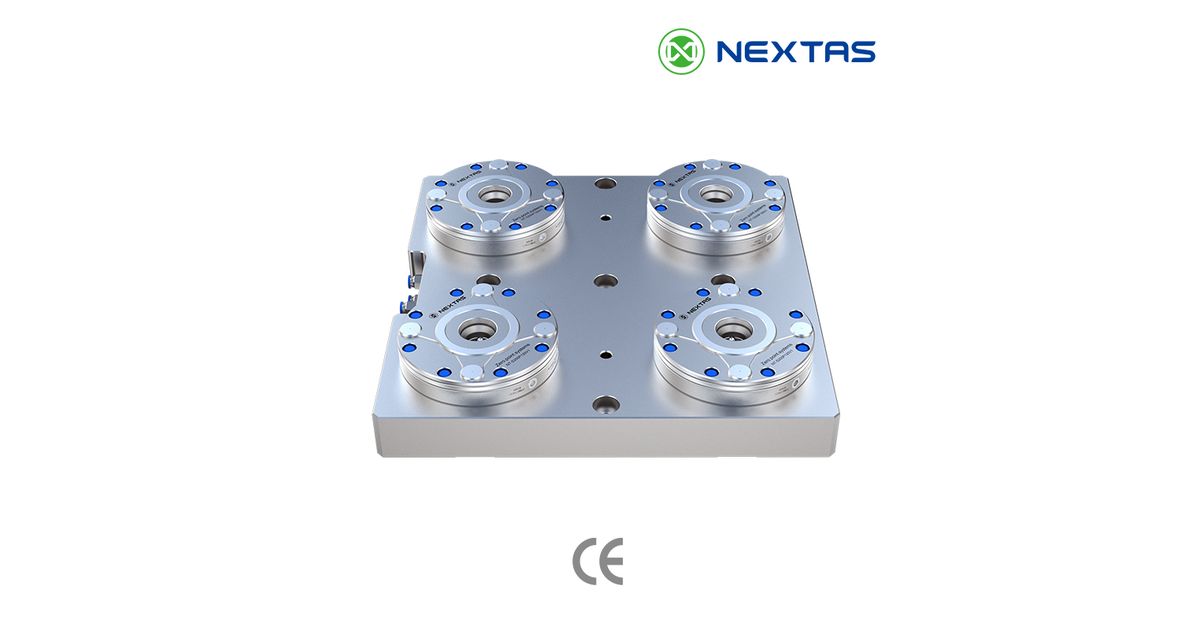
Choose side-inlet or bottom-inlet zero-point routing for an existing CNC table, then check receiver data, hose paths, load layout, and acceptance tests.
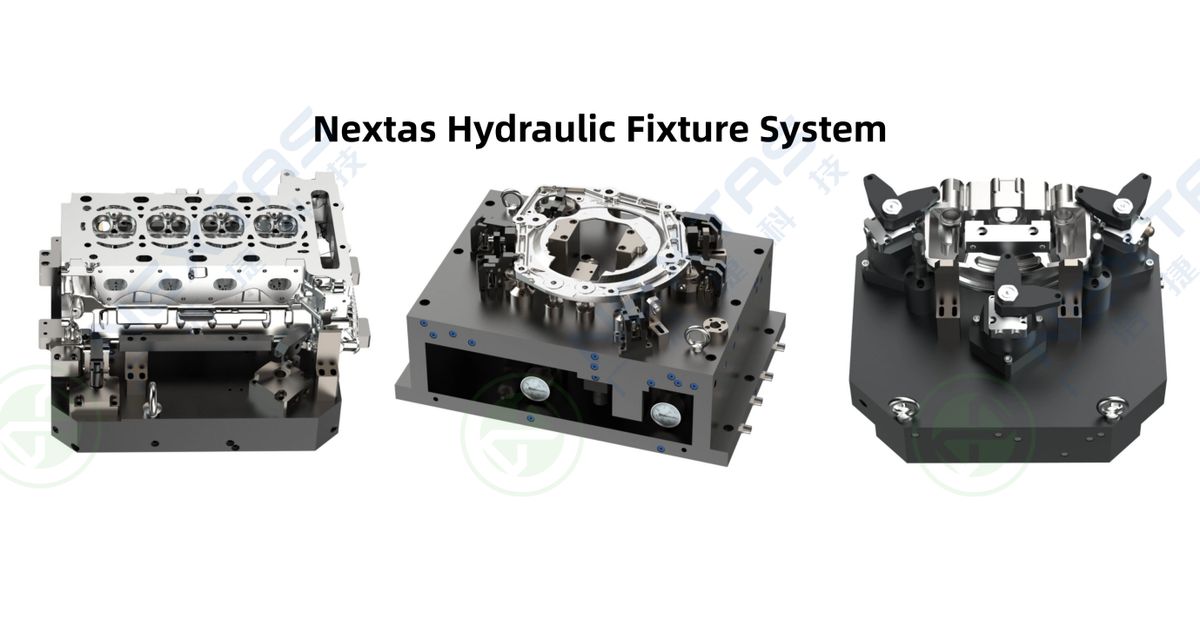
Decide when a custom hydraulic fixture fits automotive machining, what drawings to send, how to protect thin-wall parts, and what to verify before release.
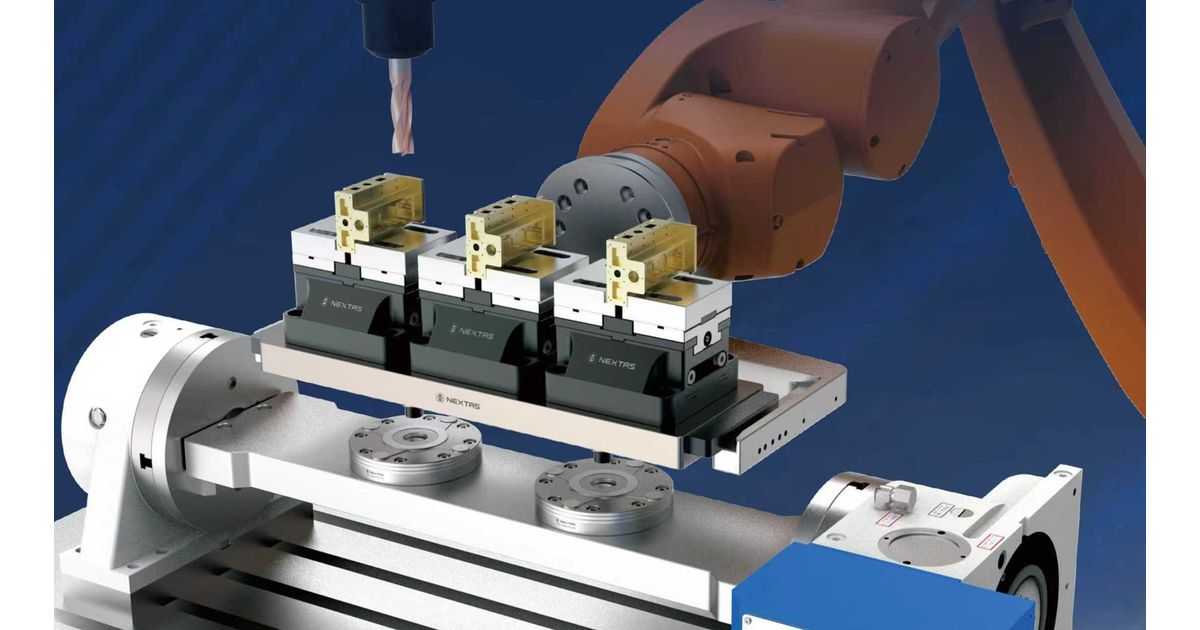
Define air supply, clamp-state evidence, PLC handshakes and release tests for a pneumatic vise in a CNC automation cell.

Plan a pneumatic zero-point plate for automated loading: air supply, seat and lock confirmation, chip control, I/O handoff, safe recovery, and release checks.

Choose a 5-axis self-centering vise by proving part envelope, tool access, jaw contact, grip depth, rotary load and a safe first-cut release trial.
Decide when a premium zero-point plate is justified by checking the selected model, load path, support count, stack height, mounting, and release tests.
Learn what HRC can and cannot prove on a zero-point plate, plus the material, heat-treatment, hardness-test and wear evidence buyers should request.

Build a shop-specific self-centering vise ROI case from measured setup time, changeover frequency, labor, rework, downtime, project cost and a controlled pilot.
Test self-centering vise repeatability on your machine with a controlled clean, load, reclamp, measure and trial-cut plan that keeps setup conditions fixed.
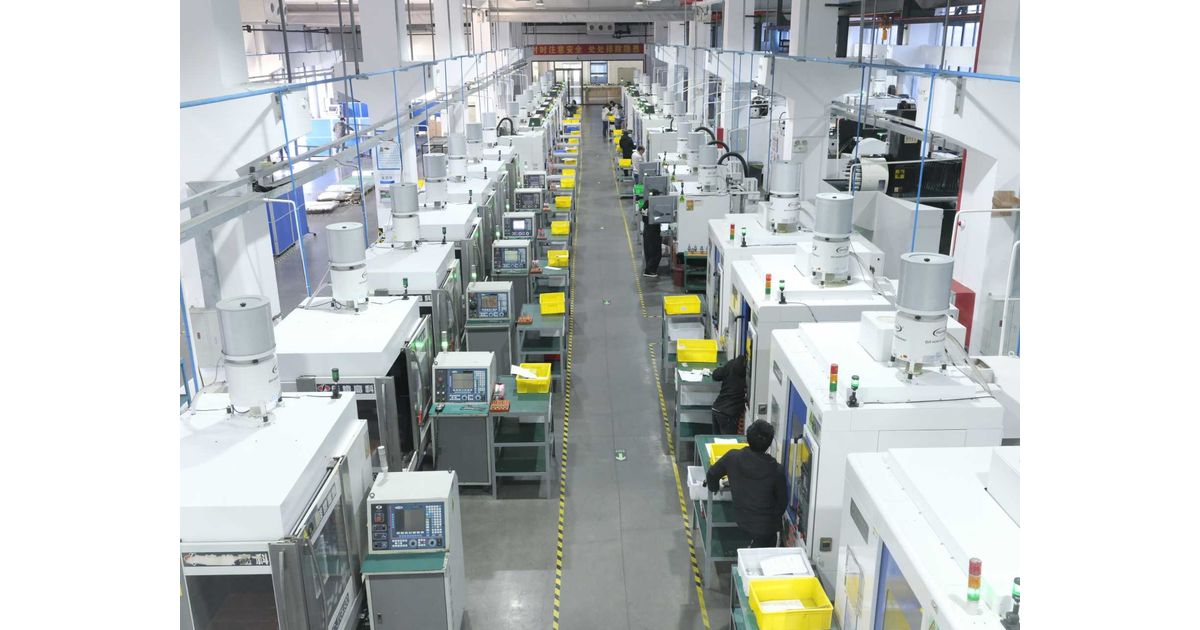
Evaluate NEXTAS with named company evidence, product scope, machine-fit checks, inspection records, lead-time gates, and a quote-ready supplier review.
Curated reading
New guides are added as engineering topics and examples are ready. The latest guide and archive dates above show the most recent additions.
Yes. Tell us the machine, part, and workholding decision you want covered through the contact page.
Our workholding solutions are built for broad compatibility with major CNC machine brands. For specific integration questions about your machine model, pallet interface, or control method, use the article as a starting point and then send our engineering team your project details for a more precise recommendation.
Bookmark this library and check the latest guide above. You can also follow NEXTAS on LinkedIn for updates.