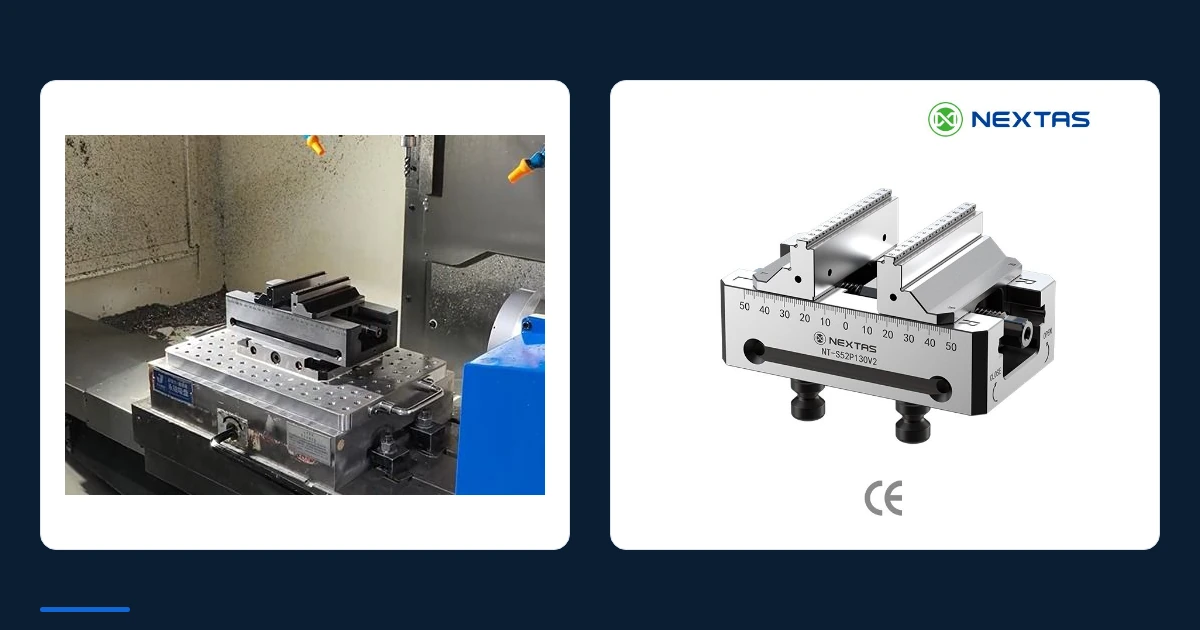
Walk into the fixture storage area of almost any established high-mix CNC job shop, and you will see a museum of workholding history. Shelf after shelf holds mismatched vises bought over a decade—different brands, different jaw heights, different leadscrew pitches, and different mounting footprints.
For a contract manufacturer running standalone 3-axis mills, that patchwork is merely an annoyance. For a shop transitioning to automated 5-axis machining and multi-pallet flexible manufacturing systems (FMS), it is a production-stopping bottleneck.
When one precision aerospace and fluid-power component manufacturer recently commissioned a new automated machining cell, their manufacturing engineering team hit a wall. They had the spindle speed, the robotic pallet loader, and the zero-point base receivers. What they lacked was top-tooling uniformity. Every time a programmer scheduled a batch of 15 or 20 parts across multiple pallets for unattended night-shift runs, operators had to apply individual Z-height and centerline wear offsets to each pallet because no two vises in the shop sat at the exact same datum.
To eliminate that variable once and for all, the shop made a decisive move: they cleared the shelves and ordered a matched fleet of 20 NEXTAS Self-Centering Vises—staged, inspected, and vacuum-sealed for immediate integration into their zero-point pallet pool.
The Anatomy of a 20-Vise Fleet Upgrade
Seeing twenty identical 5-axis vises lined up four-by-five on a NEXTAS assembly cart—and subsequently vacuum-packed alongside bulk cartons of L-type hex wrenches—highlights a critical shift in modern shop floor strategy: workholding is no longer a machine accessory; it is an interchangeable data carrier.
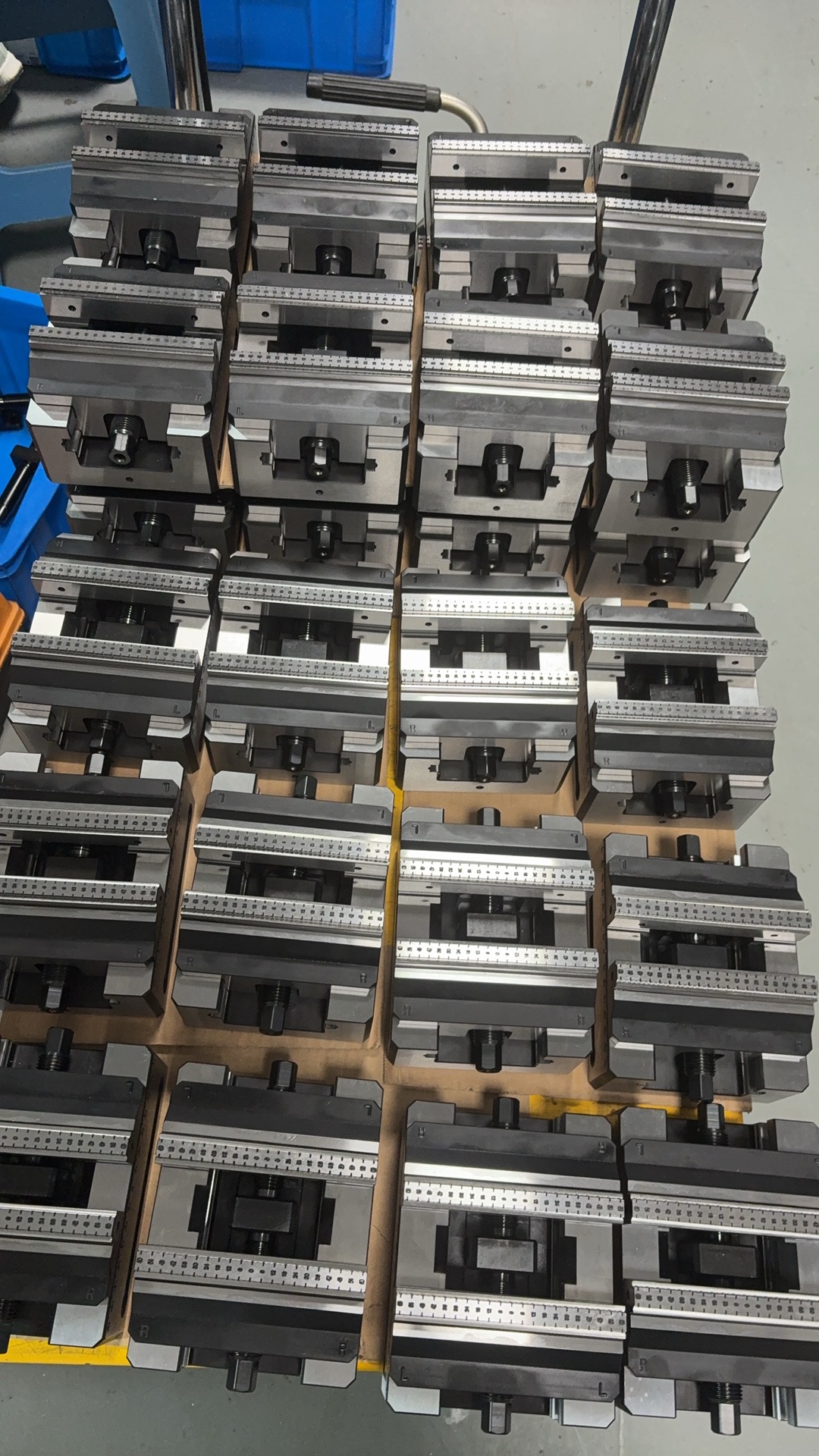
By deploying all 20 NEXTAS self-centering vises simultaneously across their offline setup stations, rotary indexers, and automated pallet racks, the customer solved four chronic machining headaches:
- True Pallet-to-Pallet Centerline Consistency: Unlike conventional fixed-jaw vises where raw stock tolerances push the workpiece centerline off-datum, the opposing-thread leadscrew inside each NEXTAS vise drives both jaws symmetrically toward the center. More importantly, because all 20 vises were precision-ground and matched in a single manufacturing lot, the Z-height from the bottom zero-point pull-stud seating surface to the stepped jaw support ledge is identical across the entire fleet. A program proven out on Vise #1 runs seamlessly on Vise #20 without touching the work offset table.
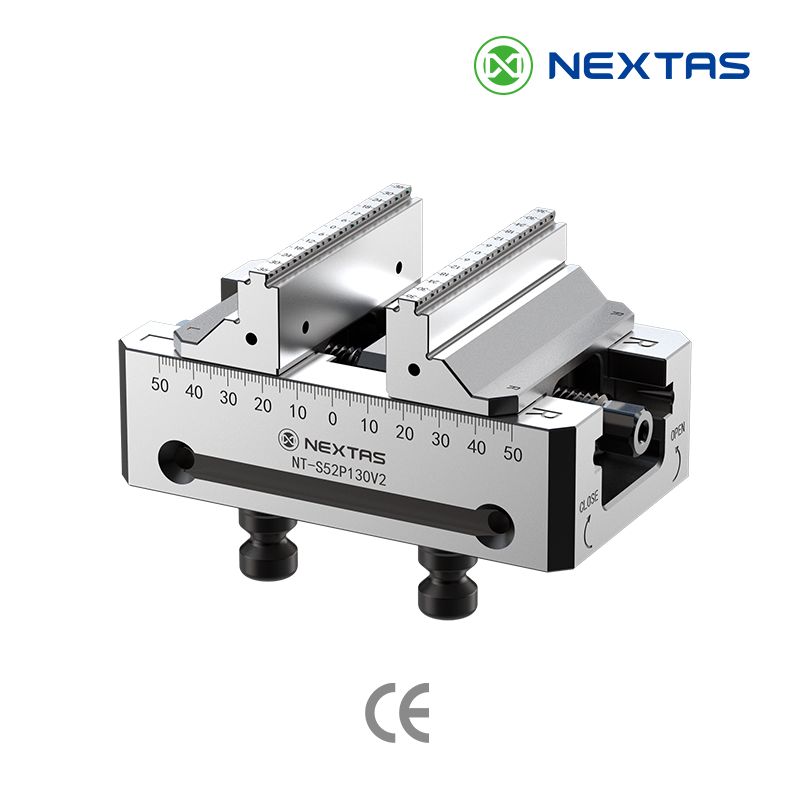
- 3.5 mm Bite for 5-Face Clearance: Each vise in the batch features reversible, hardened jaws with aggressive form-closure serrations on the step. Instead of wasting 10 mm to 12 mm of expensive billet stock just to hold the part, operators clamp raw saw-cut blanks on a mere 3.5 mm carrier hat. Combined with the sloped, compact profile of the vise body, standard short-projection toolholders can reach steep 5-axis tilt angles without risking spindle-nose or holder collisions.
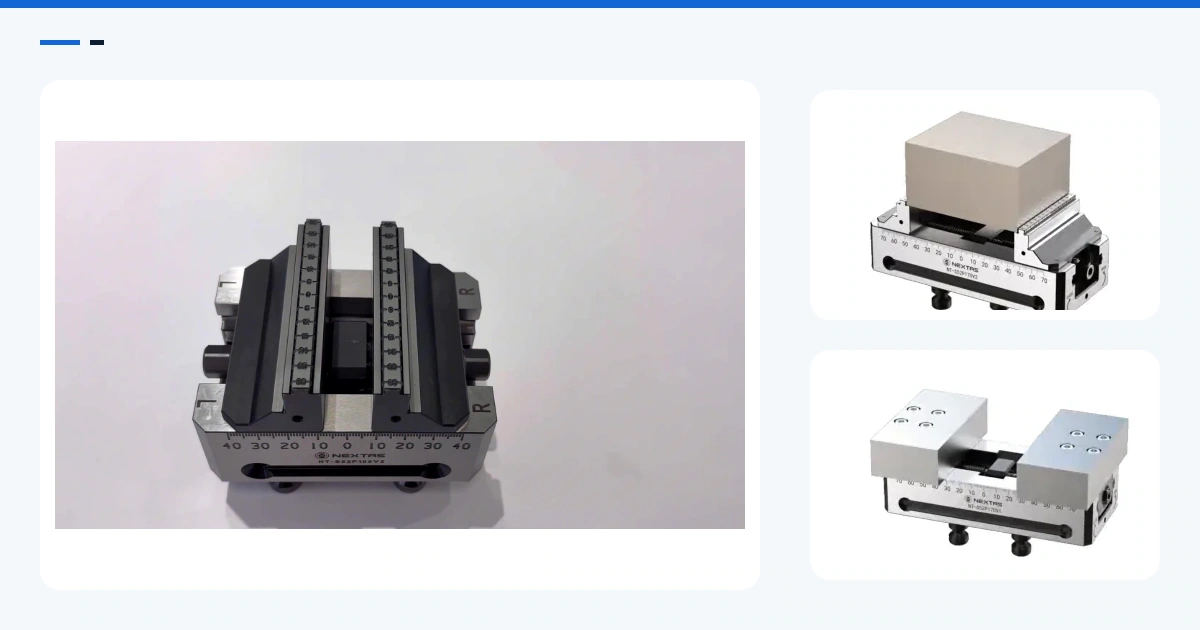
- Scale-Guided Offline Pre-Setting: Look closely at the top surface of the moving jaws across the 20-vise array, and you will see precision laser-etched millimeter scales paired with a grid of pin/fastener holes for custom top jaws. Standing at an offline prep cart, a setup technician uses a standard L-type wrench to pre-set the jaw opening to the exact billet width in seconds—long before the pallet ever enters the machine enclosure.
- Built-In Ergonomics and Robot Readiness: Machined directly into the lower flanks of every vise body are deep, symmetrical handling and gripper slots. Whether an operator is lifting a vise off a prep cart by hand or an end-of-arm robot effector is swapping vises directly onto a 4-axis/5-axis zero-point trunnion, the handling interface is already built into the steel.
From Vacuum Bag to Spindle: Zero Prep Delay
For international buyers, how a precision fixture travels is just as important as how it is ground. Rather than slathering the leadscrews and serrated jaws in heavy, sticky cosmoline grease that takes hours of solvent scrubbing to remove, NEXTAS vacuum-seals each individual vise in heavy-duty barrier film after final CMM and clamping-force verification.
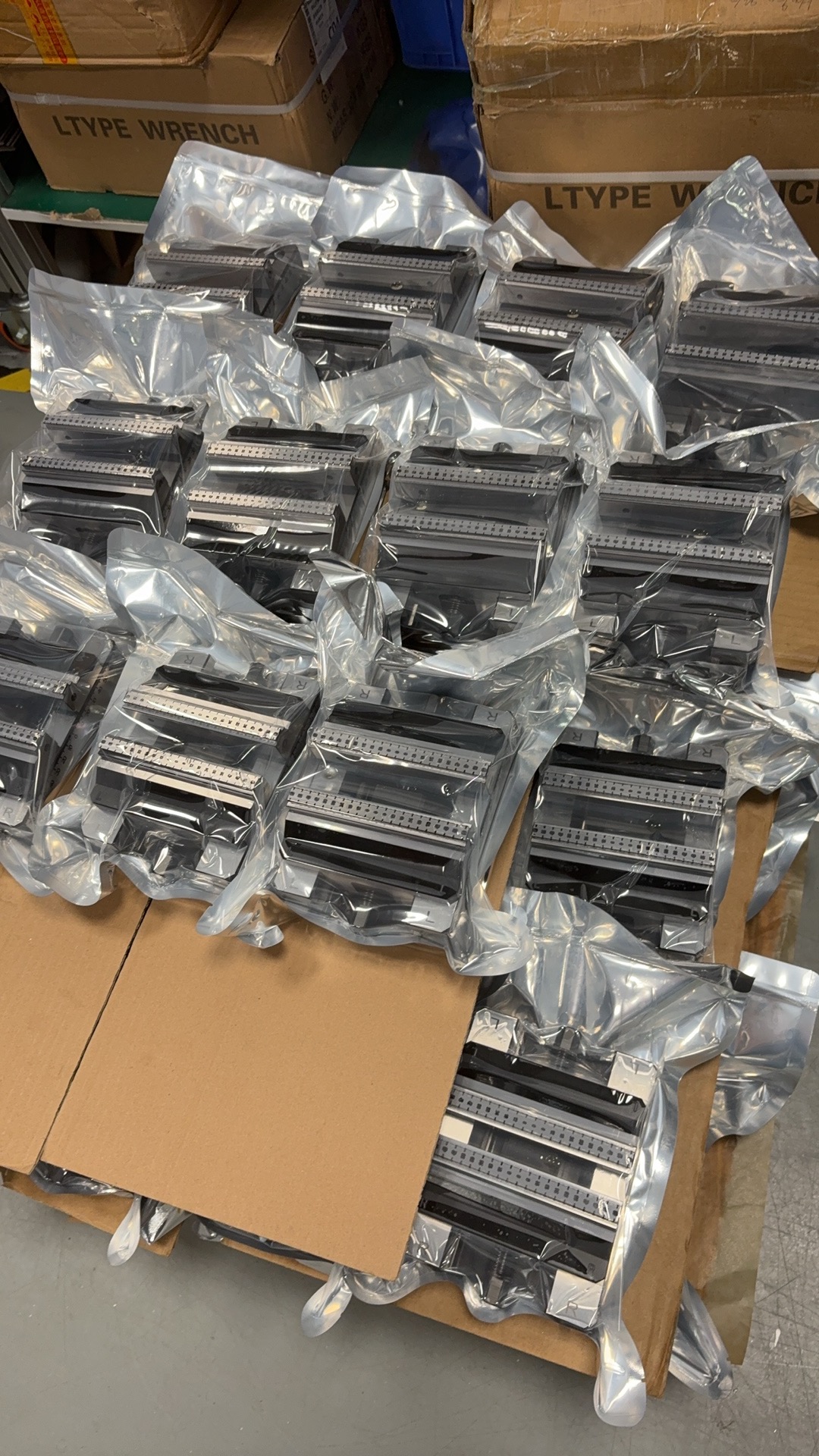
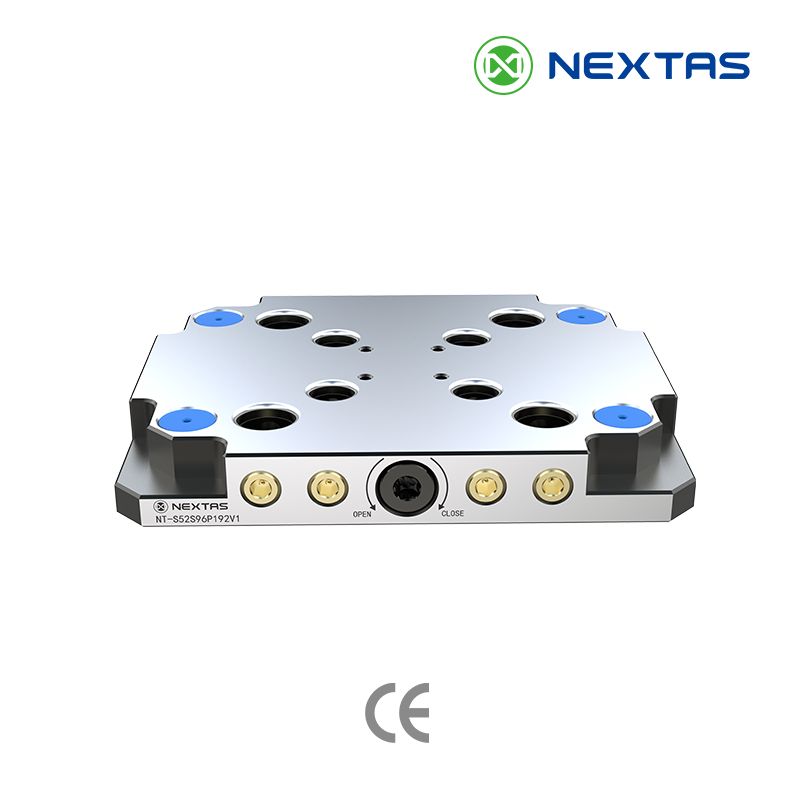
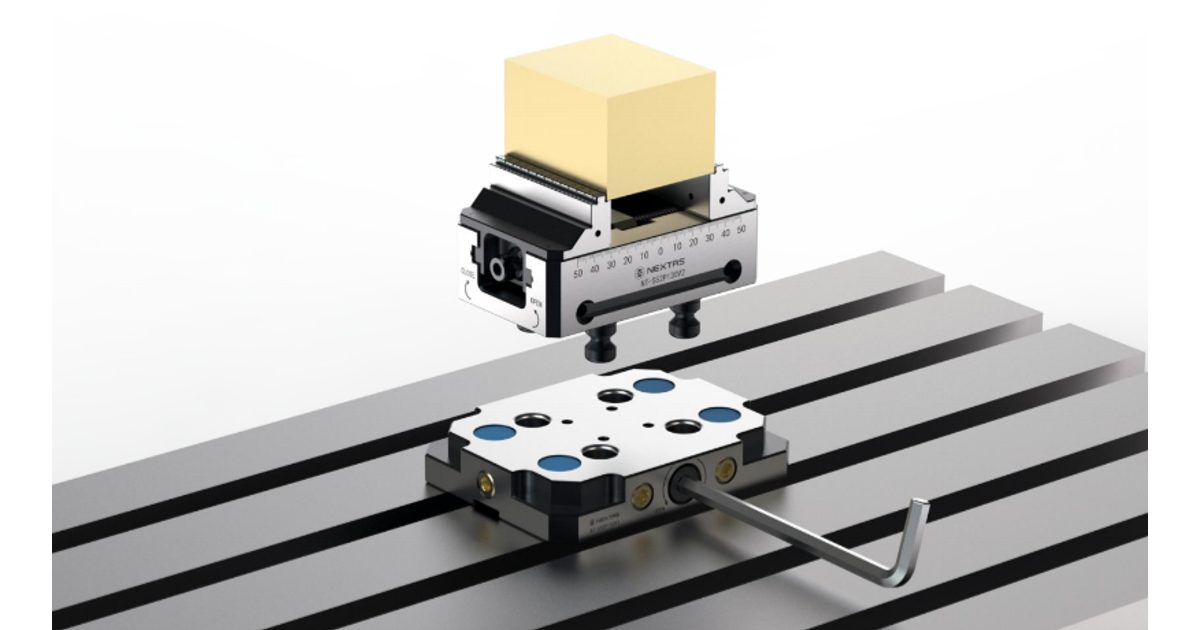
When the pallet arrived at the customer's facility, technicians simply slit the vacuum bags, mounted the 96-mm / zero-point pull studs, and dropped all 20 vises straight onto their receivers with < 0.003 mm to < 0.005 mm repeatability.
The Shop Floor Payoff: Lights-Out Confidence
With 20 standardized NEXTAS vises circulating continuously between the offline load station, the pallet rack, and the spindles, the shop transformed its daily workflow:
- Unattended Night Shifts Unlocked: Operators load 16 to 20 raw billets across the vise fleet before leaving at 5:00 PM. The automated pallet system feeds the machine through the night without a single offset adjustment.
- Instant Dual-Process Flexibility: Because the jaws are reversible and feature standardized mounting patterns, half the fleet can be configured with serrated step jaws for OP10 roughing while the other half carries contoured soft jaws for OP20 finishing.
- 22% Reduction in Raw Material Spend: Dropping the clamping allowance down to 3.5 mm across thousands of parts per month paid for the entire 20-vise investment in less than four months.
One matched lot
Send the receiver pattern and the billet size
If the pallet pool still mixes vise heights, send the zero-point receiver pattern, the saw-cut billet size, and how many vises must share one height and centerline.
Contact engineering