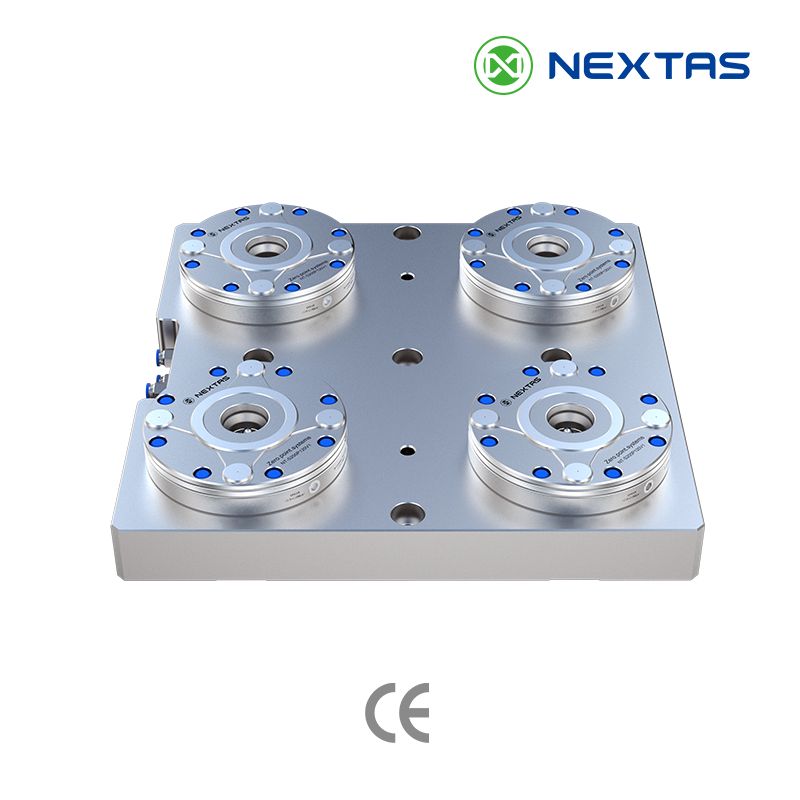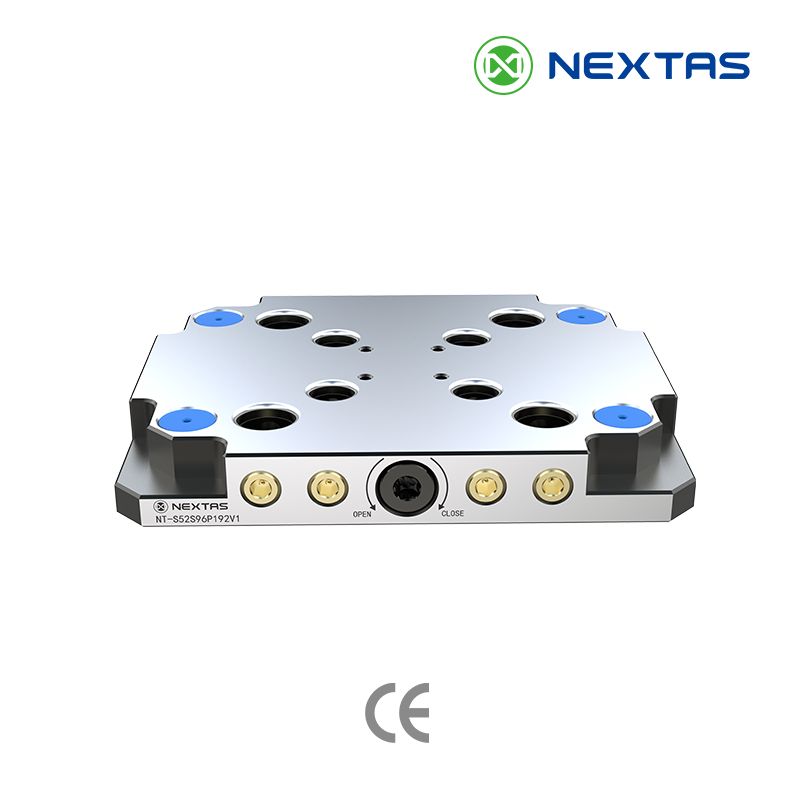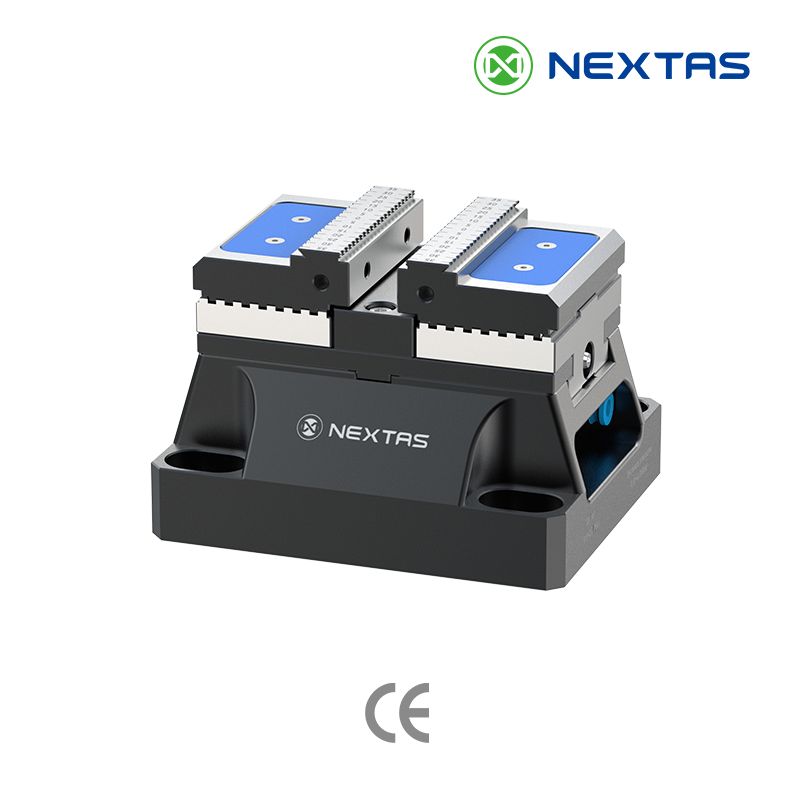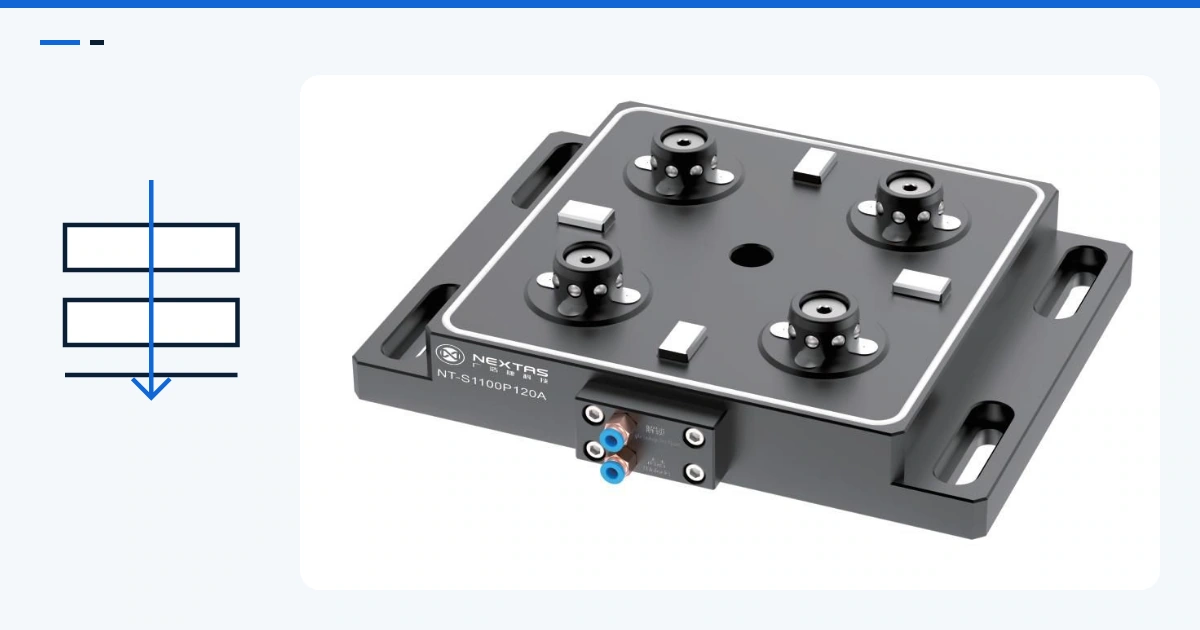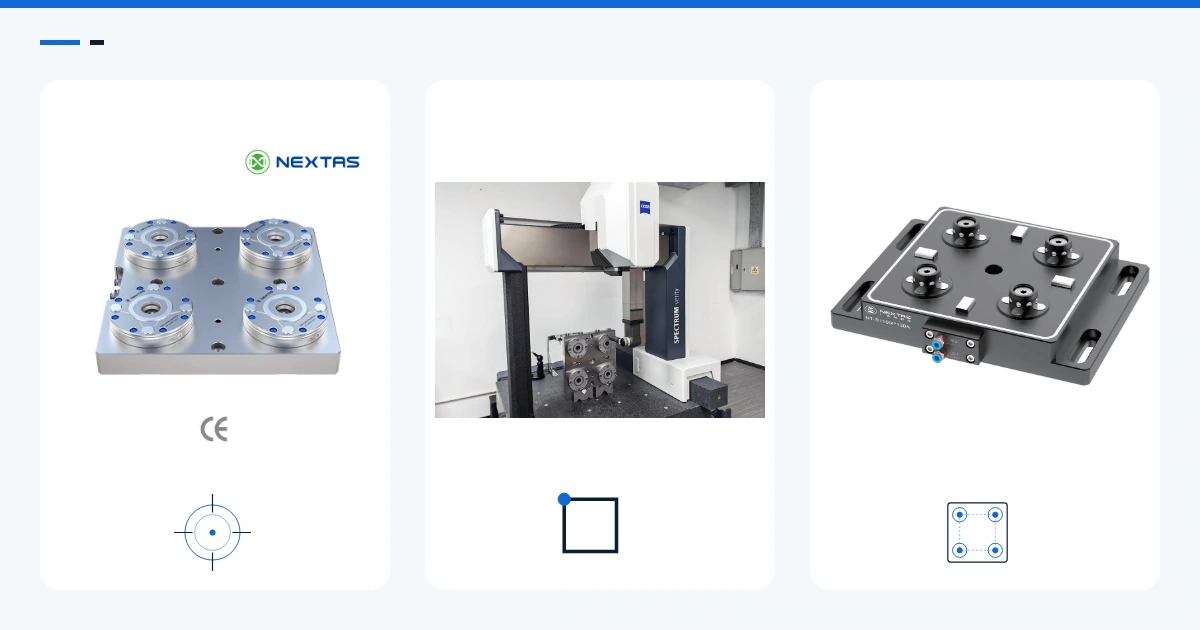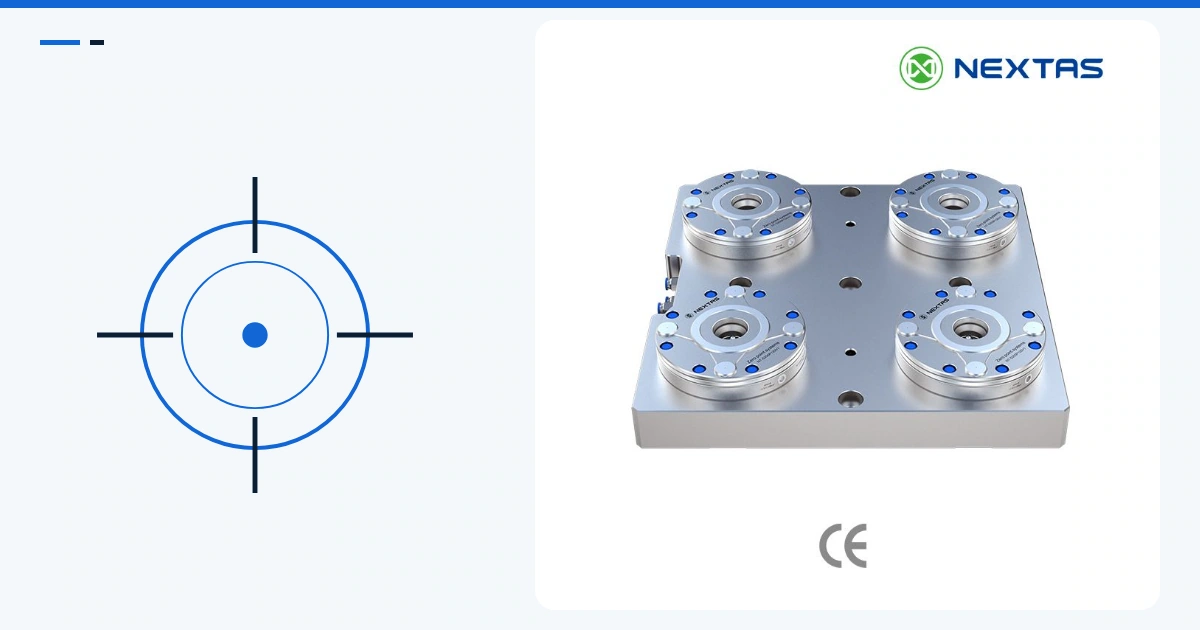
A zero point is the quick-change joint that seats a fixture back on a prepared base. It is not the work offset. A zero-point system is that joint plus the studs, the pitch, and the unlock that have to match it.
What the word is doing
Receivers, a manual plate, and a pneumatic plate do not share one interface. Match the stud, the spacing, and the unlock to the form on the drawing. The vise or dovetail that holds the part sits on top of this joint. The work offset is still set on the feature you named, after the joint is down.
On the quote, keep the three lines apart. Name the joint you are buying, name the feature you will probe, and name the locating set that has to come back with the pallet. A correct plate from the previous job can still be the wrong joint for this cell. Send the machine-table drawing with those three lines so purchasing can see the seat, the stud, and the unlock before the order is placed. Do not collapse the three words into one part number. The upper clamp, whether a vise or a dovetail, is chosen after the joint is identified. The catalog repeatability stays on the product page for the part you buy. It does not replace the alignment record between two stations.
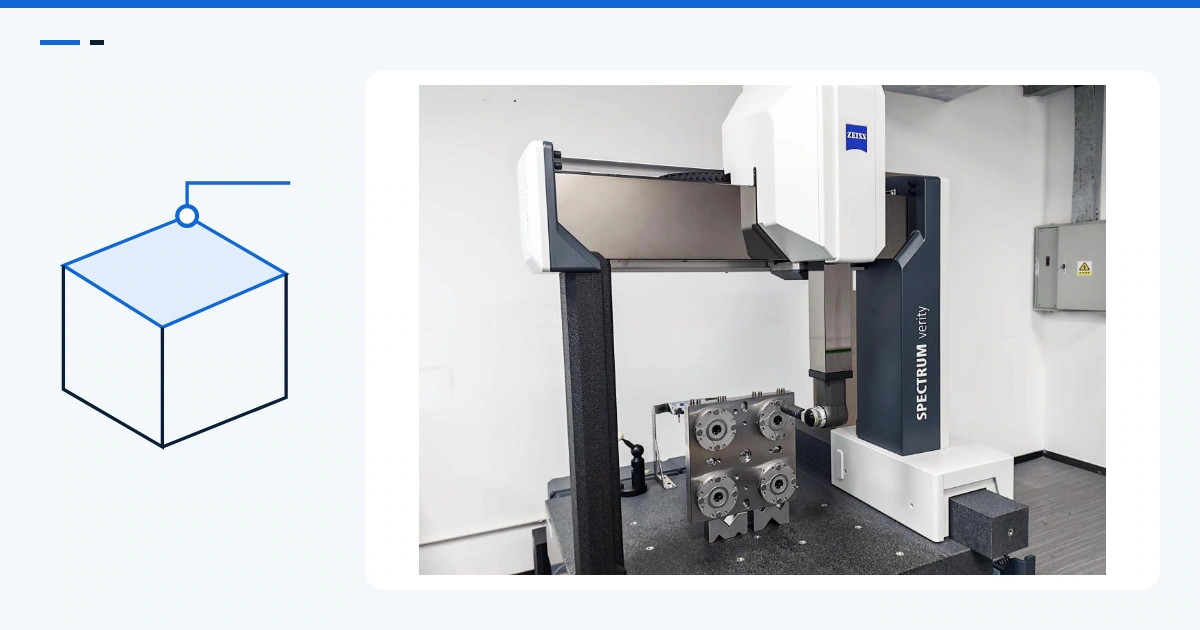
A 22-second overview of a NEXTAS zero-point clamping layout and quick-change setup. It does not prove machine-interface fit, repeatability, or the selected model.
Watch on YouTube
This 22-second clip shows one NEXTAS zero-point layout and the quick-change idea. It does not prove the stud, pitch, or unlock on your drawing.
A 25-second view of a NEXTAS side-inlet zero-point arrangement. It shows the port direction but does not prove load, repeatability or production fit.
Watch on YouTubeThe 25-second demonstration shows one side-inlet layout. Use it for visual orientation, not as proof of capacity or process results. This clip is one side-inlet example. It is not the definition of every zero-point joint.
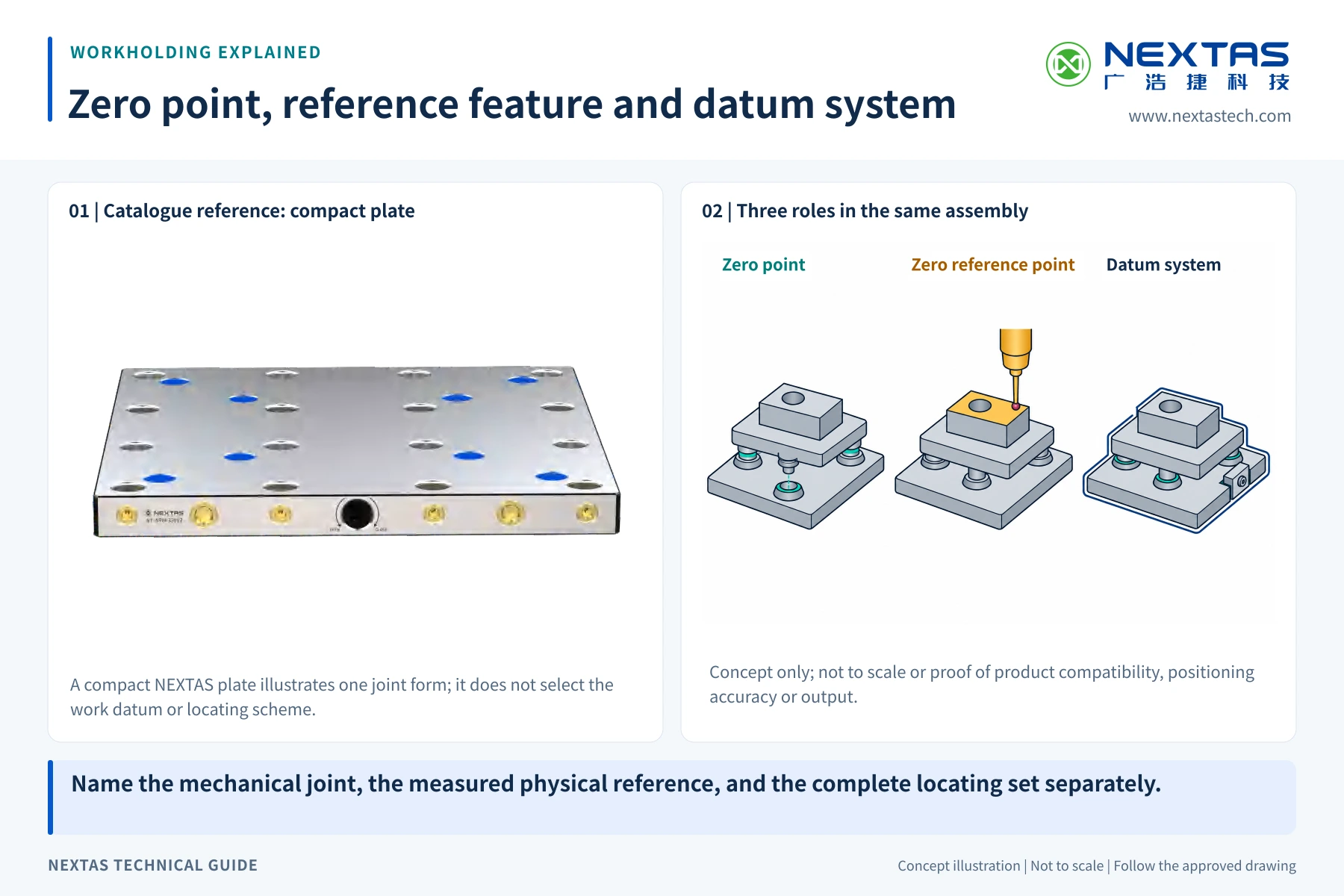
Where the rest of the comparison sits
The comparison with zero reference point and datum system, the shop example, and the three-line RFQ are on the main page. Use the anchors there instead of treating this short page as a second glossary. main page.
Next step
Ready to size hardware?
Start with zero-point systems for receivers, the clamping plate for a bolt-down grid, or the pneumatic plate when air release is in the cell. Send the machine-table drawing with the quote so the line items match the machine.
Send the machine-table drawing