Before a second machine goes on that floor rail, name the seat the pallet has to hit. In this clip an orange six-axis robot lifts a rectangular metal pallet and sets four pull studs, the pins under the pallet, into four receivers, the round seats on the machine table. That seating pattern is the fixture standard. The rail in the last shot can change the path. Every machine that takes this pallet still has to offer the same seat.
The source is a NEXTAS short titled “NEXTAS Zero-Point System | Robotic Pallet Handling Demo.” There is music and no spoken specification. The frames show the NEXTAS logo, the line “NEXTAS Zero Point System For Automation,” a banner reading “READY FOR AUTOMATION” and “POWERFUL FUNCTIONS,” and the footer www.nextastech.com. Those words are titles. They are not a model code, a force, or a time.
If a number is not on a drawing, write unknown.
The short never prints a pitch, a load, or a clamping force. “Same as the video” is how a second pitch lands in the rack.
What the short actually seats
The robot is putting the pallet’s pins into those seats. It is not finding a face on a part. No vise and no workpiece are on the pallet in this clip, so there is nothing else for it to locate.
The cell is fenced. The robot approaches a staging stand, closes a gripper on the top of the pallet, and lifts. Air lines run on that gripper. On the way up, four cylindrical pull studs are visible under the pallet. The robot carries the pallet into an open machine enclosure and lowers the four studs into four circular receivers on a base plate fixed to the machine table.
The top of the pallet has machined slots, and in this clip those slots are empty. Anything you later put in them is a separate drawing. It does not change what the four studs have to do.
A colored graphic appears over the cell while the pallet is in the air. Treat that graphic as a title card. It does not name a pitch, and it does not replace the stud drawing.
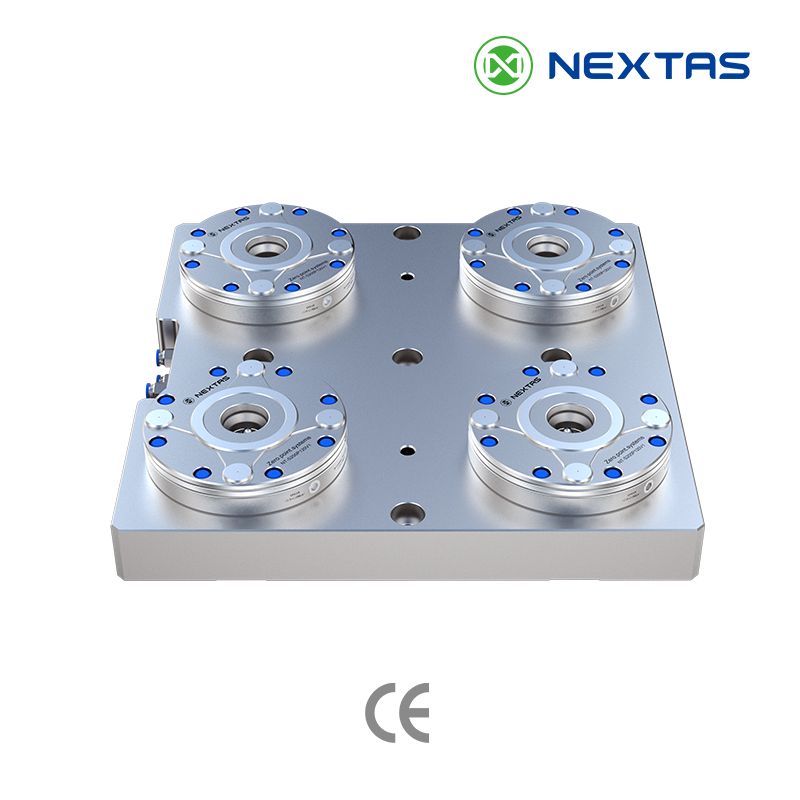
The picture at the top of this page is a catalog photo of four round receiver modules on a square plate. Use it to see the kind of seat the clip is aiming at. It is not a frame from the short, and it is not the base plate inside that machine.
Four studs are the standard
Count what the lift shows, then stop. Four studs leave the staging stand. Four receivers wait on the table. The robot’s job in this clip is to make those two sets meet. Someone still sets the program zero on the machine after the pallet is seated. This page does not turn the seat into that zero.
The pitch, the distance between the studs, is not on screen. Leave it unknown until the stud drawing gives it. Do not measure the video with a ruler. A camera angle changes the spacing you think you see, and a guessed pitch is how the next pallet looks right in the rack and misses on the machine.
The short also does not say which stud does which job. The teaching card below names three jobs on three separate studs: position side to side and front to back, a small shift so the pallet is not pulled two ways at once, and the pull-down onto the seat. The card shows three studs. The clip shows four, and neither image assigns your four holes. Your module drawing does that.
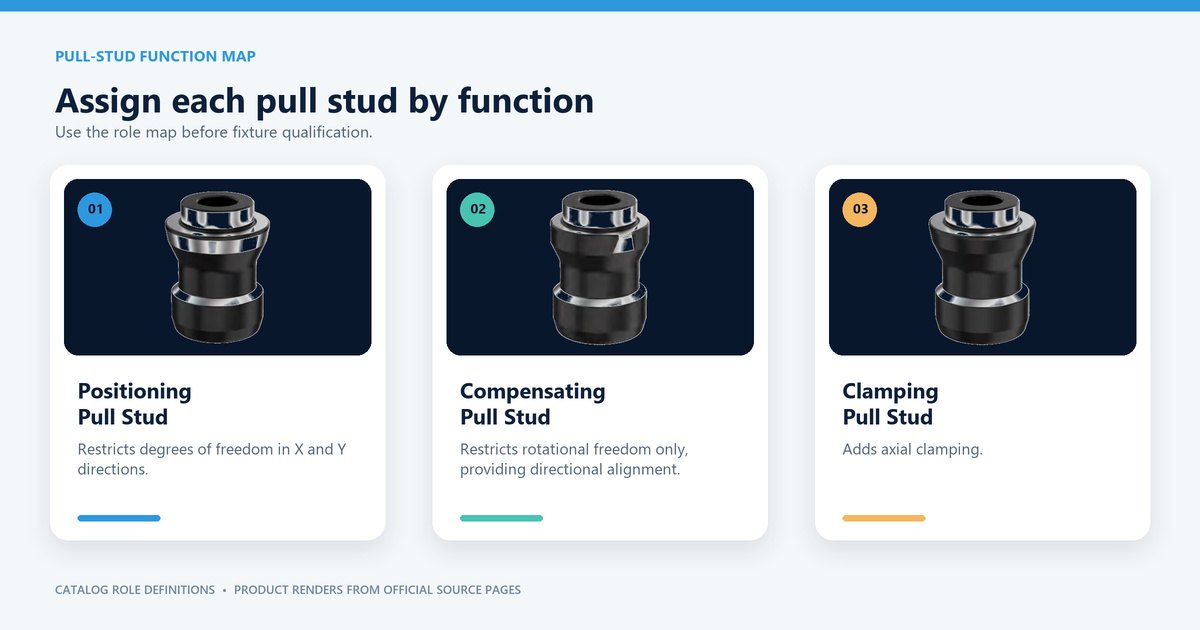
The pull-stud page lists its own models. Those names belong to that page. They are not a measurement of the four cylinders in the video. Open the page when you are ready to match a drawing. Do not copy a model code onto this pallet because you counted four pins.
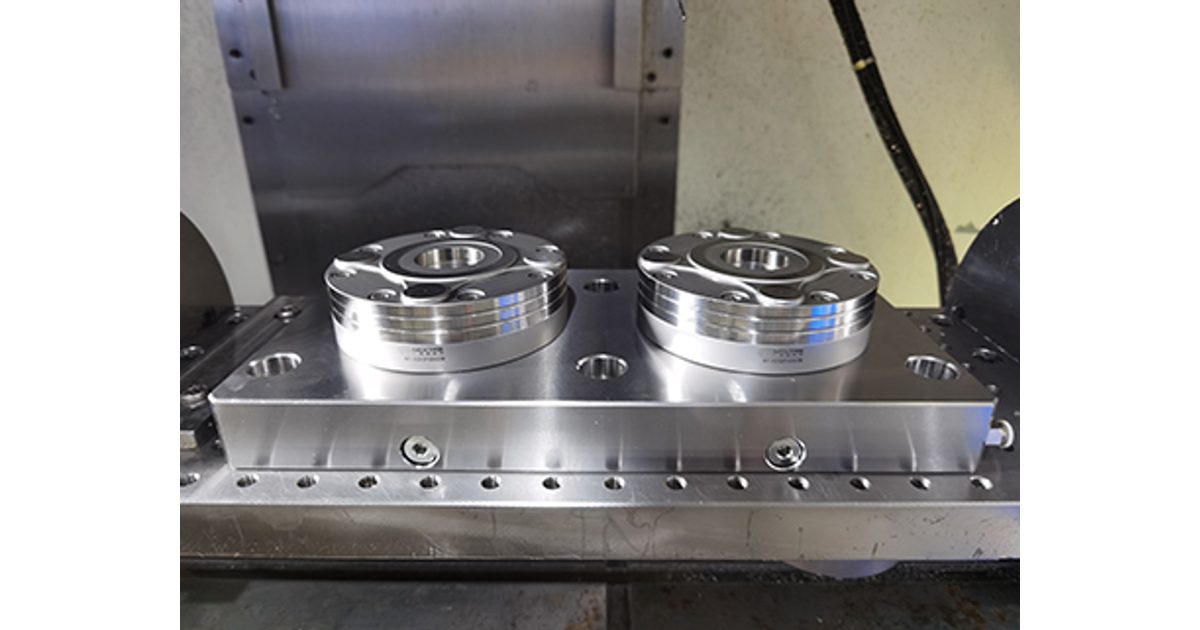
The receivers in the clip sit on a base plate inside the machine. The zero-point clamping system page is the page for receiver modules in a base or on a machine table. A finished plate you bolt down is a different part. Keep the two apart when you write the order.
The rack has to carry the same seat
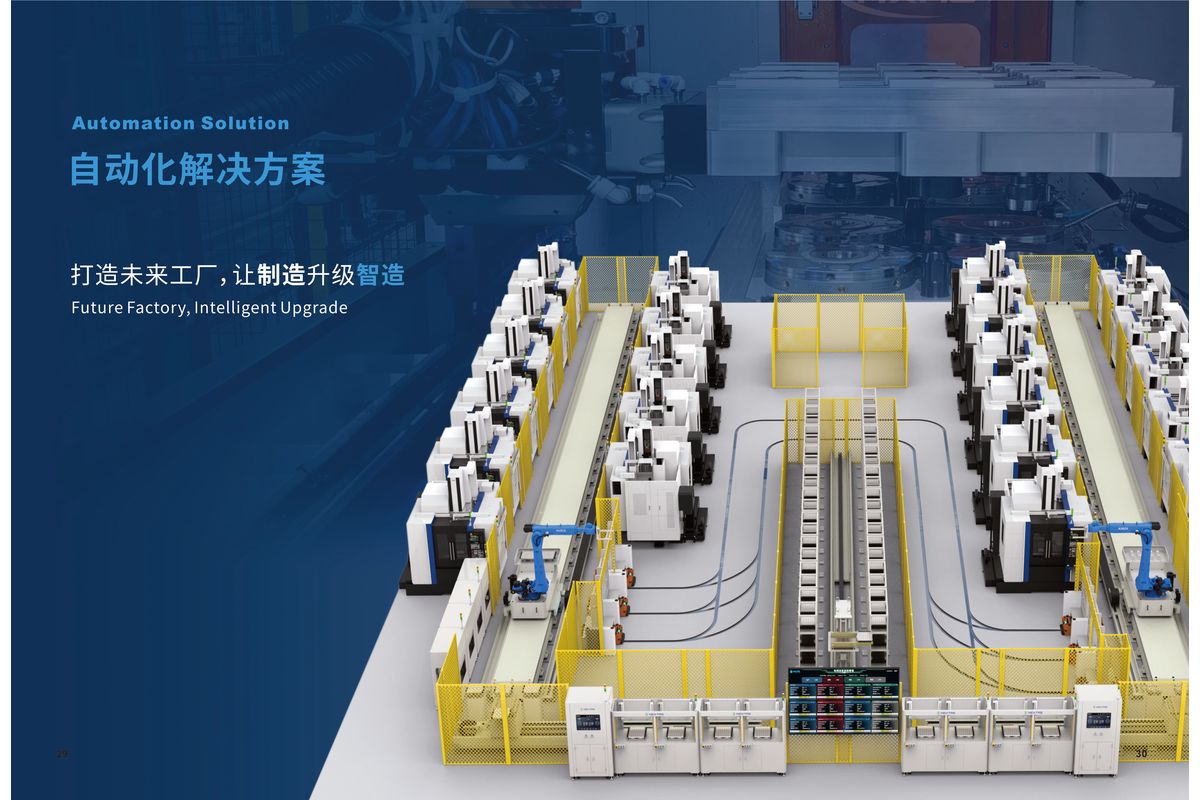
The last shot pulls back. You see a line of CNC machines, pallet racks with more than one level, and an orange robot traveling on a linear floor rail. The robot is moving pallets between the racks and the machines. People often call a line like that a flexible manufacturing system, or FMS. On this website the NEXTAS FMS page is the software product. The machines, the robot, and the racks in the short are separate hardware. The clip does not open the software, and this page does not describe it.
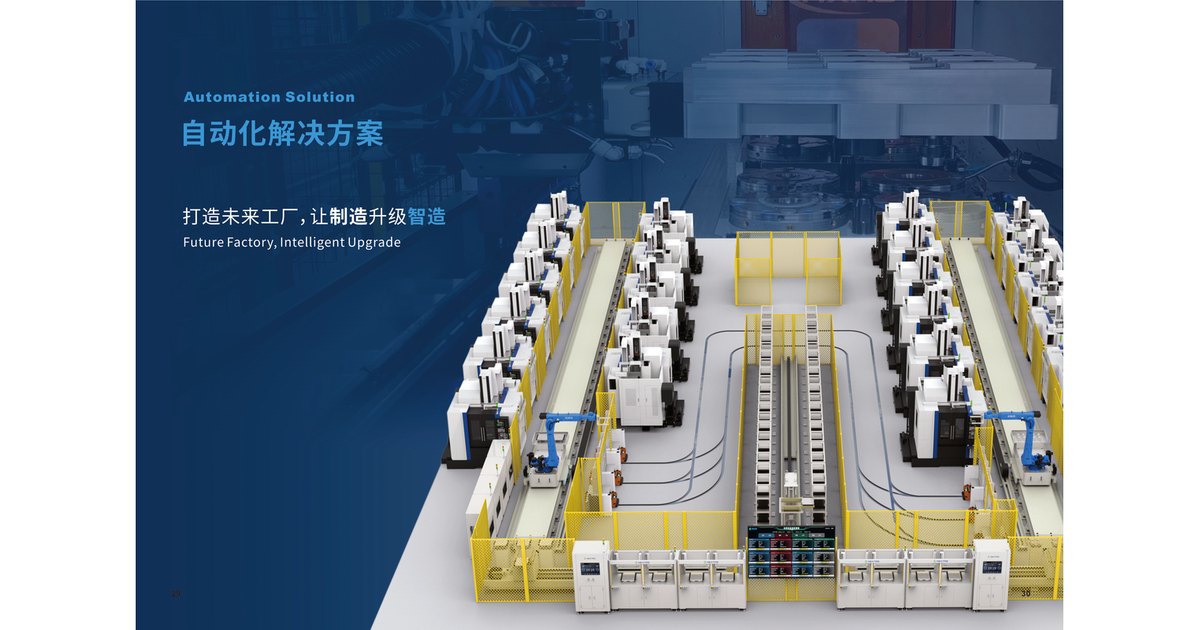
From the first pallet in the rack to the last machine on the rail, five things have to match: how many studs, the pitch between them, where the receivers sit, which stud does which job, and the grip from the top. The clip shows four studs and four round receivers, and a gripper on the top. It does not show the pitch or the job of each stud. The lines to write down are at the end of this page. One drawing has to cover the whole rack.
The machine the robot approaches can change. So can the rack level, when the pallet still fits the shelf and the gripper can still reach the top, and the path along the rail. A different level is still the same pallet. A different pitch is a different pallet, even if it sits in the same rack.
A floor rail only moves the pallet
The rail is a travel path. It does not locate the pallet on the table. Location still happens when the four studs enter the four receivers. If one machine on the rail has a different receiver layout, the robot can arrive on time and still miss the seat.
That is a different layout from a changer bolted to one machine. A dual-station manual pallet changer is a two-station unit you move by hand on a single machine. An automatic pallet changer swaps pallets at one machine. Neither one is the staging stand in the fenced cell, and neither one sets the stud pitch for the rail. Use those pages when the quote is for a one-machine changer. Use the stud drawing when the quote is for the seat the rail has to share.
The air lines in the clip are on the gripper. They do not show air going into the receivers. Open the pneumatic zero-point plate page only when a drawing says the machine or the robot releases the seat with air. A manual zero-point clamping plate is the finished plate that does not need an air supply. The gripper hoses do not make that choice for you.
Which NEXTAS page to open
Open the page that owns the part you are naming. Leave the other catalog lines closed until a drawing puts them on this order.
| You are naming | Open this page | Leave it off this order until a drawing says otherwise |
|---|---|---|
| The round seats in a base on the machine table | Zero-point clamping systems | A finished-plate catalog line written as if it were those four seats |
| The pins on the pallet underside | Pull studs | A model code from that page copied onto the four cylinders in the short |
| A finished plate you bolt to a table | Manual zero-point clamping plate | The base plate inside the machine in the short |
| Air that releases the joint | Pneumatic zero-point plate | The air lines on the gripper |
| A two-station changer on one machine, moved by hand | Dual-station manual pallet changer | The staging stand in the cell, and the stud pitch |
| An automatic changer on one machine | Automatic pallet changer | The floor rail and the rack |
| The software sold as NEXTAS FMS | NEXTAS FMS | The machines, the robot, and the racks in the last shot |

A plate that looks similar still misses
This is a planning example, not a customer job and not a timed study. A second machine on the rail gets a base plate that looks like the first one from across the aisle. Purchasing pulls an older pallet from the same rack because the outline matches. The four studs on that older pallet sit on a different pitch. The robot can still lift it by the top. The studs do not enter the four receivers. The rail did not cause the miss. The two plates were never the same seat.
The fix is on the drawing, before the second plate is cut. Mark the stud count, the pitch, and which stud does which job. Then mark every machine on the rail that must accept this pallet. A plate that is merely “similar” fails that mark.
Write these lines before the second machine
Fill the blanks the clip left open. NEXTAS can say which page and which drawing to open. The short does not become a model number on this page.
- Stud count. Four, on the pallet this clip lifts. If your pallet drawing shows a different count, you are not copying this seat.
- Pitch. Unknown from the video. Copy it from the stud drawing, or write unknown.
- Receiver layout. Four round receivers on the machine-table base. Every machine on the rail that takes this pallet needs that layout.
- Stud jobs. Which hole locates, which hole allows the small shift, and which holes pull down. Unknown in the clip. One drawing for the whole rack.
- Top grip. The gripper takes the pallet from the top. Keep that top clear, including after a vise goes into the slots.
- Shared machines. List the machines on the rail that must accept this pallet. The path can change. The seat cannot.
Questions that come up after the clip
The banner says “POWERFUL FUNCTIONS.” Does that publish a clamping force?
No. The short has music and those words on the screen. It does not show a force, a time, or a load. Leave those boxes blank. A number on a model page stays on that page. It is not a measurement of this clip.
The gripper has air lines. Are the receivers released by air?
The lines in the frame are on the gripper. Ask for the release drawing before you treat the receivers as air-released. The pneumatic plate page is for that drawing. The manual plate page is the finished plate with no air supply.
The pallet top has slots. Can a vise go there later?
The slots are empty in this clip. A vise is a later drawing. The studs underneath, and a clear top for this gripper, still have to remain if that pallet must seat on these receivers and leave this rack.
The last shot has a rail and racks. Can that line use a second stud pattern?
Only as a second pallet family. The rail moves pallets. Every machine that accepts this pallet still needs the same stud count, the same pitch, and the same receiver places.
The pull-stud page lists model names. Are those the four cylinders in the short?
No. Those names are that page’s catalog. Send the stud drawing before a model code is written onto this pallet.
Before the second machine plate
Send the stud drawing and the table plate
Send the drawing of this four-pin pallet and the base plate from each machine that rail has to serve. NEXTAS checks them against the receiver, plate, and pull-stud pages. The short is not a model number.
Send the two drawings